




Could Distributed Peer Review Better Decide Grant Funding?
The landscape of academic grant funding is notoriously competitive and plagued by lengthy, bureaucratic processes, exacerbated by difficulties in finding willing reviewers. Distributed […]

Canada’s Social Sciences and Humanities Research Council, the Canadian Institutes of Health Research, and the British Columbia-based Michael Smith Health Research BC […]
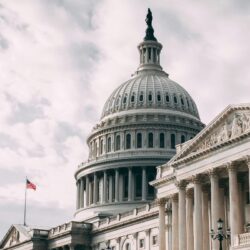
Republican legislators in the U.S. House of Representatives, arguing that “the American people’s trust in the National Institute of Health has been broken,” have released a blueprint for reforming the agency.

Thanks to a collaboration between the Inter-American Foundation (IAF) and the Social Science Research Council (SSRC), applications are now being accepted for […]

Funding for the U.S. National Science Foundation would fall by a half billion dollars in this fiscal year if a proposed budget the House of Representatives’ Appropriations Committee takes effect – the first cut to the agency’s budget in several years.

The U.S. National Science Foundation’s new Responsible Design, Development, and Deployment of Technologies (ReDDDoT) program supports research, implementation, and educational projects for multidisciplinary, multi-sector teams

A new report from Britain’s Academy of Social Sciences argues that the key to success for physical science and technology research is a healthy helping of relevant social science.

Five scientists who received federal funding earlier in their research journeys honored for their unexpected discoveries.
The Trans-Atlantic Platform for Social Sciences and Humanities has issued its fourth joint research call to produce research targeting societal issues related to the economy, politics and more while advancing democracy, governance and trust.
Jürgen Habermas, a globally known social theorist whose explorations of democracy, validity and communication have gained new prominence in the current moment, […] People often see science as a world apart: cool, rational and untouched by persuasion or performance. In this view, scientists simply discover […] “Research impact” means different things to different people. Some refer broadly to how science changes behaviors, beliefs, or practices outside academic institutions. […] David Canter considers informal places where people socialize, suggesting they’re an arena ChatGPT and other LLMs can’no’t replicate. As someone who lives […] It’s become cliche since Clive Humbly coined it in 2006, but data is indeed the new oil. It’s a mantra repeated by […] In September 2025, The Guardian reported about a lawyer in Australia having faced sanctions due to false citations. These citations were not […]
EXPLORE
Impact

Jürgen Habermas, 1929-2026: Exponent of the Public Sphere
READ MORE

Scientists Should Keep in Mind It’s Called the ‘Marketplace of Ideas’ for a Reason
READ MORE

Survey Finds Social Scientists Feel Unsupported in Seeking Societal Impact
READ MORE
Innovation

Reaching Parts to Which AI Has No Access
READ MORE

Andrea Medina-Smith on Making Research Data More FAIR
READ MORE

A Status Check on Hallucinated Case Law Incidents
READ MORE