


Could Distributed Peer Review Better Decide Grant Funding?
The landscape of academic grant funding is notoriously competitive and plagued by lengthy, bureaucratic processes, exacerbated by difficulties in finding willing reviewers. Distributed […]

Companies with a better understanding of climate change, the authors argue, have realized the need to plan actions beyond the business level.

Opinions on immigration are not set in stone, suggests Rob Ford – but they may be set in generations. Zeroing in on the experience of the United Kingdom since the end of World War II, Ford – a political scientist at the University of Manchester – explains how this generation’s ‘other’ becomes the next generation’s ‘neighbor.’
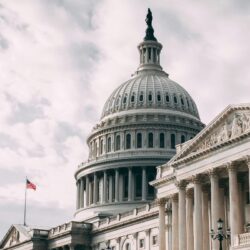
U.S. President Joseph Biden’s administration has laid down a marker buttressing the use of social and behavioral science in crafting policies for the federal government by releasing a 102-page Blueprint for the Use of Social and Behavioral Science to Advance Evidence-Based Policymaking.

Economist Tavneet Suri discusses fieldwork she’s done in handing our cash directly to Kenyans in poor and rural parts of Kenya, and what the generally good news from that work may herald more broadly.

Robert Dingwall looks at the once dominant role that miasmatic theory had in public health interventions and public policy.

By carefully interrogating the system of economic incentives underlying innovations and how technologies are monetized in practice, we can generate a better understanding of the risks, both economic and technological, nurtured by a market’s structure.

Women’s History Month is, when we “honor women’s contributions to American history…” as a nation. Author Andrae Alexander aims to spark a conversation about honor that expands the actions of this month from performative to critical

Political scientist Charles V. Hamilton, the tokenizer of the term ‘institutional racism,’ an apostle of the Black Power movement, and at times deemed both too radical and too deferential in how to fight for racial equity, died on November 18, 2023. He was 94.


Jürgen Habermas, a globally known social theorist whose explorations of democracy, validity and communication have gained new prominence in the current moment, […] People often see science as a world apart: cool, rational and untouched by persuasion or performance. In this view, scientists simply discover […] “Research impact” means different things to different people. Some refer broadly to how science changes behaviors, beliefs, or practices outside academic institutions. […] David Canter considers informal places where people socialize, suggesting they’re an arena ChatGPT and other LLMs can’no’t replicate. As someone who lives […] It’s become cliche since Clive Humbly coined it in 2006, but data is indeed the new oil. It’s a mantra repeated by […] In September 2025, The Guardian reported about a lawyer in Australia having faced sanctions due to false citations. These citations were not […]
EXPLORE
Impact

Jürgen Habermas, 1929-2026: Exponent of the Public Sphere
READ MORE

Scientists Should Keep in Mind It’s Called the ‘Marketplace of Ideas’ for a Reason
READ MORE

Survey Finds Social Scientists Feel Unsupported in Seeking Societal Impact
READ MORE
Innovation

Reaching Parts to Which AI Has No Access
READ MORE

Andrea Medina-Smith on Making Research Data More FAIR
READ MORE

A Status Check on Hallucinated Case Law Incidents
READ MORE