


Could Distributed Peer Review Better Decide Grant Funding?
The landscape of academic grant funding is notoriously competitive and plagued by lengthy, bureaucratic processes, exacerbated by difficulties in finding willing reviewers. Distributed […]
The Declaration on Research Assessment, or DORA, has yet to achieve widespread institutional support in the UK. Maybe its reception might be warmed if DORA was more like its cousin, the Leiden Manifesto.
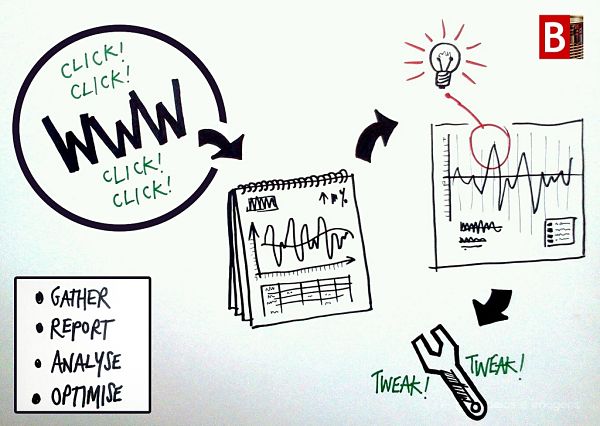
Rather than expecting people to stop utilizing metrics altogether, we would be better off focusing on making sure the metrics are effective and accurate, argues Brett Buttliere.

While the initial splash made by ‘The Metric Tide,’ an independent review on the role of metrics in research assessment, has died down since its release last month, the underlying critique continues to make waves.

Jane Tinkler argues that if institutions like HEFCE specify a narrow set of impact metrics, more harm than good would come to universities forced to limit their understanding of how research is making a difference. But, she adds, qualitative and quantitative indicators continue to be an incredible source of learning for how impact works.
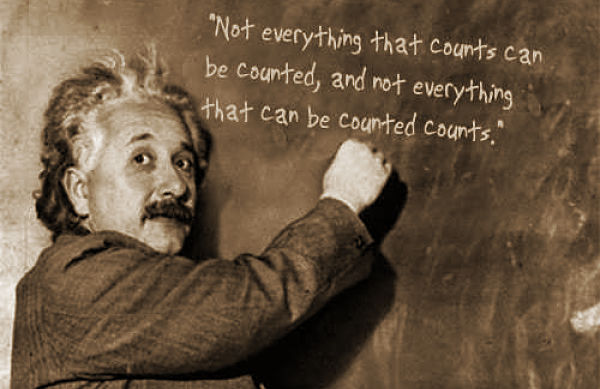
A new report looking at the role of metrics in analyzing British academe finds, ‘A lot of the things we value most in academic culture resist simple quantification, and individual indicators can struggle to do justice to the richness and diversity of our research.’

Jürgen Habermas, a globally known social theorist whose explorations of democracy, validity and communication have gained new prominence in the current moment, […] People often see science as a world apart: cool, rational and untouched by persuasion or performance. In this view, scientists simply discover […] “Research impact” means different things to different people. Some refer broadly to how science changes behaviors, beliefs, or practices outside academic institutions. […] David Canter considers informal places where people socialize, suggesting they’re an arena ChatGPT and other LLMs can’no’t replicate. As someone who lives […] It’s become cliche since Clive Humbly coined it in 2006, but data is indeed the new oil. It’s a mantra repeated by […] In September 2025, The Guardian reported about a lawyer in Australia having faced sanctions due to false citations. These citations were not […]
EXPLORE
Impact

Jürgen Habermas, 1929-2026: Exponent of the Public Sphere
READ MORE

Scientists Should Keep in Mind It’s Called the ‘Marketplace of Ideas’ for a Reason
READ MORE

Survey Finds Social Scientists Feel Unsupported in Seeking Societal Impact
READ MORE
Innovation

Reaching Parts to Which AI Has No Access
READ MORE

Andrea Medina-Smith on Making Research Data More FAIR
READ MORE

A Status Check on Hallucinated Case Law Incidents
READ MORE