


Could Distributed Peer Review Better Decide Grant Funding?
The landscape of academic grant funding is notoriously competitive and plagued by lengthy, bureaucratic processes, exacerbated by difficulties in finding willing reviewers. Distributed […]

Co-authors Birgitte Wraae and Nicolai Nybye reflect on the inspiration behind their research article, “Learning to Be “Me,” “the Team,” and “the Company” Through Entrepreneurial Extracurricular Activities: An Ethnographic Approach,” published in Entrepreneurship Education and Pedagogy.

The slow, relentless creep of computing is currently in overdrive with powerful artificial intelligence tools impacting every aspect of our lives. What […]

By actively collaborating with industry, developing interdisciplinary programs and investing in hands-on learning opportunities, business schools can equip graduates with the specific skills and experiences that employers are seeking.

Whether you’re in a research leadership position, working in research development, or a researcher embarking on their project, creating a culture of […]

Economist Daron Acemoglu, professor at the Massachusetts Institute of Technology, discusses the history of technological revolutions in the last millennium and what they may tell us about artificial intelligence today.

Organizations shouldn’t back away from workplace DEI efforts. Rather, the research suggests, they should double down, using a more inclusive approach that emphasizes civility and dialogue – one aimed at finding common ground.

In this month’s edition of The Evidence newsletter, Josephine Lethbridge explores reproductive rights after the end of Roe v Wade, highlighting research on the potentially unsafe methods used in self-managed abortions.
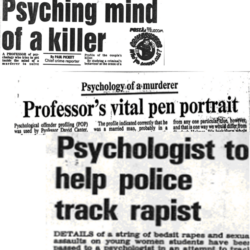
David Canter considers the confusions inherent in being (even very moderately) well-known. That has implications for the considerably greater misinformation that gets linked to those who are very well-known indeed.
People often see science as a world apart: cool, rational and untouched by persuasion or performance. In this view, scientists simply discover […] “Research impact” means different things to different people. Some refer broadly to how science changes behaviors, beliefs, or practices outside academic institutions. […] One researcher studies how war affects children, another took a literal worm’s eye view to examine rural development, while two others scrutinized […] David Canter considers informal places where people socialize, suggesting they’re an arena ChatGPT and other LLMs can’no’t replicate. As someone who lives […] It’s become cliche since Clive Humbly coined it in 2006, but data is indeed the new oil. It’s a mantra repeated by […] In September 2025, The Guardian reported about a lawyer in Australia having faced sanctions due to false citations. These citations were not […]
EXPLORE
Impact

Scientists Should Keep in Mind It’s Called the ‘Marketplace of Ideas’ for a Reason
READ MORE

Survey Finds Social Scientists Feel Unsupported in Seeking Societal Impact
READ MORE
Canada’s SSHRC Names 2025 Impact Winners
READ MORE
Innovation

Reaching Parts to Which AI Has No Access
READ MORE

Andrea Medina-Smith on Making Research Data More FAIR
READ MORE

A Status Check on Hallucinated Case Law Incidents
READ MORE