

Could Distributed Peer Review Better Decide Grant Funding?
The landscape of academic grant funding is notoriously competitive and plagued by lengthy, bureaucratic processes, exacerbated by difficulties in finding willing reviewers. Distributed […]

Janet Salmons, the research community director of our sister site, Sage Methodspace, coordinated a series of research roundtables to discuss the obstacles facing academic freedom and how to navigate them.

The claim that academics hype their research is not news. The use of subjective or emotive words that glamorize, publicize, embellish or exaggerate results and promote the merits of studies has been noted for some time and has drawn criticism from researchers themselves. Some argue hyping practices have reached a level where objectivity has been replaced by sensationalism and manufactured excitement. By exaggerating the importance of findings, writers are seen to undermine the impartiality of science, fuel skepticism and alienate readers.

The idea that sexism in any form might be benevolent is counterintuitive – but is it genuine? That was a question explored in the paper “Benevolent Sexism and the Gender Gap in Startup Evaluation.”
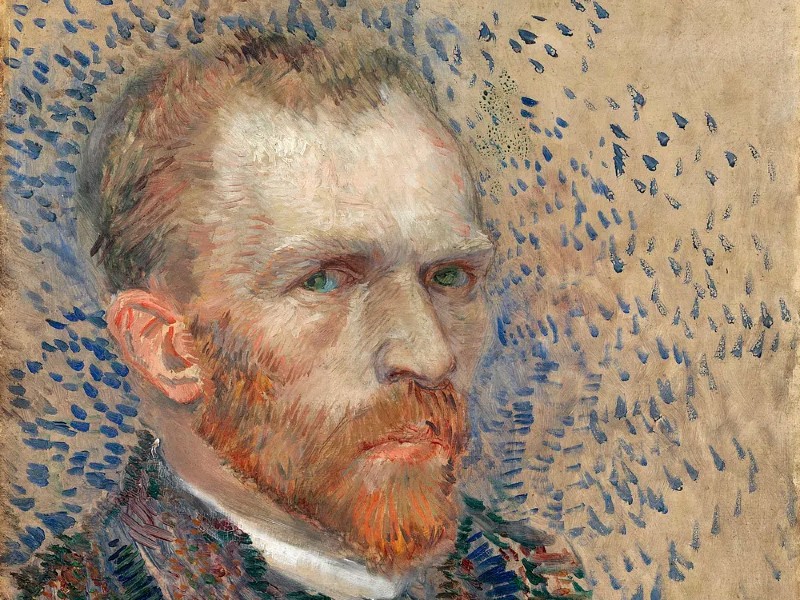
Diagnosis is so important to understanding our lives and those around us that it’s often applied outside of the health setting.

The National Science Foundation’s directorates of geosciences and of social, behavioral and economic sciences, in collaboration with the National Oceanic and Atmospheric Administration are calling for proposals to create a center for catastrophic impact and risk assessment modeling related to climate change.

Danian Darrell Jerry is the co-editor, with Walter Greason, of a just-released book, Illmatic Consequences: The Clapback to Opponents of ‘Critical Race Theory’. […]

Between the 1780s and 1930s, more than 80 emancipations from slavery occurred, from Pennsylvania in 1780 to Sierra Leone in 1936.

As a math professor who teaches students to use data to make informed decisions, I am familiar with common mistakes people make when dealing with numbers. The Dunning-Kruger effect is the idea that the least skilled people overestimate their abilities more than anyone else. This sounds convincing on the surface and makes for excellent comedy. But in a recent paper, my colleagues and I suggest that the mathematical approach used to show this effect may be incorrect.
When people trust science, they can make better decisions, follow helpful rules and work together on big problems like health, climate change […] Do you know a social or behavioral science researcher whose work resonates across disciplines and which has made a significant impact in […] Please note: this contest has now closed. The winner will be contacted in due course. This November, Sage and Overton invite you to share the unexpected […] The latest generation of artificial intelligence models is sharper and smoother, producing polished text with fewer errors and hallucinations. As a philosophy […] In a new white paper by Tom Chatfield, the philosopher of tech and critical thinking outlines a practical roadmap for integrating artificial intelligence into […] Distance learning far precedes the digital age. Before online courses, people relied on print materials (and later radio and other technologies) to […]
EXPLORE
Impact

There Is a Cost to Being Honest About Science
READ MORE

Outstanding Social and Behavioral Scientists Sought for Sage-CASBS Award
READ MORE
Share Your Most Surprising Policy Citation for Chance to Win $500 [Closed]
READ MORE
Innovation

An AI Authorship Protocol Aims to Sharpen a Sometimes-Fuzzy Line
READ MORE

A Box Unlocked, Not A Box Ticked: Tom Chatfield on AI and Pedagogy
READ MORE

AI Gaming of Some Online Courses Threatens Their Credibility
READ MORE