



Could Distributed Peer Review Better Decide Grant Funding?
The landscape of academic grant funding is notoriously competitive and plagued by lengthy, bureaucratic processes, exacerbated by difficulties in finding willing reviewers. Distributed […]

For all sorts of reasons, our article “A Design Thinking Approach to Teaching Sustainability” should not have been written. This blog entry […]

Political scientists Monika McDermott and David Jones help readers understand why further restrictions never pass, despite a majority of Americans supporting tighter gun control laws.

The current convention that envisions the manuscript as a self-contained universe produces a range of negative consequences extending beyond papers’ obscene length: many scholars seem to cite papers based on their abstracts or even title alone; reviewing literature takes lots of time; noncore research communities are badly served; new requirements on research transparency and openness are difficult to meet; and, finally, our papers are not particularly enjoyable to read.

The United States has formally established the Advanced Research Project Agency for Health, or ARPA-H, as an independent entity within the National Institutes of Health. Anthropologist Adam H. Russell will head the new agency as acting deputy director

In this second response to Ziyad Marar’s thought piece “On Measuring Social Science Impact” from Organizational Studies, Anne-Wil Harzing, professor of international management and staff development lead at Middlesex University Business School, sets the stage for further discussion by defining impact in terms of progressing scientific knowledge, developing critical thinking, and addressing societal problems.
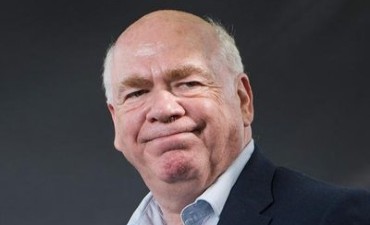
“It’s very hard,” explains Sir Lawrence Freedman, “to motivate people when they’re going backwards.”

Loren Henderson describes her work with BarBara Scott as part of a small body of descriptive research, mostly by researchers of color, countering negativity and victim-blaming in earlier studies of Black families.

The answer may seem obvious, yet empirical evidence is often mixed as to whether the racial composition of a firm’s board of directors influences corporate decisions.
When people trust science, they can make better decisions, follow helpful rules and work together on big problems like health, climate change […] Do you know a social or behavioral science researcher whose work resonates across disciplines and which has made a significant impact in […] Please note: this contest has now closed. The winner will be contacted in due course. This November, Sage and Overton invite you to share the unexpected […] The latest generation of artificial intelligence models is sharper and smoother, producing polished text with fewer errors and hallucinations. As a philosophy […] In a new white paper by Tom Chatfield, the philosopher of tech and critical thinking outlines a practical roadmap for integrating artificial intelligence into […] Distance learning far precedes the digital age. Before online courses, people relied on print materials (and later radio and other technologies) to […]
EXPLORE
Impact

There Is a Cost to Being Honest About Science
READ MORE

Outstanding Social and Behavioral Scientists Sought for Sage-CASBS Award
READ MORE
![Share Your Most Surprising Policy Citation for Chance to Win $500 [Closed]](https://www.socialsciencespace.com/wp-content/themes/conferpress/images/default_thumbnail-new-border.jpg "Share Your Most Surprising Policy Citation for Chance to Win $500 [Closed]")
Share Your Most Surprising Policy Citation for Chance to Win $500 [Closed]
READ MORE
Innovation

An AI Authorship Protocol Aims to Sharpen a Sometimes-Fuzzy Line
READ MORE

A Box Unlocked, Not A Box Ticked: Tom Chatfield on AI and Pedagogy
READ MORE

AI Gaming of Some Online Courses Threatens Their Credibility
READ MORE