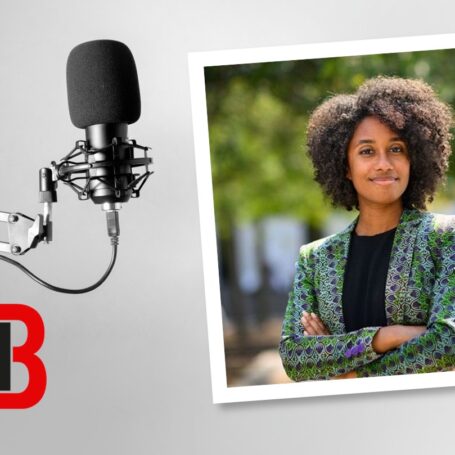
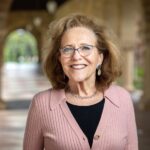
Jennifer Hochschild on Race in America

LISTEN TO JENNIFER HOCHSCHILD NOW!
Between a series of high-profile shootings of black men by police and the election of Donald Trump by a bifurcated electorate, the racial divide in the United States has achieved a renewed public prominence. While discussion of this divide had faded since the election of Barack Obama, it’s an issue that has always been at the forefront of the scholarship of Harvard’s Jennifer Hochschild.
In this Social Science Bites podcast, Hochschild explains to interviewer David Edmonds some of the pertinent data points from her years of using quantitative and qualitative analysis to map the racial, ethnic and class cleavages in America’s demography.
The issues are devilishly difficult to address in, well, black-and-white terms, it turns out, as Hochschild repeatedly answers “yes and no” to various questions. Academics, she explains, tend to generalize too much about these issues, to focus too much on the role of the federal government to the detriment of state governments, and don’t pay enough attention to spatial variations: “Los Angeles doesn’t look like Dubuque, Iowa.”
She depicts a racial continuum of acceptance and opportunity, with whites and Asians at one extreme, blacks at the other, and other communities, such as Latinos and Muslims, populating the expanse in between. While the distance between the extremes seems to be as wide as it’s been for the last half century, she sees some hopes in the middle. She draws parallels for the modern Latino community with that of immigrants from Eastern and Southern Europe at the turn of the last century: they arrived as ‘lesser whites’ but at this point have full membership in the larger dominant community.
Hochschild talks specifically about the Muslim immigrant community in the U.S., with its wide range of homelands and ethnicities but a generally high level of education. She expects the community’s traditional low level of political activity to change dramatically in the near future. “My guess is that’s going to change over the next decade as they increasingly feel not only beleaguered but in real trouble. From my perspective, I hope there will be more alliances with other groups, but that remains to be seen”
Hochschild is the Henry LaBarre Jayne Professor of Government at Harvard University, where she focuses on African and African American studies. The author of several important books on race and politics, she was also the founding editor of Perspectives on Politics, published by the American Political Science Association, and was a former co-editor of the American Political Science Review. Earlier this year she completed her one-year term as president of the APSA.
To download an MP3 of this podcast, right-click here and save.
***
Social Science Bites is made in association with SAGE Publishing. For a complete listing of past Social Science Bites podcasts, click HERE. You can follow Bites on Twitter @socialscibites and David Edmonds @DavidEdmonds100.