Monika Krause on Humanitarian Aid

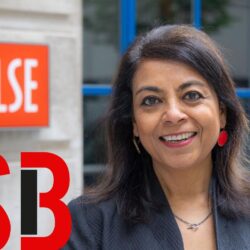
Humanitarian aid organizations often find themselves torn by reasonable expectations – to address a pressing crisis and to show that what they are doing is actually helping. While these might not seem at odds, in practice, says Monika Krause, they often do.
Krause, an assistant professor of sociology at the London School of Economics, is the author of The Good Project: Humanitarian Relief NGOs and the Fragmentation of Reason, an award-winning book from 2014. In her research, she conducted in-depth interviews with “desk officers” across a range of transnational non-governmental organizations (NGO) that respond to emergencies around the world distributing aid to save lives. (“For me,” she tells interviewer David Edmonds in this Social Science Bites podcast, “headquarters themselves were the field.”)
While she found that NGOs were “relatively autonomous,” their donors put pressure on them “to demonstrate results, and that pressure to show evidence, measurable results, may incentivize NGOs to do projects that are relatively easy to do. It certainly encourages NGOs to do kinds of work, and kinds of projects, where the success is more easily measured rather than other ones.”
While they may resemble businesses in some respect – and some use that observation as a pejorative, Krause notes — they don’t distribute aid by purchasing power, as a private sector organization would, but rather by need.
The mechanics of this has meant that NGOs have become more focused on being accountable to the beneficiaries “rather than focus on more abstract and large-scale indicators” such as gross domestic product or greater employment which may ultimately improve the beneficiaries’ ecosystem. It also means, in practice, that NGOs focus on meeting the metrics they set at the beginning of a project, which may not serve the entirety of an affected population in crisis. And so, “beneficiaries can become a means to an end rather than an end in themselves.”
That people outside an NGO feel comfortable critiquing them reflects the unique role that NGOs, as opposed to say private businesses, occupy. “[NGOs] seem to represent or speak for our highest ideals as individuals and as humankind,” Krause says, which in turn can foster a sort of cynicism when the ideals the larger community expects aren’t met.
This tension has always intrigued the researcher, who had earlier won an ESRC Future Research Leaders Award to explore how organizations with values-based missions make decisions on how to deploy resources and who to help. In studying NGOs for The Good Project, “I was interested in the middle space, figuring out exactly how they do their work, how they confront the dilemmas that they must be facing … about what to respond to and what not to respond to.”
Krause came to the London School of Economics in 2016 from Goldsmiths College, and at LSE is co-director of LSE Human Rights, a center for academic research, teaching and critical scholarship on human rights. In addition to her work on the logic of humanitarian aid, she is interested in the history of the social sciences and in social theory. Krause was a Poiesis Fellow at the Institute for Public Knowledge at her alma mater of New York University and a member of the Junior Fellows’ network at the Centre for Interdisciplinary Research at the University of Bielefeld. She was a core fellow at the Helsinki Collegium for Advanced Studies 2016-17.
To download an MP3 of this podcast, right-click HERE and save.
For a complete listing of past Social Science Bites podcasts, click HERE. You can follow Bites on Twitter @socialscibites and David Edmonds @DavidEdmonds100.