If You Like President Trump, You Probably Won’t Wear a Mask
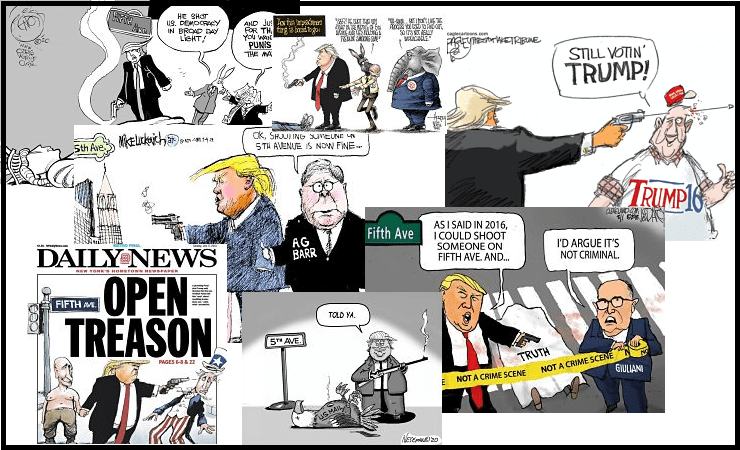
“I could stand in the middle of 5th Avenue and shoot somebody and I wouldn’t lose voters.”
–Donald J. Trump, President of the United states
In 2018, we published an article on the importance of “liking” on employees’ perceptions of their bosses in the Journal of Applied Psychology. Through a series of 10 studies, we demonstrated that “liking” (or what social psychologists call “affect”) accounts for a majority of variance in employees’ ratings of their bosses’ ethical leadership, authentic leadership, transformational leadership and even abusive leadership.
We then began planning a follow-up study which examined the importance of affect on perceptions of various other targets such as colleagues, direct reports and even professors. The hypothesis was that liking is strongly related to one’s evaluation of just about any target (i.e. if I like my professor, I will probably give her high marks on teaching behaviors such as “availability,” “organization,” and “fairness.”).
As we collected data for this study, COVID-19 hit. Management journals put out calls for studies on the effects of COVID-19 in organizations. At the same time, we saw various reports that President Trump was the most divisive leader in American history (Eady, Vaughn & Rottinghaus, 2018; Sprunt & Turner, 2020), with people either loving him or hating him. We thought this was the perfect context to demonstrate our theory.
We decided that the best way to collect information about the relationship between U.S. citizens’ affect toward President Trump and their perceptions of the job he was doing with respect to COVID-19 was to use data from public opinion polls. We conducted a meta-analysis of the findings from 17 polls. To qualify, each poll had to ask about general approval of Trump (which we considered, and later proved, to be a surrogate for liking) and how they felt he was handling the pandemic (i.e. his leadership efficacy).
We extended our hypotheses beyond just the relationship between liking and followers’ perceptions of leadership. We wanted to know: Would liking also impact followers’ actual behaviors: (i.e. hand washing, social distancing, and face mask wearing)?
We found that not only did approval/liking of President Trump strongly, and positively, predict Americans’ approval of his handling of the pandemic, but it also had significant, negative effects on personal protection behaviors. In short, liking Trump was associated with less handwashing, less social distancing and less facemask wearing. We attributed this to Trump’s downplaying of the coronavirus and repeated refusal to wear a facemask.
To make our results even stronger, we collected our own sample of 522 citizens of the U.S. over 18 years of age and replicated the meta-analytic findings. The findings were similar: If you liked Trump, then you approved of his leadership over the COVID-19 pandemic and you were less likely to wash your hands, social distance or wear a mask.
We then added one last twist: We wanted to know if the “cognitive effort” individuals put forth to learn about COVID-19 would impact the relationships between liking and perceptions/behaviors. We suspected that increased knowledge about the coronavirus might weaken the effect of liking on both approval of Trump and use of personal protective behaviors. We found that cognitive effort did indeed reduce the strength of the relationship between liking Trump and approval of his COVID leadership as well as social distancing (i.e. even strong Trump supporters were less likely to approve of his COVID leadership and more likely to social distance). However, it did not impact the relationship between liking Trump and mask-wearing. Strong Trump supporters were just as unlikely to wear masks, regardless of the effort they put into understanding COVID-19. We believe that mask-wearing became politicized, due to Trump’s strong influence on his base and his own, very public, lack of mask-wearing. It may also be attributable to which sources of news Trump supporters and non-supporters selected.
While Trump may be an extreme case, we believe that liking one’s leader can have a significant influence on followers’ perceptions of their leaders’ effectiveness as well as their own behavior.
References
Eady, G., Vaughn, J.S., & Rottinghaus, B. (2018). Comparing Trump to the greatest—and most polarizing—presidents in US history. Brookings, March, 20, 2018.
Sprunt, B., & Turner, C. (2020). White House stumbles over how best to reopen schools, as Trump blasts CDC Guidance. NPR, July 8, 2020.