Watch the Lecture: Like Wildfire – How Climate Justice Should Change Disaster Response
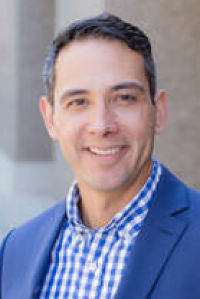
As climate change advances, communities across the United States are adapting to the increased threat of wildfires. Such disasters are expected to become more frequent and severe. In the 2021 Henry and Bryna David lecture, Michael Méndez, assistant professor of environmental planning and policy at the University of California, Irvine, explores why it is crucial to understand how these events amplify existing inequalities, and how to lessen the resulting harms, in particular for the most stigmatized populations, such as undocumented Latino/a and Indigenous migrants.
The National Academy of Sciences’ Division of Behavioral and Social Sciences and Education and Issues in Science and Technology magazine sponsor the annual Henry and Bryna David lecture, which has been endowed to bestow an annual award to a leading researcher who has drawn insights from the behavioral and social sciences to inform public policy. This year’s lecture, presented virtually only, was Méndez’s “Like Wildfire: How Climate Justice Should Change Disaster Response.”
Méndez most recently served as the inaugural James and Mary Pinchot Faculty Fellow in Sustainability Studies and Associate Research Scientist at the Yale School of the Environment. Michael has more than a decade of senior-level experience in the public and private sectors, where he consulted and actively engaged in the policymaking process. This included working for the California State Legislature as a senior consultant, lobbyist, a member of the California State Mining & Geology Board, and as vice chair of the Sacramento City Planning Commission. In 2021, California Governor Gavin Newsom appointed Méndez to the Los Angeles Regional Water Quality Control Board, which regulates water quality for 11 million people.
Méndez’s research on climate-induced disasters and social vulnerability has been awarded a National Science Foundation Early Faculty Career grant, in conjunction with the National Center for Atmospheric Research.
Henry David was a professor at the Lyndon B. Johnson School of Public Affairs at the University of Texas, executive director of the Assembly of Behavioral and Social Sciences at the National Academy of Sciences/National Research Council, Pitt Professor of American History and Institutions at Cambridge University, president of the New School for Social Research, dean of the graduate faculty of political and social sciences at Columbia University, and executive director of the National Manpower Council. Bryna David was also active in public policy, working as an assistant to Eleanor Roosevelt during the 1948 UN General Assembly in Paris, as a scholar in residence at the Rockefeller Center in Bellagio, Italy, and as director of the National Manpower Council.