Watch a Social Scientist Reflect on the Russian Invasion of Ukraine
“It’s very hard,” explains Sir Lawrence Freedman, “to motivate people when they’re going backwards.”
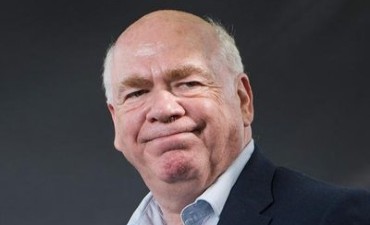
This, details the emeritus professor of war studies at King’s College London, is one of the current impediments affecting the flailing Russian military machine as it continues to try to subjugate its neighbor, Ukraine. Vladimir Putin, as well as the majority of outside observers, underestimated Ukraine’s defensive abilities and grit while overestimating his own nation’s offensive abilities and esprit de corps, the professor says.
Freedman’s remarks were the basis of the latest Social Science Perspectives, a quarterly series of salon-style events in London co-hosted by the Campaign for Social Science, The Conversation, and SAGE Publishing. (SAGE is the parent of Social Science Space.) His introductory statements, made on May 18, are viewable in the video below.
The over- and underestimations seemed reasonable, Freedman implies, given Russia’s strategy and approach to conflict in the 2014 annexation of Crimea and support of breakaway factions in Eastern Ukraine, its supposed mastery of so-called “hybrid” warfare and huge war-making machine, and that for the 69-year-old Putin “this has become the major mobilizing moment for the nation.” But the hype didn’t account for the reality in Ukraine, which for its part “had been thinking about this for a long time.”
“As soon as Ukraine showed resilience,” Freedman says, “you knew the Russian occupation was going to be in trouble.”
At King’s College London, Freedman was professor of war studies from 1982 to 2014 and vice-principal from 2003 to 2013. Before joining King’s he held research appointments at Nuffield College Oxford, the International Institute for Strategic Studies, and the Royal Institute of International Affairs. Elected a Fellow of the British Academy in 1995 and awarded the Commander of the British Empire in 1996, he was appointed official historian of the Falklands Campaign in 1997. In 2003, he was awarded the Knight Commander of St Michael and St George, and in 2009 he was appointed to the official inquiry into Britain and the 2003 Iraq War. He is a fellow of the Academy of Social Sciences.