Putting a Critical Perspective to Use in Management Education
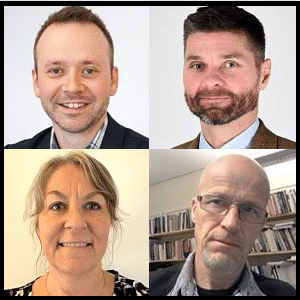
Andreas Wallo, Jason Martin, Gun Sparrhoff, and Henrik Kock (all at Linköping University, Sweden) share the motivation behind their paper, “Balancing “Critique for Improvement” With “Critique for Emancipation,” in the Journal of Management Education, which explores and outlines two types of critical reflection: critique for improvement and critique for emancipation. In their paper, it is argued that managers and leaders enrolled in management education need to be exposed to both critique for improvement and critique for emancipation.
We were motivated to pursue this research because we felt that critical thinking and the importance of having a critical approach were treated too narrowly in the traditional leadership and management literature. In many texts about management that we encountered in our roles as researchers and teachers, critique was either mainly used as a tool to improve efficiency from the perspective of organizational management or to uncover organizational dysfunctions and flaws in management by drawing on critical theory. We thus saw a need to combine these two types of criticism – in the article referred to as “critique for improvement” and “critique for emancipation” – and discuss how they can be used in different types of learning and training activities for managers, leaders, and students. In the article, we tried to not only identify and conceptually frame the phenomena but also present concrete strategies that can be put into real, practical use.
In further extending knowledge on the two concepts proposed in the article, we hope future empirical research will investigate cause-and-effect aspects involving the professionals “at the sharp end.” Teachers and educators in management education, as well as students, need to be extensively involved, not only in data collection but also in problem formulation and analysis of the results. We believe that these stakeholders should be involved very early in any research process to achieve informed problem descriptions and analyses. We, therefore, want to encourage researchers and teachers to adopt a truly collaborative stance when further exploring the issues we have addressed and to utilize both types of critical thinking for guiding constructive management development in their respective research projects, regardless of the problem area, context, or stakeholders.