Jonathan Haskel on Intangibles
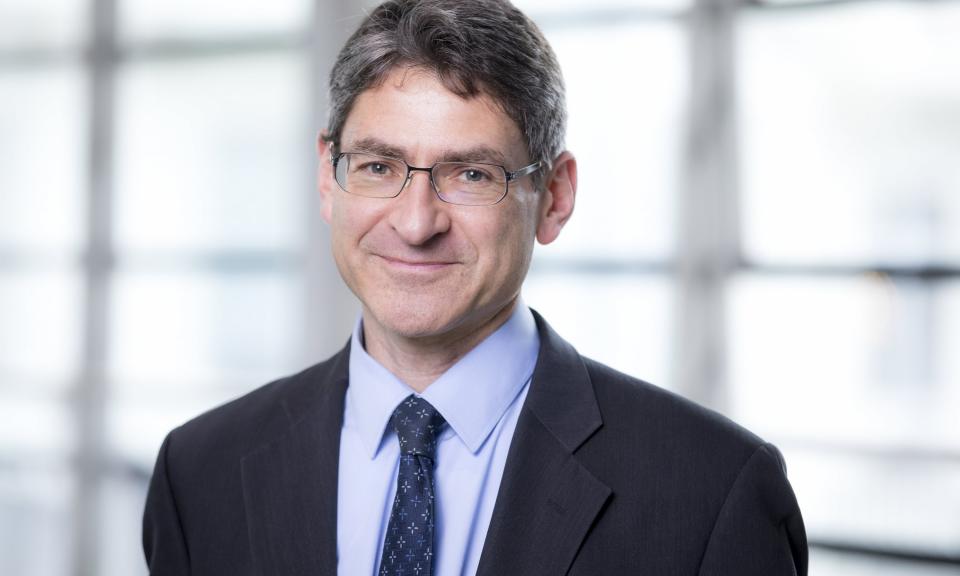
The knowledge economy. Intellectual property. Software. Maybe even bitcoin. All pretty much intangible, and yet all clearly real and genuinely valuable. This is the realm where economist Jonathan Haskel of Imperial College London mints his own non-physical scholarship.
“In the old days,” relates the co-author of Capitalism without Capital: The Rise of the Intangible Economy, “the assets of companies, the sort of secret sauce by which companies would generate their incomes and do their services for which they’re employed for, was very tangible-based. These would be companies with lots of machines, these would be companies with oil tankers, with buildings, with vehicles to transport things around. Nowadays, companies like Google, like Microsoft, like LinkedIn, just look very different.”
And that difference, he explains to interviewer David Edmonds in this Social Science Bites podcast, is knowledge. “What they have is knowledge,” says Haskel, “and it’s knowledge assets, these intangible assets, which these companies are deploying.”
Intangible investments, as you might expect, have different properties than do tangible ones. Haskel dubbed them the four S’s:
- Scale. Once you have a handle on a successful intangible, like software, that can generally scale up without more capital spending;
- Sunk Costs. These are invested costs you can’t get back, such as the costs of developing software;
- Spillovers. Aspects of your intangibles that others can copy or adopt for themselves; and
- Synergies. “If you put all these intangibles together,” he explains, “you get more than the sum of the parts.”
Meanwhile, intangibles help keep modern economies humming – we think. “Accountants and statistical agencies are quite reluctant to measure intangibles because it’s — intangible. It’s a rather difficult thing to get at; these are often goods that aren’t traded from one person to another …”
Part of Haskel’s research effort is to quantify how much investment in intangibles is going on “behind the scenes,” which fits in with other interests of his such as re-engineering how gross domestic product gets measured. Businesses are now spending more on intangibles then on tangibles: Haskel’s work reveals that for every monetary unit companies spend on tangible assets, they spend 1.15 on intangible ones.
In addition to serving as a professor at the Imperial College Business School, Haskel is director of the Doctoral Programme at the Imperial. He is an elected member of the Conference on Research in Income and Wealth and a research associate of the Centre for Economic Policy Research, the Centre for Economic Performance, LSE, and the IZA, Bonn.
Haskel has been a non-executive director of the UK Statistics Authority since 2016 and an external member of the Bank of England’s Monetary Policy Committee since 2019.
To download an MP3 of this podcast, right-click HERE and save.
Join the debate and discuss this episode with fellow listeners on our Multytude conversation. Multytude is a new social media app that aims to make sense of the online conversation. With support from the SAGE Concept Grant, the Multytude team is working to create a new method of qualitative research for social scientists to better understand what people are saying about the big issues of today.
For a complete listing of past Social Science Bites podcasts, click HERE. You can follow Bites on Twitter @socialscibites and David Edmonds @DavidEdmonds100.



























































































Why is there no mention of social capital as an intangible with wonderful regenerative properties? Someone needs to start counting it. Oh wait, they have: countercommunity.com