The International Sociological Association Should Be Ashamed of Its President
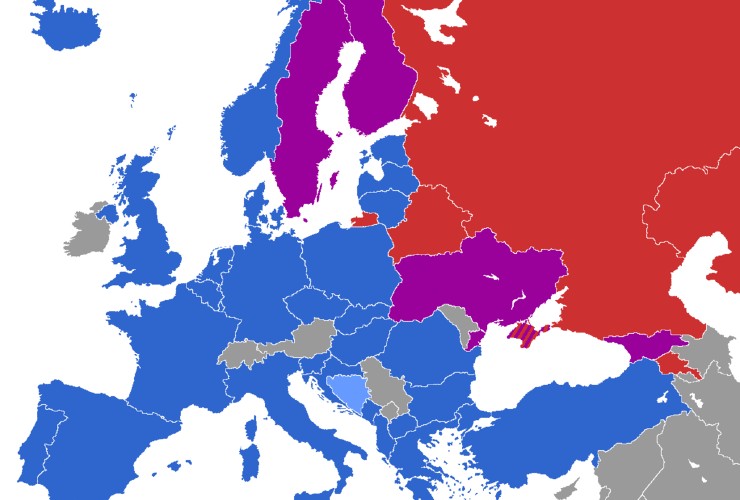
As a member of various International Sociological Association research committees, I have been receiving the latest communication to members from the current president. This opens with some remarks about the continuing war in Ukraine including the statement that “The eastward expansion of NATO is a provocation…”. While this does not lead the president to condone the Russian response, his argument is a general one against war rather than a specific criticism of colonial ambition. At least by implication, the Russian invasion of Ukraine has, in his text, some measure of justification as a response to changes in NATO since the collapse of the Soviet Union.
This is an extraordinary misrepresentation of history, which is wholly inconsistent with the traditions of the ISA. It should be withdrawn at the earliest opportunity.
Firstly, what does the president mean by the “eastward expansion of NATO”? NATO is a voluntary association of nation states for mutual defence. It was certainly conceived in a very different era, when the Soviet threat was palpable, as evidenced by its suppression of the early ventures in democracy in Eastern Europe after World War II. Its military naturally faced east because that was the source of the perceived threat.
When those states were able to re-establish themselves, with varying degrees of success in creating democratic institutions, this was in the shadow of that experience. For some the pain went back much further. Russia had been a colonial power in the Baltic States and Poland since the 18th century, with only occasional episodes of national liberation. Is it surprising that these nations saw an opportunity to take out insurance against a revival of Russian imperialism by joining an association for mutual defence?
NATO has always been clear that it would not accept members where there were active border disputes – which has ruled out a number of Balkan states. It is no different from an insurer refusing coverage of claims that are live at the time of taking out a policy. Russia acquiesced in the process and there were many opportunities for confidence-building and mutually beneficial trade and cultural exchanges. If the Russian state refused the hand of friendship that is not NATO’s responsibility.
NATO’s “eastward expansion” has been a threat only to those whose own insecurities led them to feel threatened. ISA may not have any great love for the richer countries of the world but its president should be capable of telling the difference between mutual aid among sovereign nations and a desire to subject other countries to external domination.
Which brings us to the second point. ISA has a long and generally honourable tradition of anti-colonialism, seeking to identify and challenge all forms of global oppression. The Russian invasion of Ukraine should not be condemned just because ISA, rightly, prefers to promote the peaceful resolution of international disputes. It should be called out for what it is – 18th- or 19th-century colonialism reinvented for the 21st century.
The invasion of Ukraine continues a project begun under Catherine the Great that exactly parallels the colonization of Africa, Asia or the Americas by other European powers. It seeks to erase national identity, in the same way as colonists did with indigenous peoples in Canada, Australia and elsewhere. In Russian-occupied areas, the Ukrainian language is being suppressed, Russian currency introduced, Russian passports issued and Russian legal and political institutions imposed by force of arms. The defence of “Russian settlers” in Donbas and Crimea is the same justification that the United States used to seize territory from Mexico or the British used to justify the Boer Wars in South Africa. Throughout its existence, ISA has regarded such actions and excuses for imperialism as unacceptable.
The struggle for independence in Ukraine is unlikely to be affected by anything the ISA says or does. However, the position taken by the ISA president is inconsistent with its history and values, offensive to many of its members, and does little for its credibility as a global voice for the discipline. It is an embarrassment and should be retracted.