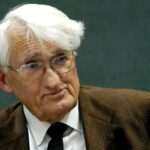
Loet Leydesdorff, 1948-2023: Tackling the Thickets of Innovation and Scientometrics
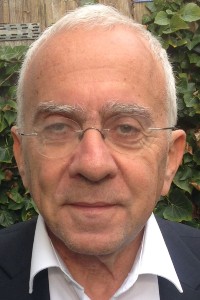
Loet Leydesdorff, a sociologist and communications scholar who found academic fame for his work in developing scientometrics and the “triple helix” model of innovation, died on March 11, 2023, in Amsterdam. He was 74, and had been diagnosed with Parkinson’s disease in 2014.
The “triple helix” which Leydesdorff developed with Henry Etzkowitz describes a model of knowledge production arising from a “complex network of local interactions between universities, industry, and government”:
The resulting innovation networking nestles within what the two considered a “second academic revolution.” Thanks in part to Leydesdorff’s prolific writing output, this proved a widely recognized way to interpret science and technology studies.
Another major contribution to the meta study of the research enterprise, often in an interdisciplinary context, arose from Leydesdorff’s work in the field of scientometrics, which measures and analyzes the literature of research to provide insights above and beyond what the research outputs themselves tell us. “Authors cannot be reduced to texts and texts cannot be reduced to authors,” he would write in explanation of his studies. “Cognitions emerge and can be recognized in the development of complex networks of texts and authors operating on one another. The study of these multivariate networks over time provides the subject of ‘scientometrics.’ How can one describe and/or measure the sciences so that the cognitive content can be made visible?”
Much of this is fleshed out in his 2000 book, The Challenge of Scientometrics. Sometimes his observations shed an awkward light on the research enterprise, as a passage from a paper in Science, Technology, & Human Values he co-authored with Olga Amsterdamska demonstrates:
In 2003 he received the Derek de Solla Price Memorial Medal from the International Society for scientometrics and infometrics.
Louis André “Loet” Leydesdorff was born on August 21, 1948 in Batavia, part of what was then the Dutch Indies, to Albert Leydesdorff and Celine (Lientje)-van Praag. Albert, a land judge in the colonial government, and Celine had both been interned by the invading Japanese forces in 1942, while other members of their extended family remaining in the Netherlands died in the Holocaust. That loss remained with him forever; as he would write in 2016, “[His family members] tried to flee, commit suicide, etc., but in the end they were deported and killed. I don’t need to tell you that story. We can only think about this in collective images insofar as we have no memories.”
His higher education initially saw Leydesdorff focus on physical science, earning a bachelor’s in chemistry in 1968, working as a professor of chemical technology at Amsterdam’s Gerrit Rietveld Academie the next year, and receiving a master’s in biochemistry in 1972. He started to examine the nexus of science and society, and in 1972 took a position at the University of Amsterdam’s philosophy department. Albeit with many outside connections and appointments, he would remain at Amsterdam throughout his life, joining the Department of Science and Technology Dynamics as senior lecturer in 1980 and receiving a Ph.D. in sociology there in 1983. Starting in 2000, he also served as a professor at the university’s Amsterdam School of Communications Research.
Leydesdorff also had appointments at the Science and Technology Policy Research Unit of the University of Sussex, the Institute of Scientific and Technical Information of China, Zhejiang University, and the School of Management, Birkbeck, University of London.
As noted earlier, Leydesdorff published widely, and was named the 34th most-cited social scientist last year. In addition to The Challenge of Scientometrics, his works included The Evolutionary Dynamics of Discursive Knowledge, A Sociological Theory of Communication, and The Knowledge-Based Economy. Over the last 35 years he has been on the editorial boards of at least 25 different journals.
He was named a fellow of the Virtual Knowledge Studio of the Royal Netherlands Academy of Arts and Sciences in 2006 and of the Science and Technology Policy Research of the University of Sussex in 2007. He received the Social Impact Award from the American Society for Information Science and Technology and at the time of his death was president of the Dutch Systems Group society, which had cofounded the International Federation for Systems Research.