


Could Distributed Peer Review Better Decide Grant Funding?
The landscape of academic grant funding is notoriously competitive and plagued by lengthy, bureaucratic processes, exacerbated by difficulties in finding willing reviewers. Distributed […]

What is the best strategy for finding someone missing in the wilderness? It’s complicated, but the method known as ‘Lost Person Behavior’ seems to offers some hope.

Large projects co-owned by several organizations with separate, perhaps competing, interests and values are characterized by complexity and are not served well […]

The President’s Management Agenda Learning Agenda: Public Participation & Community Engagement Evidence Challenge is dedicated to forming a strategic, evidence-based plan that federal agencies and external researchers can use to solve big problems.

To me, one of the most surprising things about bereavement is its complexity and that it can last far longer than expected. This is challenging to navigate at work where, unless it was a coworker’s death, no one else’s world has changed.

Having experienced firsthand the transformational power of education, the authors wanted to shed light on the contemporary challenges faced by regional and remote university students.
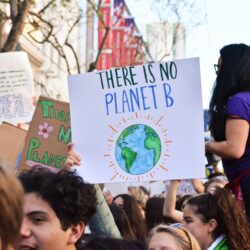
To feel able to contribute to climate action, researchers say they need to know what actions to take, how their institutions will support them and space in their workloads to do it.

In this post, Jun Xia, Fiona Kun Yao, Xiaoli Yin, Xinran Wang, and Zhouyu Lin detail their research from their new paper, “How Do Political and Non-Political Ties Affect Corporate Regulatory Participation? A Regulatory Capture Perspective,” appearing in Business & Society.

Robert Dingwall looks at the once dominant role that miasmatic theory had in public health interventions and public policy.
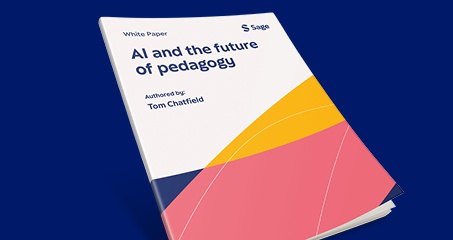
When people trust science, they can make better decisions, follow helpful rules and work together on big problems like health, climate change […] Do you know a social or behavioral science researcher whose work resonates across disciplines and which has made a significant impact in […] Please note: this contest has now closed. The winner will be contacted in due course. This November, Sage and Overton invite you to share the unexpected […] The latest generation of artificial intelligence models is sharper and smoother, producing polished text with fewer errors and hallucinations. As a philosophy […] In a new white paper by Tom Chatfield, the philosopher of tech and critical thinking outlines a practical roadmap for integrating artificial intelligence into […] Distance learning far precedes the digital age. Before online courses, people relied on print materials (and later radio and other technologies) to […]
EXPLORE
Impact

There Is a Cost to Being Honest About Science
READ MORE
Outstanding Social and Behavioral Scientists Sought for Sage-CASBS Award
READ MORE
![Share Your Most Surprising Policy Citation for Chance to Win $500 [Closed]](https://www.socialsciencespace.com/wp-content/themes/conferpress/images/default_thumbnail-new-border.jpg "Share Your Most Surprising Policy Citation for Chance to Win $500 [Closed]")
Share Your Most Surprising Policy Citation for Chance to Win $500 [Closed]
READ MORE
Innovation

An AI Authorship Protocol Aims to Sharpen a Sometimes-Fuzzy Line
READ MORE

A Box Unlocked, Not A Box Ticked: Tom Chatfield on AI and Pedagogy
READ MORE

AI Gaming of Some Online Courses Threatens Their Credibility
READ MORE