Pope Francis, Human Dignity, and the Right to Stay, Migrate and Return
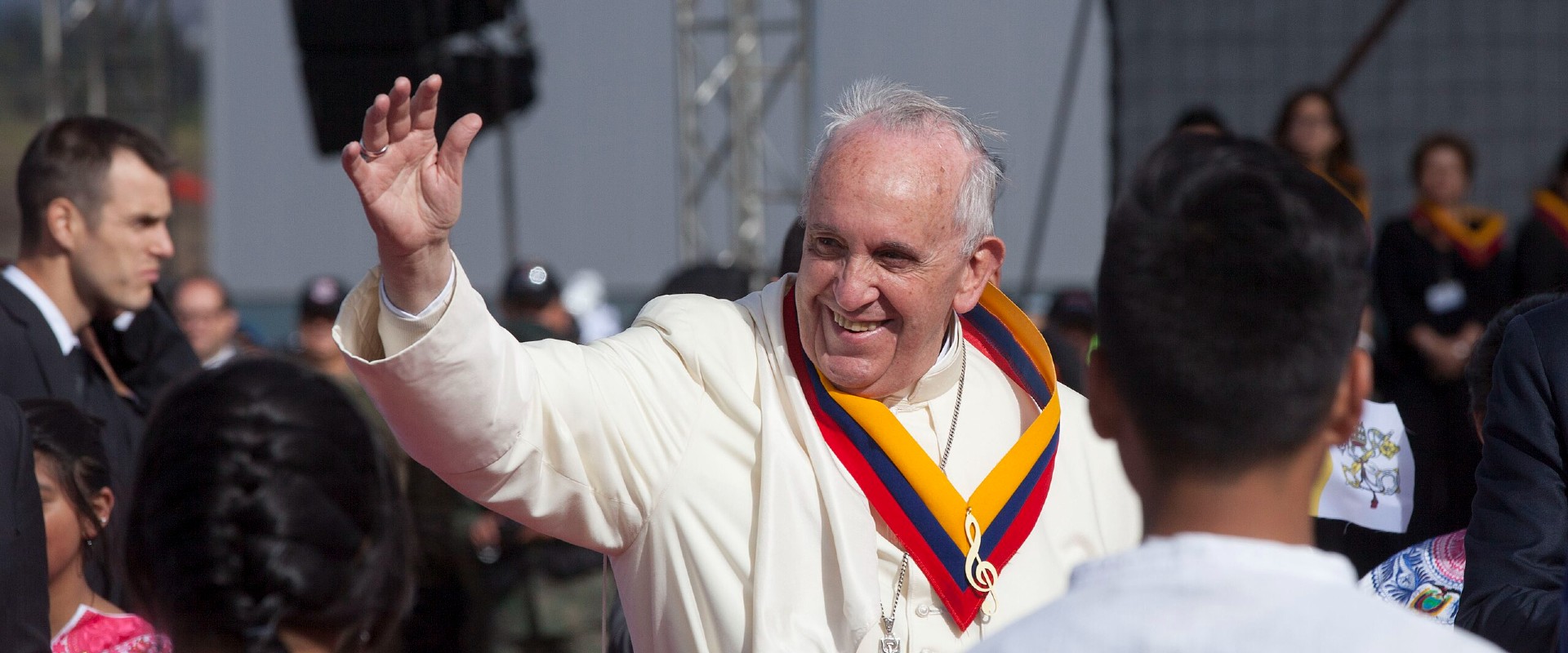
Pope Francis devoted his Message for World Day of Migrants and Refugees in 2023 to the “right” or “freedom” to stay or migrate. A recent special edition of 12 papers in the Journal on Migration and Human Security examines this concept in states with “diverse, fluid and complex” migration situations and forced migrant populations. The volume summarizes seminal human rights documents, United Nations’ Covenants, documents and processes, and academic literature that supports aspects of the right to stay, migrate and return. Yet Pope Francis – who was first and foremost a pastor, rather than an academic or policymaker – articulated this concept in a particularly compelling way in light of his own religious tradition.
To Francis, the freedom to stay – or not to have to emigrate – depended largely on states establishing the minimal conditions (the “common good”) that allow all of their residents to flourish or at the very least subsist, and thus remain at home. Yet he recognized that states regularly fail to meet this responsibility – sometimes for understandable reasons (poverty, instability, and shocks of different kinds) and often for inexcusable ones (predatory and parasitic behavior). In these circumstances, when individuals find it impossible to stay, they have a right to migrate legally and securely to a better situation. Francis also repeatedly spoke of the “shared responsibility” to welcome, protect, promote and integrate the displaced. The concept of “subsidiarity” (akin to devolution) plays an important role in his vision. It holds that consequential decisions should be made by those closest to them and thus in the best position to make them – in this case potential migrants, displaced persons, and their families.
To Francis then, the interrelated options – staying, migrating, returning – underscored the obligations of states, and the reality of individual decision-making, however circumscribed and painful the options. From the earliest days of his pontificate, he decried the trauma of uprooting and the perils of irregular migration, and aspired to a world in which “in every case migration would be the fruit of a free decision.”
Francis offered a vision of forced migrants rooted in the Catholic Church’s well-developed body of moral teaching on social issues, and its extensive knowledge and long experience of migration. This tradition stretches back to God’s injunction to the Jewish people to love and “treat the alien no differently than the natives born among you” (Leviticus 19:33-34). It encompasses the dangerous journey of Mary and Joseph to Bethlehem, where God migrates to humanity, and the Holy Family’s subsequent flight to Egypt (like today’s refugees) to escape an evil ruler (Matthew 2:13-15). Jesus identified with the least, including the stranger (Matthew 25:31-46). This means, as Pope Francis put it, “the encounter with the migrant, as with every brother and sister in need” is an encounter with Christ.
Francis cared deeply about the ability of persons in difficult circumstances to exercise their agency. He reminded the world of the fundamental importance of the right to migrate, as evidenced most clearly by people who cannot migrate – genocide victims, slaves, trafficked persons, political prisoners, the starving, the indigent, the imprisoned, the detained, the kidnapped, and persons in protracted (forever) refugee situations. He recognized the need for states to protect their residents and to regulate migration. Yet he also believed that public policies should be built on “the truth about the equal dignity of every human being.” He brought an international perspective to forced migration, whose causes (war, climate change, disaster) and potential consequences (violence, marginalization, exclusion) cannot be effectively addressed by unilateral policies, or by enforcement strategies alone. Time and again, such approaches have led to migrant deaths and tragedy. In Francis’ words, policies that fail to acknowledge “the equal dignity of every human being,” begin “badly and will end badly.” He believed in mercy and dignity, not scapegoating desperate persons.
Most migrants, he knew, sought to exercise their “freedom” to pursue a “good,” such as family life, protection, a living, or religious freedom. He believed in freedom rooted in “the dignity of every human being, without exception,” the freedom for a better life at home or somewhere else. He saw the uprooted as the “children of God.”
Contributors to the special edition – religious leaders, theologians, political dissidents, peace activists, development experts, foundation heads, community organizers, scholars, and humanitarian actors – persuasively deploy his framework to critique the policies and practices of supranational agencies, humanitarian and development agencies, and states as diverse as Lebanon, Colombia, Nicaragua, Honduras, Guatemala, El Salvador, the United States, and European states. The authors also use the right to stay, migrate, and return to explain the decisions and challenges facing diverse migrant populations at every stage of the migration process. It is hoped that current and future generations of leaders will learn from Francis’s witness and teaching as well, and live up to his call to chart a better course – one grounded in a commitment to human dignity and agency – for refugees, migrants, displaced persons, their communities, and the world.