 International Debate
 Closing the Gap: Research, Representation and Women’s History at Sage
A March 2026 report from UN Women offers a sobering reality check on women’s progress: across professional, legal and academic fields, the fight for gender equality has stalled. According to a report published by the UN Secretary General, there is still not a single country in the world that has achieved full legal equality for women. Globally, women hold 64% of the legal rights of men — and that discouraging average masks significant disparities, with many countries lagging far behind. Growing backlash against gender equality has accelerated violations of women’s rights globally, with 44% of countries still not mandating equal pay for work of equal value.
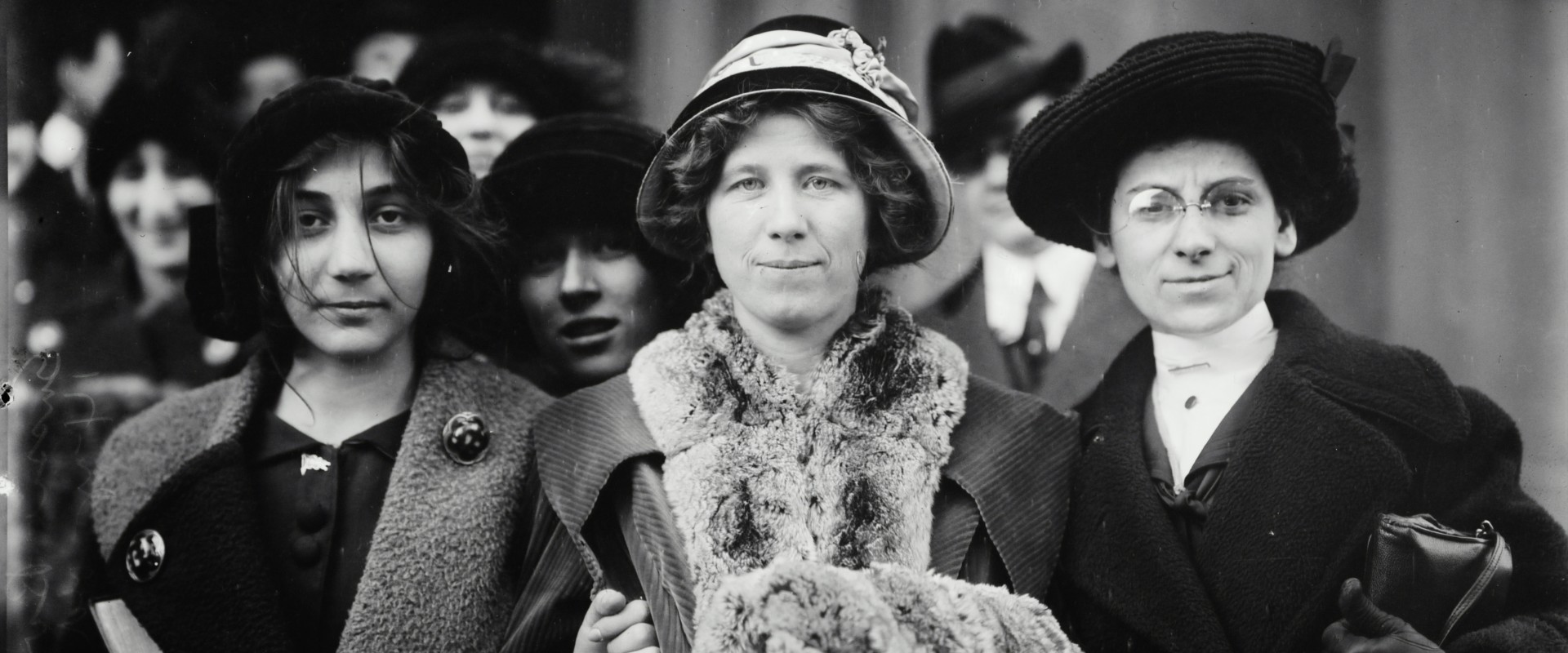
And yet Women’s History Month itself is a testament to how much has changed, even though it may feel like progress has plateaued. In 1978, an American group, the National Women’s History Alliance created the first Women’s History Week with the goal of making women’s history more mainstream after noticing an absence of women in educational texts. (The U.S. Congress resolved in 1987 that the weeklong commemoration would become a monthlong event celebrated each March.) What began as an effort to fill the gaps in history books has since grown into a global conversation that researchers, publishers and institutions like Sage are working to sustain.
Sally Curtis, a research affiliate with the Global Institute for Women’s Leadership, said that she believes progress is being made, but very slowly. Her research on gender pay gaps shows how even though women today have more freedom and choices, inequality is still woven into organizational systems, both professionally and academically.
“Looking only at people in formal employment, women earned on average 78 cents for every dollar earned by men,” Curtis said, “and these gaps are often even wider for mothers and for women affected by intersecting forms of disadvantage, including racism.”
Understanding where those gaps come from, however, is where the real work begins. “Employer gender pay gaps matter because national and global statistics tell us how big the problem is,” Curtis outlined, “but employer gender pay gaps tell us where inequality is being produced and where change can happen. In other words, they move us away from an approach focused on ‘fixing women’ and towards an approach focused on making workplace systems fairer.”
Here at Sage, one of the world’s leading academic publishers and the parent of Social Science Space, the work of bridging gender gaps extends well beyond the month of March.
Martha Avtandilian, associate director of Social Sciences Journals, said Sage publishers and editors understand that the key to a successful journal is meeting the needs of the research community. For journals covering gender and women’s studies, she said, that need has never felt more urgent.
“Knowledge is inherently valuable, and that makes gender and women’s studies uniquely important. The research of this field is loam for any healthier, more informed society, but especially the one of this very moment.”
Sage, founded in 1965 by fledgling entrepreneur Sara Miller McCune, has been committed to independent publishing and supporting quality research, especially in the social and behavioral sciences, in the subsequent 60 years. But at a time when diversity statements are easy to make and harder to keep, Sage has worked to back those commitments with measurable results. What began as Miller McCune’s one-woman operation in a New York apartment is now employs over 2,000 people globally.
According to the company’s 2025 Independence with Impact Report, 53% of its vice president roles are held by women, up from 47% in 2022 — a shift the company attributes to intentional, measurable commitments to diversity, equity and inclusion (DEI) made in 2020.
Liz Thornton, vice president of sales enablement for the U.S. College division at Sage, said seeing that growth felt incredibly meaningful to her both professionally and personally.
“Seeing that 53%, when I saw that on the report, it actually was a clear sign for me of progress that we’ve made,” Thornton said. For her, as a woman of color in a vice-presidential role, this felt “really encouraging and affirming that Sage has been intentional.”
But she doesn’t think this shift happened recently. She traces it back to the company’s founding — to the values Miller McCune embedded in Sage from the very beginning.
“Sara, I mean, she brings the culture here, right? She started the company young, vibrant, wanting diverse voices to be heard. It permeates down to the CEO who cares about inclusion and hearing diverse voices and it just comes down through the leadership throughout.”
For Thornton, Women’s History Month isn’t just a reflection on the past — it’s something she has lived. Much of her growth at Sage, she said, came from women who saw potential in her before she fully saw it in herself.
“Their perspectives, their encouragement, their honest feedback, all of that really helped build confidence, helped build clarity and really helped get me to progress into the senior leadership role that I am in today.”
But representation internally is only part of the equation. In order to drive real change, research must reach people outside of academia. And that’s not automatic. Lorna Notsch, a digital accessibility specialist at Sage, said that research usually comes with a lot of barriers that can keep it isolated — and that isolation has real consequences, particularly for the women and communities the research is meant to serve.
“There’s a cost factor. And then there’s also this sort of insider mentality, I think, in a lot of areas — jargon and terminology that’s very off-putting to the general public. They may not have that insider knowledge, so it’s a little club.”
Breaking down those barriers, Notsch said, requires more than good intentions. It requires rethinking how research is packaged, priced and presented from the ground up, which Sage has done.
“Sage open access journals — anybody can go into those,” Notsch said. “You don’t need a subscription, you don’t need anything special to access that.” Such work, Notsch said, is bigger than any one month — not just celebrating how far women have come, but refusing to look away from how far there is still to go.
For Thornton, that means staying aware even when progress feels certain.
“Even though there’s been pressure to not talk about DEI as much as there was back then,” Thornton said, “Sage is still doing the work and cares about it.”