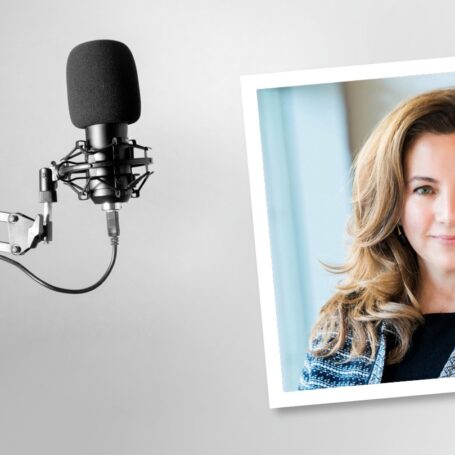
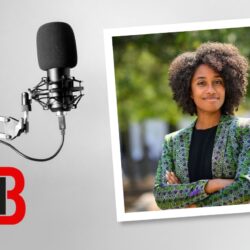
Celia Heyes on Cognitive Gadgets

LISTEN TO CELIA HEYES NOW!
How did humans diverge so markedly from animals? Apart from physical things like our “physical peculiarities,” as experimental psychologist Celia Heyes puts it, or our fine motor control, there’s something even more fundamentally – and cognitively — different.
“I suppose at the broadest level,” Heyes tells interviewer David Edmonds in this Social Science Bites podcast, “we differ from animals because we are so ultra-social, so intensely cooperative. And as a result, we’ve transformed our environments, for good or ill, more radically than any other species through things like agriculture, technology, science, but also, law, trade to the point of economies and finance, fine arts, sports, all of these things.”
Heyes, a senior research fellow in theoretical life sciences at All Souls College, University of Oxford, argues that we’ve evolved those differences, or “innate modules.” That may sound like evolutionary psychology, which suggests that many of these traits are pre-coded into humans — “we get them for free,” as Heyes translates — and therefore are minimally dependent on what we experience in childhood. While Heyes appreciates the evolutionary aspect of natural selection and agrees there is some sort of genetic starter kit,” but she says the locus of evolution is not genetic but cultural.
She points to things like cross-cultural differences in beliefs and behavior or the ability to read, which hasn’t had time to be genetically encoded (even if it can be observed lighting up only certain parts of the brain) but it can have evolved culturally.
Heyes’ research and theories place her all over the academic map, but she describes herself as “part biologist, part philosopher, but I am first and foremost a psychologist.” A fellow of the British Academy and president of the Experimental Psychology Society, her latest book is the brand new Cognitive Gadgets: The Cultural Evolution of Thinking from Harvard University Press.
To download an MP3 of this podcast, right-click HERE and save.
***
For a complete listing of past Social Science Bites podcasts, click HERE. You can follow Bites on Twitter @socialscibites and David Edmonds @DavidEdmonds100.