Daniel Yon on the Brain as Scientist
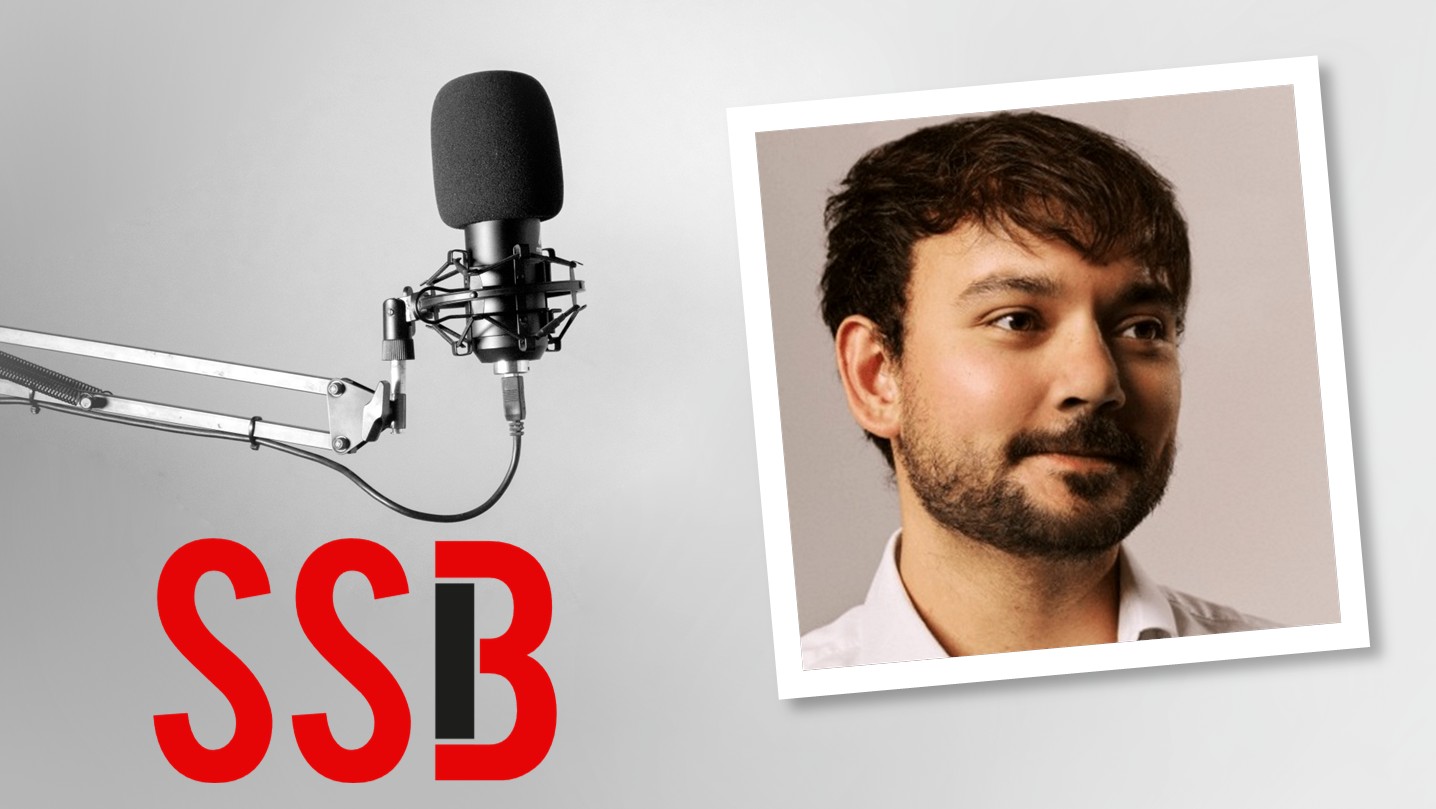
The human brain works very hard behind the scenes even in the most mundane aspects of daily life, like enjoying a nice day or determining the meaning of chit-chat with a friend. Ferreting out the basis and structures of our brain’s labor is the domain of Daniel Yon, a psychologist and neuroscientists and director of the Uncertainty Lab at Birkbeck, University of London.
In this Social Science Bites podcast, Yon – author of the 2025 book A Trick of the Mind: How the Brain Invents Your Reality — details for interviewer David Edmonds why he feels that just as science itself represents a solid – but not “bullet-proof” way of interpreting the natural world, science also well describes how the brain itself does the same.
“I think that at the heart of what I think science and the brain share is this preoccupation with building theories and models based on the data that you’ve gathered and using those theories to make sense of the world around you. That’s a very powerful way to make sense of things,” he explains, before adding the caveat, “but it also means that once you start to build your theories and paradigms, they can become the filter and the lens through which everything else gets seen.”
Yon’s scholarship has earned him a number of honors, such as the Experimental Psychology Society’s EPS Prize and the Janet Taylor Spence Award from the Association for Psychological Science. He has also been named a Rising Star by the Cognitive Neuroscience Society and received a mid-career fellowship by the British Academy.
To download an MP3 of this podcast, right-click on the link. The transcript of the conversation appears below.
David Edmonds: We have senses that facilitate our understanding of the external world, smell, touch, taste, sound, sight, but these sources of information alone are insufficient. At least that’s the argument of neuroscientist and psychologist Daniel Yon, author of A Trick of the Mind. What we need, too, are models, theories that allow us to filter and process this information.
Daniel Yon, welcome to Social Science Bites.
Daniel Yon: Thank you very much. It’s a pleasure to be here.
David Edmonds: You study the brain. Before we get going with the topic we’re going to be talking about today, can you tell me whether you regard yourself as a scientist or social scientist?
Daniel Yon: Oh, that’s a tricky one. I’d like to think that they’re not completely incompatible. I feel spiritually as if I’m a social scientist, and I think what psychology and the kind of cognitive neuroscience I do shares with the other social sciences is this preoccupation with trying to understand quite complicated phenomena that are definitely real parts of nature that can be really difficult to get behind the surface on without the grip and precision that the hard sciences might have. So I think I have a lot in common with a lot of social scientists.
David Edmonds: So today’s topic is going to be the brain as scientist. Tell me, what the general thesis is in very broad terms.
Daniel Yon: Well, neuroscientists, for a long time, have been trying to come up with a way to describe what the mind and the brain does, and in particular to try and explain what single principle might explain both what makes our mind such impressive feats, but also can explain some of the biases and tricks that our mind might play on us. So, I think when I describe the brain as being like a scientist, it’s intended kind of as both a compliment and an insult. I think that science might be the best way that we’ve come up with to try and understand the natural world, but it’s also not bullet-proof. I think that at the heart of what I think science and the brain share is this preoccupation with building theories and models based on the data that you’ve gathered and using those theories to make sense of the world around you. That’s a very powerful way to make sense of things, but it also means that once you start to build your theories and paradigms, they can become the filter and the lens through which everything else gets seen.
David Edmonds: So, let’s get into the weeds of this. The great 20th century philosopher of science and political theorist, Viennese-born Karl Popper, has a schema where he talks about the world being divided into three types: there’s stuff, there’s things, there’s the mind, and there’s the ideas. Talk about just the world of things. When I look at the world, I see the world through my eyes. In what sense am I acting as a scientist? In what sense am I bringing theory to what I see?
Daniel Yon: Well, I think if you think about your brain as being a bit like a skull-bound scientist, you can think that really you’re somewhat sealed off from the outside world. You have, you know, these eyes poking out of your skull, and what they’re doing for you is they’re taking measurements that are being kind of sent back for analysis. I think that it’s quite similar to the way that a scientist might take their measurements of some aspect of the natural world they care about. They can sample this information, but the information on its own is somewhat meaningless. This is a point that was made by philosophers like Thomas Kuhn, that you need to be trained as a scientist to interpret what the measurements mean, and you need to have the relevant kinds of background knowledge to make sense of them.
I think that’s precisely what happens as you look around this room. You’re taking in this information, but the information itself is ambiguous and incomplete, and you need your own paradigm to make sense of it.
David Edmonds: That’s perception. The same is true of sound. You’ve got this lovely example of a sentence, “We’ll meet at the bank.” Explain how we need theory to understand that. I mean, listeners listening to that “We’ll meet at the bank,” they’ll seem to understand it straight away. In what sense are they bringing theory to that sentence?
Daniel Yon: So it might seem a bit strange, even to begin with, that a sentence like “We’ll meet at the bank” doesn’t, on the surface, feel at all ambiguous at all, but that’s partly because you are only really in touch with the output of that theorizing process. It’s all really happening under the hood. If you think about the sounds that are kind of coming through your speaker now, when I say “We’ll meet at the bank,” there’s actually various kinds of ambiguity and indeterminacy in what I’m saying, so something like “we’ll meet” could be the kind of common “we will meet,” but that sounds exactly phonologically the same as if I was talking about a round piece of flesh I might want to consume for dinner, a wheel of meat. And you are able to make sense of that. Is not because the things that I’m saying are clear, but because you take that ambiguous information and you pass it through a kind of plausible theory, a plausible hypothesis, about what I’m going to be saying.
The same is true of different kinds of ambiguity in that sentence, even if you have things that are phonologically clear cut, like the word “bank,” there’s still a sort of semantic ambiguity there about whether I’m going to meet you at a bank that you can cash a check, or I guess you can’t really do that anymore, or a bank that might be by a sort of stream of running water. Nonetheless, it doesn’t really take much for you to come to the right conclusion, but that’s because your brain’s constructing the most likely interpretation of the signals that are coming towards you at any given moment.
David Edmonds: So we’ll meet at the bank. That’s just a stream of sound, and in fact, we’re only able to divide up that stream of sound because we’re bringing to that auditory signal, we’re bringing the vocabulary and a sense of meaning, and working out what you mean by those individual words.
Daniel Yon: Yeah, that’s probably part of it, that’s even trickier to get your head around from your personal experience. But even if I say a sentence like “we’ll meet at the bank,” you probably can separate that and segregate it into lots of discrete chunks of sound, but when it comes out of my mouth, if we were to look at this audio file later, there isn’t any space in the air. There’s no dead time when I say “we’ll meet at the bank.” There’s no pause. So, the fact that you can even do that initial segmentation to the words requires your brain to, in some sense, hallucinate the right pauses to put the gaps where they should be, according to the linguistic knowledge that you’ve developed. There’s very kind of crystallized theories you have.
David Edmonds: When I bring a theory to the world, I may be more or less confident about whether that theory is right. You talk about something called the Matthew effect. Can you describe what that is and its relevance here?
Daniel Yon: So, the Matthew effect, which is in a circuitous way connected to Matthew the Evangelist, is this idea that the rich basically get richer, so it’s something which sociologists have managed to find in various different domains, where initial early success can become a sort of ratchet for even more success in the future. You have to be pretty successful, say, to get your album in the top 10 of the chart, so you have to be pretty successful to have a novel that becomes a best seller, but once you get these markers of success, then it becomes even easier to achieve greater and greater success afterwards. There’s this kind of gravitational pull of the glory,
David Edmonds: There’s a virtuous circle, as it were. Your first success will lead to future success.
Daniel Yon: Exactly.
David Edmonds: And what’s the relevance of the Matthew effect to your theory of how our brains interact with the world.
Daniel Yon: I think that it’s perhaps we move away from thinking about the role of theories and understanding that material world of stuff, and more towards thinking about the roles that these theories play as we try to understand other people’s minds and our own. So in the same way that the external world is a very ambiguous and indeterminate place, it’s also the case that we’re somewhat alienated from our own minds. Introspection isn’t perfect. You can’t really work out precisely how your own mind works, what your own talents and abilities are, just through direct introspection. I mean, if you could, you wouldn’t need psychologists and neuroscientists like me to run studies to find out how thinking really happens. But because you have this kind of problem of self-knowledge, this problem of trying to make sense of what you’re really like through the noise of introspection, your brain likewise has to come up with a theory of who you are and the kinds of abilities you may or may not have, and so I think that this kind of theory-building instinct that your mind has when it’s turned inwards can create various kinds of either optimistic or pessimistic theories about what you yourself can achieve.
David Edmonds: So, if you have that first very successful album or that first very successful novel, possibly you’ll overestimate your abilities.
Daniel Yon: Well, overestimate might be unfair. You might genuinely be good, but the key thing I suppose would be that you take the success or the failure as evidence about what you’re really like. It’s very difficult to work out, have you been lucky or are you good?
So, there’s some evidence for this kind of rich getting richer process happening among scientists. There was one nice study that was done by the Dutch Research Council, which looked at the careers of different scientists who were roughly as good as each other, had roughly similarly good ideas, but where, in the first grant that they applied for, some by the skin of their teeth were funded, and others just missed out. So we can be pretty confident that these scientists are pretty comparable in their kind of early career potential, but we see that those who were initially successful, they end up gaining even more and more funding from the same and other funders in the future, and correspondingly they have a more sort of glittering career. You can think of that happening because the initial success, at least in part, builds into a model of how good, you are, and it creates a sense that it’s worth you trying.
David Edmonds: Let’s talk about those models, because Popper has this theory that science is about setting up predictions, and if the predictions don’t come true, then the theory is falsified, and you, you abandon the theory. But of course that’s not how science works, because sometimes you don’t abandon the theory. You think that the particular case, which seems to contradict the theory, is wrong or inappropriate, or something’s gone wrong with the measurement. So, water boils at 100 degrees centigrade. We know that if we test the boiling point of water, and here it only boils at 99 degrees, we don’t think the theory is wrong. We think there’s something to do with the measurement. How do we know when to stick to the theory and when to abandon the theory because the individual cases seem to contradict it.
Daniel Yon: So, when psychologists and neuroscientists think about this, exactly as you say, they don’t think that it’s a good idea simply to change your mind at the first discrepant piece of information. If you were doing that, you’d be constantly darting between different paradigms and hypotheses, just because of the noise and stochasticity in the world around you. The kind of solution that cognitive scientists come up with really is to think that we should engage in what’s called meta learning. It maybe sounds a bit complicated, but the idea behind sort of meta learning is rather simple, it’s just that you learn how much to learn, you learn under what circumstances should you stick with your existing theories, and when you should be open to changing your mind.
The essence of what is supposed to guide meta learning is your sense of how stable or how volatile the world around you seems. You can think of this as being a bit like the case you gave there, about the boiling water. There are some things which are so predictably stably true, you can have high confidence that this is a relatively fixed feature of the world and of our knowledge, whereas other things might be more up for grabs, there might be more of a sense of change and uncertainty. So in the scientific case, it takes this sense that old truths might not be as reliable before a new paradigm can come and sweep them away. I think exactly the same thing happens in our minds and our brains. So, if we look behind, say, the neuroscience of this sort of meta learning, we can find there are specific circuits that are engaged in tracking how predictable or how volatile the world around us seems, and they use that to control in a pretty global way how flexible our learning and decision making is.
David Edmonds: Is there a right answer to when one should abandon the theory? I mean, how many individual cases that contradict the theory are needed before we should abandon the theory? Presumably this will vary from individual to individual. Some individuals will hang on to the theory, whereas others will be quick to abandon it and adopt a new way of perceiving the world.
Daniel Yon: You’re completely right there. There are ways that you can work this out in more controlled, toy computational situations, where you would say what you’re describing there is someone’s learning rate. It’s how much you take in the new information and use it to kind of penetrate into what you think about a particular situation.
David Edmonds: Give me an example of how this is tested.
Daniel Yon: So, if you were to take part in a typical learning experiment, what you might be doing is, say, getting people to play really quite a simple game, a game like hide-and-seek. So, you might give them a couple of hiding places where you’re going to hide a small amount of money, and you begin by having the money hidden predictably under, say, the green square rather than the red one. And if you do this, what you can find is that people can form these hypotheses on the fly about which particular place tends to have the money. It’s a useful kind of prediction theory for you to make, but the trick the scientist plays over the course of the experiment, they will change where the hiding place is, the good place with the cash, and they can change that rate either pretty often, making it a more volatile and unpredictable world, or they can change it much less frequently, so there are more consistent patches where one option is good. You can create environments on the fly where people don’t begin with any particular initial expectations, but they can quickly form a sense of how reliable and how unreliable the world is. And if you do this, what you can find says that when people are exposed to this more variable environment, they will switch much more quickly in the face of a discrepancy. So if you’ve learned that the world is a less predictable place, you need less evidence before you can effectively jump to a new conclusion.
David Edmonds: That seems obviously totally rational, but is there a variation in the population about how quickly people adapt to recognizing that the world is volatile?
Daniel Yon: There is variability, and I think that part of the problem is that the way that the system works in the brain is pretty global. So the sense that you have of things being stable or volatile isn’t really compartmentalized. You can have volatility in one aspect of your cognition and behavior that begins to sort of bleed into the way you think and decide about lots of different things.
One example where this became quite salient was in research that was done during the COVID-19 pandemic, where people who were going through a surprising event of governments locking down and having state troopers march down the street, telling you to stay inside. These were extremely surprising, discrepant pieces of evidence that should rationally have made people think new things about viruses or about vaccines. But what was kind of intriguing was that this sense of volatility you can see in these experiments, it would bleed into even these arbitrary games you would play where the money was hiding behind the hiding place, and more than that, the degree to which this sense of volatility bled into different aspects of your mind would end up sometimes predisposing you to being somewhat dangerously open-minded. You could start to believe conspiracy theories about things like microchips and vaccines, or you could become enthralled with fringe political movements like QAnon in the US. This kind of variability in the world bled into the way that you thought about lots of different things, and if different people live in different environments, they can end up being more or less labile in the face of different messages that they may or may not want to imbibe.
David Edmonds: In a more volatile world, people are more likely to believe conspiracy theories because the old theories look like they can be jettisoned.
Daniel Yon: Exactly. In a sense, what the surprising prediction errors the world serve up, what they mean is that you thought something was the case and you were wrong. And what you can learn from that, I suppose, is really two things: you can learn that that particular thing that you thought isn’t the case, but you can also learn something more general, right? You can learn, well, if I was wrong about that, maybe I’m wrong about other things, too. The process of meta learning is effectively to weaken the grip of your existing worldviews, your existing models, when it seems like they might be wrong. Bbut that makes us somewhat vulnerable. We become — in a way that’s both positive and negative — a bit more credulous, that you can end up beginning to think things that would have been unthinkable before.
David Edmonds: I think I remember reading that you claim that people on the political extremes are more stubborn about their theories, they’re more resistant to adapting their theories to new information. Is that right? And how do you explain that?
Daniel Yon: Yeah, so there is indeed some evidence that if you get people who are, the term psychologists might use is politically radical, try not to pass judgment on whether the beliefs they have are right or wrong, just that they’re kind of atypical people who are either on the very right or very left end of the political spectrum, rather than being somewhere in the middle, and if you do experiments with people, and you kind of measure their political attitudes. What you can see is that in what don’t seem like particularly high-stakes decisions, these can be decisions like which of two boxes has got more circles in it, or something quite arbitrary like that. You can see that people who are more politically radical seem to find it harder to revise their initial decisions and their initial feelings of confidence when they’re presented with conflicting information, information that suggests their initial choice was wrong.
Now, that on the one hand might seem like quite a predictable result, but it in some sense comes from a way that confidence can lead to a kind of rational form of confirmation bias. So normally when we think about confirmation bias, we think of it in terms of a kind of self-serving desire to have a coherent worldview and therefore we keep believing things that don’t require us to have this quite unpleasant feeling of changing our mind. That doesn’t really seem to be plausible in these kinds of experiments, because the kinds of decisions people are making, the choice to revise their thoughts about or not, they’re not particularly high stakes things, they’re not political issues that people might feel are a core part of their identity, things like their view on immigration or abortion. They’re literally decisions about which box has got the most circles in it. So, the fact that we see a resistance there really connects to this idea that confidence should have a protective effect on our beliefs. If we are very confident that we’re already right, there can be a sort of rationality to sticking with what you believe if you have good reason to believe that you’re right, because if you were not having this degree of insulation from the noise and the signals that are buffeting you from the outside, it would be too easy to prematurely abandon a theory that actually turns out to be true,
David Edmonds: But why would extremists be any more confident or certain than anybody else? Why couldn’t you get a confident centrist?
Daniel Yon: Well, I think that puts it the wrong way. I think you probably can get confident centrist, but I think it might be in the sort of genesis of these kinds of beliefs. It might be more like you begin with individual differences in confidence, and those individual differences, when you put them into the political sphere, can make it easier for somebody to endorse an extreme view. In some sense, the kind of puzzle for the for the psychologist is not that taking a view on which side of the spectrum is right or wrong, but more that these beliefs are statistically low frequency: most people don’t believe these radical things. So there has to be something which makes it possible for someone to hold on to a theory that when other people are presented with conflicting evidence, they don’t. A plausible way of thinking about that is if you have a trait like high level of confidence in everything that you perceive and think, it becomes easier for you to stay wedded to a particular political view. But that’s a general feature of your psychology. It’s not specific to the political sphere.
David Edmonds: One aspect that puzzles me about that claim, though, is that the definition of extremism or radicalism will vary from culture to culture. So, what counts as an extremist in the UK won’t be the same as an extremist in Russia or the US. Is this model cross-cultural? Is this a universal claim about what’s defined as an extremist in all these different places?
Daniel Yon: I think you probably could say that it has cross-cultural legs. I completely agree with the point that what’s extreme is going to be contingent on space and time and culture, but the interesting thing that we can see in this kind of research is that confidence and this particular self-confidence that’s trait-like, that gives you a sense that your own point of view needs more before it can be nudged around, I think, is something that you could imagine is something which would recur in various different contexts. And that in a sense it would be a way for people to resist whatever the cultural consensus is at the moment. So, if you imagine, I don’t know if we wound ourselves back to, I don’t know, the Enlightenment or something, you could imagine that it might have been relatively low frequency or extreme to privately be an atheist, and there would be a very powerful cultural current that would make it possible for just the consensus of the intellectual establishment for most people to change their minds and think, “You know, I flirted with atheism, and actually I’m, I’m persuaded by all the counter evidence from the church.” Whereas to hold on to that low frequency, that fringe, in a purely statistical sense, view requires some kind of buffering against what the other messages are telling you. And that might not be an extreme view now, but it certainly was an extreme view then.
David Edmonds: I want to finish you off with an AI question. All Social Science Bites interviews these days seem to include a question about AI. You’re presenting a picture of the brain as being a predictive machine. And these days when we hear people talk about LLMs, they often say “Don’t believe the hype, because all LLMs are are predictive machines,” but now you’re telling me that’s what the brain is as well. It looks like the parallel between the LLM and the brain is much closer than we believed.
Daniel Yon: Yeah, I think that can be sometimes a bit of an uneasy thought, particularly when you see the great and the good of the scientific world coming out, saying they’re just stochastic parrots or they’re just regurgitating these patterns that are in their training data. In some respect, I think if this way of thinking about the brain’s right, that’s precisely what we’re doing. I think you could have maybe two different reactions to this. If you start to see ourselves as being more similar to these models, it could be a sign that we take the capacities of these models more seriously, that we kind of raise them up to the same pedestal that we put our own human minds on.
Another reaction, of course, is to just be less smug about human cognition and to think that actually there’s something rather simple at the heart of what our minds and brains do, but nonetheless it can create the kind of rich and varied mental lives in the world that we will enjoy.
I don’t go to bed worried about whether or not I’m distinct from an LLM, partly because I think that the real difference is my mind and yours is in fact embedded in a world where it’s having an exchange between theory and evidence. So while you might train one of these models and have it crystallize a rich, complicated set of patterns, it doesn’t engage in that same kind of duet with reality, that kind of hypothesis testing that really is at the heart of, I think, what scientists do in their labs, but also what the scientist in your skull does for you, too.
David Edmonds: Daniel Yon, thank you very much indeed.
Daniel Yon: Thank you very much.