

Could Distributed Peer Review Better Decide Grant Funding?
The landscape of academic grant funding is notoriously competitive and plagued by lengthy, bureaucratic processes, exacerbated by difficulties in finding willing reviewers. Distributed […]

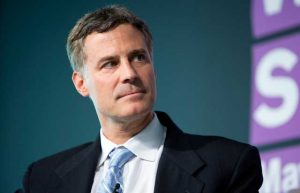
Princeton economist Alan Krueger, who The New York Times described as “help[ing] lead economics toward a more scientific approach to research and policymaking” in his repeated stints in the public sector, has died at age 58.
The U.S. military’s innovation incubator, the Defense Advanced Research Projects Agency, has signed the Center for Open Science to create a research claims database as DARPA’s first step to assign a ‘credibility score’ to social and behavioral science research.
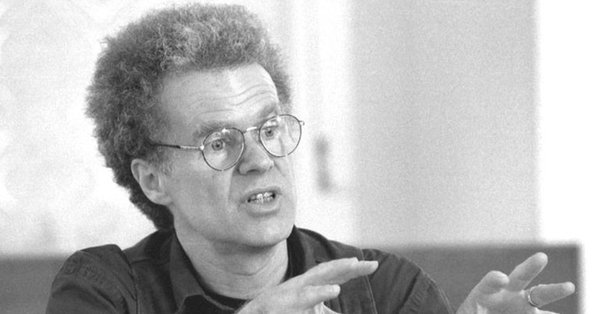
Sociologist Erik Olin Wright, who died last week at age 71, spent his career trying to imagine practical alternatives to capitalism.
In what’s been billed as “the first step in a longer process of ensuring the government is fully invested in using science to improve the effectiveness of its operations,” on January 14 President Trump signed the Foundations for Evidence-Based Policymaking Act of 2018.

The U.S. National Institutes of Health’s Office of Behavioral and Social Sciences Research, which has a rather lengthy revised definition that it’s currently asking experts to assess.
Today Social Science Space completes a series drawn from five winners of Britain’s Economic and Social Science Research Council’s 2018 Impact Prize to learn how they built meaningfulness into their own research and how they measure impact more broadly. We end with Denise Baden of the University of Southampton, winner of the Outstanding Impact in Business and Enterprise prize.
Kevin Bales’ work on modern slavery won his one of Britain’s Economic and Social Science Research Council’s 2018 Impact Prize. We’ve asked him how he built meaningfulness into his own research and how to measure impact more broadly.
New year, new research? Hear from five ESRC Impact Prize winners on how and what real research impact looks like as you set your own research goals for 2019. Today it’s Abigail Dymond from the University of Exeter.


Jürgen Habermas, a globally known social theorist whose explorations of democracy, validity and communication have gained new prominence in the current moment, […] People often see science as a world apart: cool, rational and untouched by persuasion or performance. In this view, scientists simply discover […] “Research impact” means different things to different people. Some refer broadly to how science changes behaviors, beliefs, or practices outside academic institutions. […] David Canter considers informal places where people socialize, suggesting they’re an arena ChatGPT and other LLMs can’no’t replicate. As someone who lives […] It’s become cliche since Clive Humbly coined it in 2006, but data is indeed the new oil. It’s a mantra repeated by […] In September 2025, The Guardian reported about a lawyer in Australia having faced sanctions due to false citations. These citations were not […]
EXPLORE
Impact

Jürgen Habermas, 1929-2026: Exponent of the Public Sphere
READ MORE

Scientists Should Keep in Mind It’s Called the ‘Marketplace of Ideas’ for a Reason
READ MORE

Survey Finds Social Scientists Feel Unsupported in Seeking Societal Impact
READ MORE
Innovation

Reaching Parts to Which AI Has No Access
READ MORE

Andrea Medina-Smith on Making Research Data More FAIR
READ MORE

A Status Check on Hallucinated Case Law Incidents
READ MORE