


Could Distributed Peer Review Better Decide Grant Funding?
The landscape of academic grant funding is notoriously competitive and plagued by lengthy, bureaucratic processes, exacerbated by difficulties in finding willing reviewers. Distributed […]

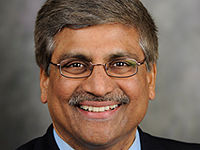
Arizona State University electrical engineer Sethuraman “Panch” Panchanathan is the likely nominee to replace France Córdova as director of the National Science Foundation once Córdova’s six-year appointment ends next year

The National Science Foundation, the premiere funder of basic social and behavioral research in the United States, will see a 2.5% increase in funding in the upcoming fiscal year.
Earlier this month, Ted Hewitt, the president of Canada’s Social Science and Humanities Research Council, presented the 2019 SSHRC Impact Awards to gold medal winner Will Kymlicka and four other notables at a ceremony in Ottawa.

The National Science Foundation (NSF) will be accepting applications for the Science and Technology Studies (STS) Program. With an estimated program funding of 6,200,000 (to be awarded among 40 different researchers), this is an opportunity worth considering.

Vicky Randall, a political scientist whose research into how marginalized populations – such as women, the aged, and those outside the First World – can and do interact in politics, died on November 22. The emeritus professor of government at Essex University was 74.
COSSA is now seeking nominations for the 2020 COSSA Public Impact Award. If you know of individuals, groups, or organizations that are using social and behavioral science research to affect real change in society, consider nominating them!
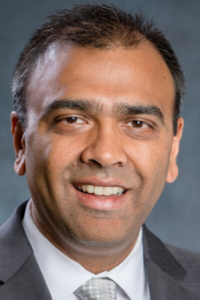
Life scientist Sudip Parikh has been tapped to head the American Association for the Advancement of Science, the organization announced last week. He will be the 19th chief executive the AAAS, the world’s largest multidisciplinary scientific society, has had in its 171 years.
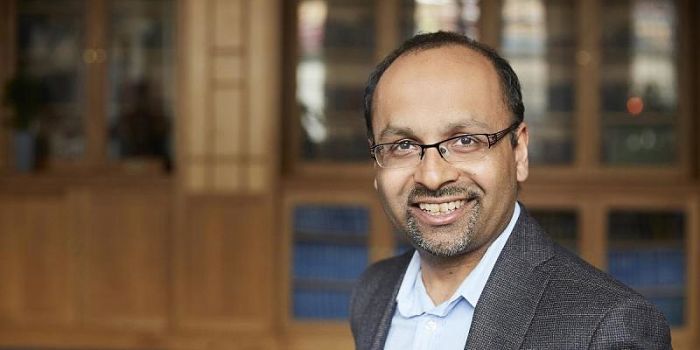
Professor Hetan Shah, who has headed the Royal Statistical Society for the last eight years, has been named to lead the British […]

The Royal Swedish Academy of Sciences has awarded this year’s Nobel Prize in Economic Sciences to the American economists Robert E. Hall […] Four Americans working in the social and behavioral sciences are among the 20 people named MacArthur Fellows this year. Recipients may be […] Euan Adie, the founder of Altmetric and later of Overton, discusses the reasons the led to Overton’s focus on showing researchers how […] The following is an adapted extract from The Cultural Industries, fifth edition, by David Hesmondhalgh. The increasing presence of information technology (IT) […] Developers of AI data centers have a public trust problem. According to multiple surveys, a majority of Americans say they would oppose […] I was adding some final flourishes on the topic of ‘iatrocracy’ to my forthcoming book with Natewindé Sawadogo – Sickness and Social […]
EXPLORE
Impact
Economic Peaks, Troughs and This Year’s Nobelists in Economics
READ MORE

Four From Social Science World Receive 2026 MacArthur Fellowships
READ MORE

Quick Insight: Euan Adie on Getting Academics Credit for Their Impact
READ MORE
Innovation

IT Giants and Their Operations: Should We Be Concerned?
READ MORE

What We Miss When We Study Public Trust with Surveys Alone
READ MORE

AI and ‘Iatrocracy’ – A Cautionary Tale
READ MORE












































































