
Could Distributed Peer Review Better Decide Grant Funding?
The landscape of academic grant funding is notoriously competitive and plagued by lengthy, bureaucratic processes, exacerbated by difficulties in finding willing reviewers. Distributed […]

The Journal of Applied Behavioral Science has honored Achilles Armenakis, the James T. Pursell Sr. Eminent Scholar in Ethics at Auburn University, […]
A social psychologist whose work examines how racial bias–unconscious but still present–impacts Americans’ perceptions and reactions to crime is one of 21 new recipients of the MacArthur ‘genius award.’

In 2013, the budgetary and regulatory reform of European Union Cohesion policy for 2014-20 was finally agreed following the most extensive process […]
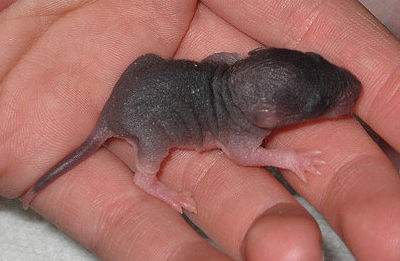
The latest winners of the Gold Goose Award for seemingly weird science with big practical benefits are researchers whose brush with lab rat love is now helping thousands of preemies.

What’s the best for a professional association to build engagement from its members? For one thing, notes Mark Hager in an award-winning paper, you probably can put away the souvenir tote bags.
Parsing federal education statistics, it turns out that prospective social scientists are the most avid consumers of humanities courses as undergrads (not counting humanities majors themselves, that is).

Raising the drumbeat of alarm before a final European Parliament ruling later this year, a coalition of the continent’s research organizations have made explicit their opposition to new rules that they say would impede social science and medical research.

A study of the 100 top journals in education research found that there’s still almost no effort made to replicate the findings they publish.
Jürgen Habermas, a globally known social theorist whose explorations of democracy, validity and communication have gained new prominence in the current moment, […] People often see science as a world apart: cool, rational and untouched by persuasion or performance. In this view, scientists simply discover […] “Research impact” means different things to different people. Some refer broadly to how science changes behaviors, beliefs, or practices outside academic institutions. […] David Canter considers informal places where people socialize, suggesting they’re an arena ChatGPT and other LLMs can’no’t replicate. As someone who lives […] It’s become cliche since Clive Humbly coined it in 2006, but data is indeed the new oil. It’s a mantra repeated by […] In September 2025, The Guardian reported about a lawyer in Australia having faced sanctions due to false citations. These citations were not […]
EXPLORE
Impact

Jürgen Habermas, 1929-2026: Exponent of the Public Sphere
READ MORE

Scientists Should Keep in Mind It’s Called the ‘Marketplace of Ideas’ for a Reason
READ MORE

Survey Finds Social Scientists Feel Unsupported in Seeking Societal Impact
READ MORE
Innovation

Reaching Parts to Which AI Has No Access
READ MORE

Andrea Medina-Smith on Making Research Data More FAIR
READ MORE

A Status Check on Hallucinated Case Law Incidents
READ MORE