
Could Distributed Peer Review Better Decide Grant Funding?
The landscape of academic grant funding is notoriously competitive and plagued by lengthy, bureaucratic processes, exacerbated by difficulties in finding willing reviewers. Distributed […]
Research Impact and the Early Career Researcher presents chapters that reflect on the experiences that ‘early career researchers’ have had in relation to research impact. The collection is not a manual or textbook on how to achieve impact, but instead presents different voices on how researchers experience and react to the demand for impact.
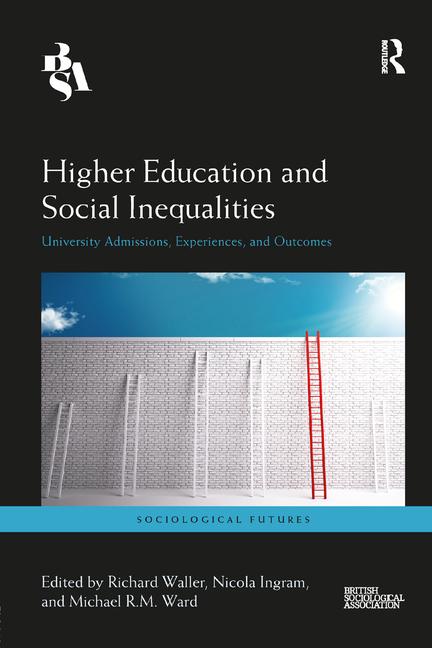
The higher education system rests on the principle of meritocracy, with entry into the ‘top’ Russell Group universities supposedly the product of ability. This is despite growing attention to the over-representation of independent school students studying at the ‘top’ universities, with state school students and disadvantaged groups less likely to secure admission.
If you were going to create an encyclopedia about “mass media,” your first task likely would be to define both words in the term. Doing so was immeasurably easier in the 1920s, when the term “mass media” first started making the rounds, but it’s grown corresponding harder as both the popular conception of ‘mass’ has mutated and the very media itself has evolved from purely paper to heavily broadcast to OMG online.

How you structure the thesis itself is only one part of the overall structure of your doctorate. In their new book, Mike Bottery and Nigel Wright discuss the importance of three different areas in which a good structure is crucial to your success…

Science journalist Hope Reese speaks with Naomi Oreskes, author of the new book ‘Why Trust Science?’ about how to trust science that may conflict with our moral or religious values and what we can do to prevent bias in scientific communities, and methodological fetishism, among other topics.
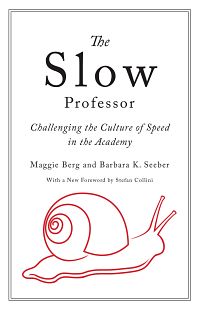
After a friend gave the reviewer a copy of ‘The Slow Professor: Challenging the Culture of Speed in the Academy’ by Maggie Berg and Barbara K. Seeber, it gave him lots of food for thought: Working at a university, after several years of postdoctoral fellowships, why, indeed, not slow down?
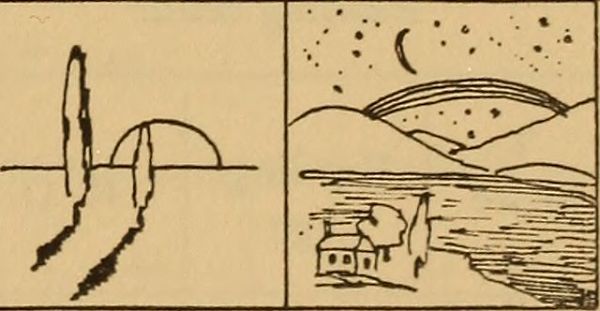
Joni Lakin takes a look at David Lohman’s seminal 2005 work in Gifted Child Quarterly. His paper addresses the issue of underrepresentation while tackling a well-intentioned myth that nonverbal tests are the most equitable way to assess students who come from racial, ethnic, or linguistic minorities in the U.S.

Burned out by the hamster-wheel of academe and the regime of metrics, John Postill decided the tonic would be to write a spoof spy thriller about a Spanish nerd with a silly name who moves to London in 1994 and accidentally foils a terrorist plot by an evil anthropologist.
Jürgen Habermas, a globally known social theorist whose explorations of democracy, validity and communication have gained new prominence in the current moment, […] People often see science as a world apart: cool, rational and untouched by persuasion or performance. In this view, scientists simply discover […] “Research impact” means different things to different people. Some refer broadly to how science changes behaviors, beliefs, or practices outside academic institutions. […] David Canter considers informal places where people socialize, suggesting they’re an arena ChatGPT and other LLMs can’no’t replicate. As someone who lives […] It’s become cliche since Clive Humbly coined it in 2006, but data is indeed the new oil. It’s a mantra repeated by […] In September 2025, The Guardian reported about a lawyer in Australia having faced sanctions due to false citations. These citations were not […]
EXPLORE
Impact
Jürgen Habermas, 1929-2026: Exponent of the Public Sphere
READ MORE
Scientists Should Keep in Mind It’s Called the ‘Marketplace of Ideas’ for a Reason
READ MORE

Survey Finds Social Scientists Feel Unsupported in Seeking Societal Impact
READ MORE
Innovation
Reaching Parts to Which AI Has No Access
READ MORE

Andrea Medina-Smith on Making Research Data More FAIR
READ MORE
A Status Check on Hallucinated Case Law Incidents
READ MORE