

Could Distributed Peer Review Better Decide Grant Funding?
The landscape of academic grant funding is notoriously competitive and plagued by lengthy, bureaucratic processes, exacerbated by difficulties in finding willing reviewers. Distributed […]

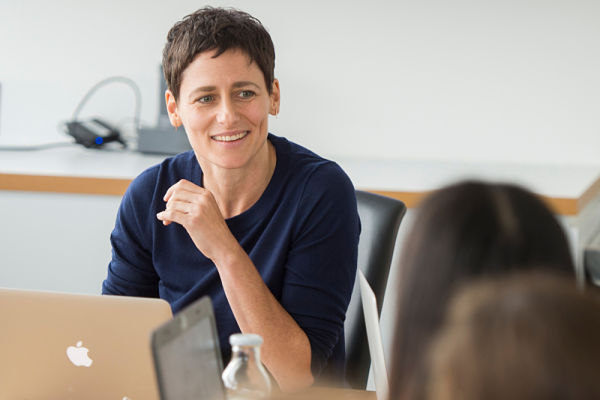
Congressman Daniel Lipinski says “we should encourage interdisciplinary collaboration, but we must also maintain support for core social science research.” He will moderate the congressional briefing on “Social Science Solutions for Health, Public Safety, Computing, and Other National Priorities” on Wednesday.
Andrew Bernat is the executive director of the Computing Research Association. He will participate in a congressional briefing on “Social Science Solutions for Health, Public Safety, Computing, and Other National Priorities” on October 4, 2017.
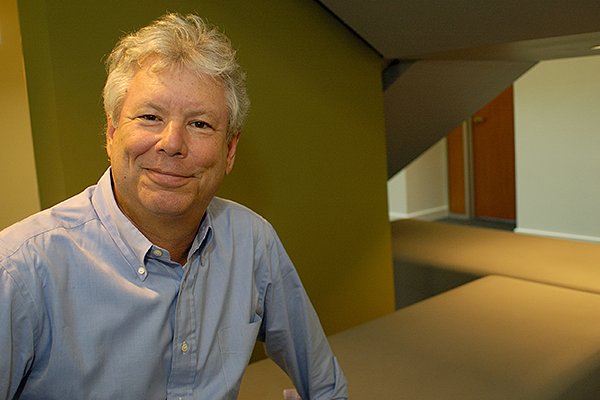
William “Bill” Riley is the director of the Office of Behavioral and Social Sciences Research at the National Institutes of Health. He will participate in a congressional briefing on “Social Science Solutions for Health, Public Safety, Computing, and Other National Priorities” on October 4. Here he explains why he feels public health is best served by good social and behavioral science.
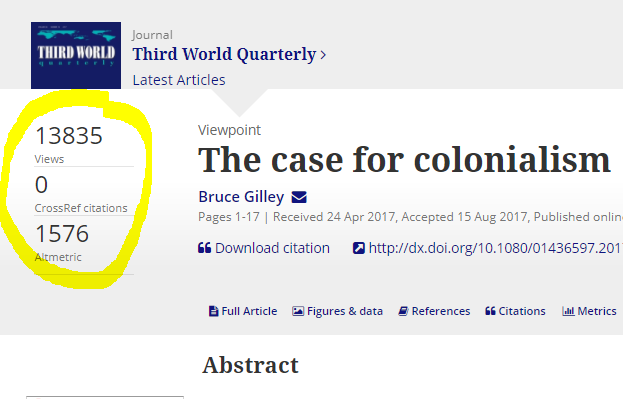
Portia Roelofs and Max Gallien cite Bruce Gilley’s defense of colonialism paper published earlier this month to illustrate how deliberately provocative articles have the capacity to hack academia, to privilege clicks and attention over rigor in research.
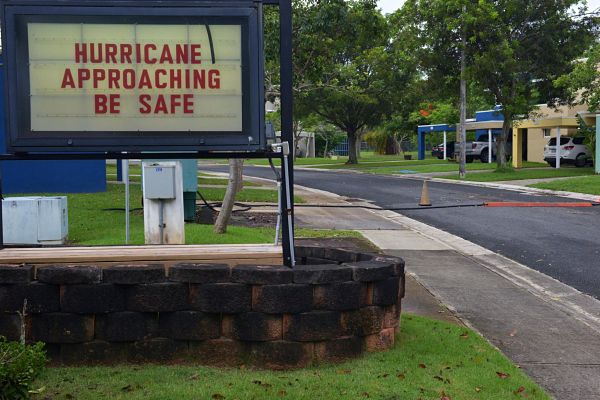
A new video from the National Science Foundation concisely emphasizes the role that social science has in preparing for and reacting to natural disasters.

On the surface studying how gamblers reacted to playing a poker machine while holding a live crocodile sounds, well, silly. But the goal — to learn how to get gamblers to say ‘when’ — is deadly serious business.

Evidence shows that the Australian government’s ‘nudge unit’ may be the wrong way to address major problems like inequality, argue Andrew Frain and Randal Tame.
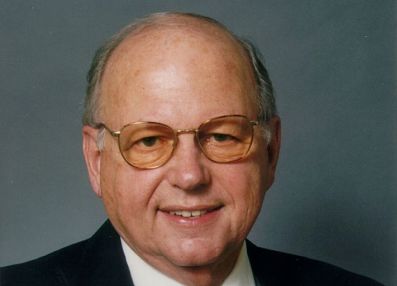
One of the founding fathers of the field of evaluation, Daniel L. Stufflebeam of Western Michigan University, has died at age 80.

Jürgen Habermas, a globally known social theorist whose explorations of democracy, validity and communication have gained new prominence in the current moment, […] People often see science as a world apart: cool, rational and untouched by persuasion or performance. In this view, scientists simply discover […] “Research impact” means different things to different people. Some refer broadly to how science changes behaviors, beliefs, or practices outside academic institutions. […] David Canter considers informal places where people socialize, suggesting they’re an arena ChatGPT and other LLMs can’no’t replicate. As someone who lives […] It’s become cliche since Clive Humbly coined it in 2006, but data is indeed the new oil. It’s a mantra repeated by […] In September 2025, The Guardian reported about a lawyer in Australia having faced sanctions due to false citations. These citations were not […]
EXPLORE
Impact

Jürgen Habermas, 1929-2026: Exponent of the Public Sphere
READ MORE

Scientists Should Keep in Mind It’s Called the ‘Marketplace of Ideas’ for a Reason
READ MORE

Survey Finds Social Scientists Feel Unsupported in Seeking Societal Impact
READ MORE
Innovation

Reaching Parts to Which AI Has No Access
READ MORE

Andrea Medina-Smith on Making Research Data More FAIR
READ MORE

A Status Check on Hallucinated Case Law Incidents
READ MORE