


Could Distributed Peer Review Better Decide Grant Funding?
The landscape of academic grant funding is notoriously competitive and plagued by lengthy, bureaucratic processes, exacerbated by difficulties in finding willing reviewers. Distributed […]
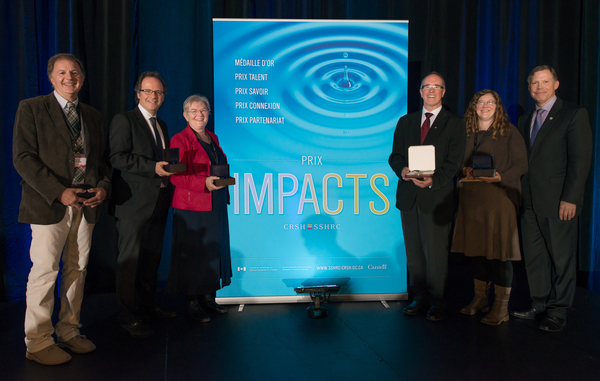
Canada’s premiere government-sponsored awards for outstanding work in HSS fields will be announced in Ottawa next week.

Previous studies show there is low correlation between altmetrics and citation, but how do altmetrics compare to other metrics? Xianwen Wang and his colleagues recently conducted a study to answer this question.
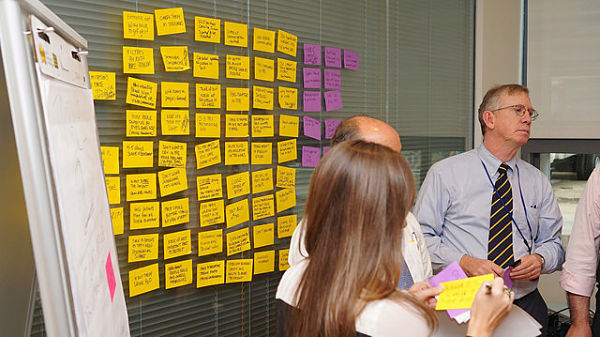
The National Science Foundation is calling for some shovel-ready social science research to help combat the current crises circling around the Ebola explosion. Social science has some experiences in the field already.
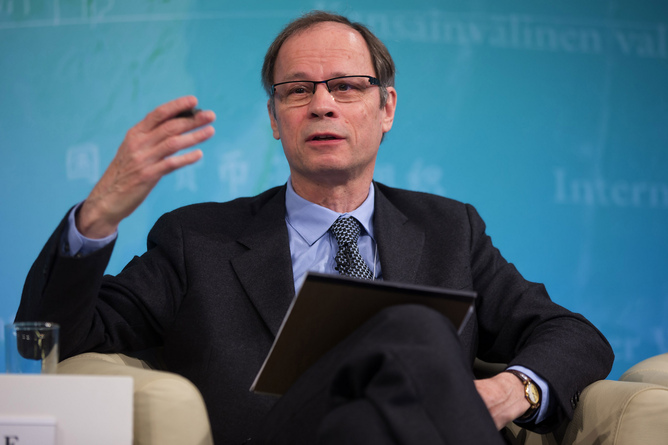
The latest winner of the Nobel in economics saw the National Science Foundation support his formative work, just as it has for every winner since 1998.

Will Davies responds to the calls for a social science shake-up by questioning the status of the social sciences in 2014 as something other than mere understudies to the natural sciences. The shared terrain of the two, he argues, seems to rest on various acts of forgetting on the part of the social sciences, but no acts of learning on the part of the natural sciences.
Discussions around the REF have tended to be negative, but what exactly is viewed poorly varies by interest group[. Two academics who conducted an analysis of the media’s covefage of the framework argue there is much that can be learned for future assessment exercises and it is ever-more important that we get it right when thinking about ‘impact’ in research and the pressures academics face.

In honor of its 50th anniversary next year, Britain’s social science research council wants you to help it identify 50 signal achievements made possible by social science.

Social Science Space talks to Margaret Levi about her goals for re-imagining the Center for Advanced Study in the Behavioral Sciences.

Jürgen Habermas, a globally known social theorist whose explorations of democracy, validity and communication have gained new prominence in the current moment, […] People often see science as a world apart: cool, rational and untouched by persuasion or performance. In this view, scientists simply discover […] “Research impact” means different things to different people. Some refer broadly to how science changes behaviors, beliefs, or practices outside academic institutions. […] David Canter considers informal places where people socialize, suggesting they’re an arena ChatGPT and other LLMs can’no’t replicate. As someone who lives […] It’s become cliche since Clive Humbly coined it in 2006, but data is indeed the new oil. It’s a mantra repeated by […] In September 2025, The Guardian reported about a lawyer in Australia having faced sanctions due to false citations. These citations were not […]
EXPLORE
Impact

Jürgen Habermas, 1929-2026: Exponent of the Public Sphere
READ MORE

Scientists Should Keep in Mind It’s Called the ‘Marketplace of Ideas’ for a Reason
READ MORE

Survey Finds Social Scientists Feel Unsupported in Seeking Societal Impact
READ MORE
Innovation

Reaching Parts to Which AI Has No Access
READ MORE

Andrea Medina-Smith on Making Research Data More FAIR
READ MORE

A Status Check on Hallucinated Case Law Incidents
READ MORE