


Could Distributed Peer Review Better Decide Grant Funding?
The landscape of academic grant funding is notoriously competitive and plagued by lengthy, bureaucratic processes, exacerbated by difficulties in finding willing reviewers. Distributed […]

A seminal figure in solidifying the importance and position of the social and behavioral sciences in the federal research infrastructure, sociologist Cora Marrett leaves the National Science Foundation next month.

Other nations looking at successful American universities and seeing the invisible hand of the marketplace at work should take a closer look at the arm attached to that hand, argues Steve C. Ward.

Australia allocates around A$9 billion a year of taxpayers’ money for research, but how do we know if that money is being spent wisely?

Trying to measure the benefits of scientific research using traditional business-oriented metrics may not be the best tool in our shed, argues Michael White.
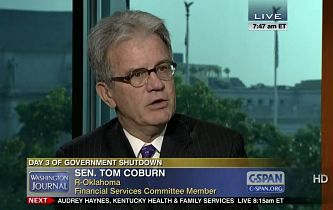
A little bit of poli sci learning might be a tonic in Washington. But as Michael Harris points out, some legislators like Dr. Tom Coburn want to restrict funding for their ‘medicine.’
David Takeuchi argues that even if the FIRST act doesn’t pass, it is clear that U.S. politicians are demanding more of a say in federally funded research. While a push to ensure research remains relevant can be a good thing, scientists and politicians must not forget that initial outcomes do not constitute substantive evidence. Scientific integrity and replication shouldn’t have to be sacrificed in order to meet political time frames.
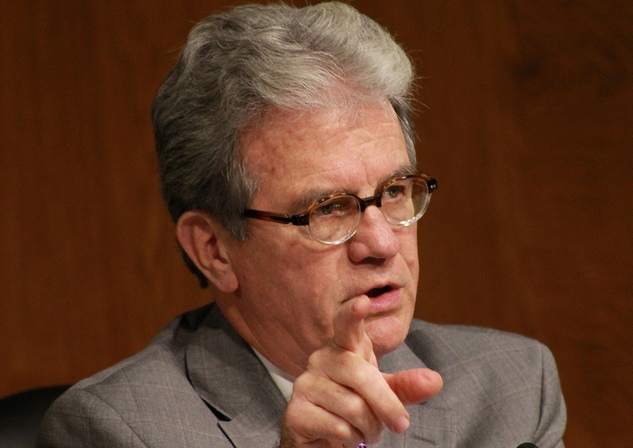
Senator Tom Coburn’s long-standing effort to restrict political science funding has returned with a new amendment filed for the latest bill that funds the National Science Foundation.
The more things change, the more they stay the same — especially when it comes to political reluctance for the U.S government to pay for social science research. Our new blogger, Howard J. Silver, is an old hand at lobbying the feds for research funds, and details how political headwinds blew in a suite of lobbying groups.


Jürgen Habermas, a globally known social theorist whose explorations of democracy, validity and communication have gained new prominence in the current moment, […] People often see science as a world apart: cool, rational and untouched by persuasion or performance. In this view, scientists simply discover […] “Research impact” means different things to different people. Some refer broadly to how science changes behaviors, beliefs, or practices outside academic institutions. […] David Canter considers informal places where people socialize, suggesting they’re an arena ChatGPT and other LLMs can’no’t replicate. As someone who lives […] It’s become cliche since Clive Humbly coined it in 2006, but data is indeed the new oil. It’s a mantra repeated by […] In September 2025, The Guardian reported about a lawyer in Australia having faced sanctions due to false citations. These citations were not […]
EXPLORE
Impact

Jürgen Habermas, 1929-2026: Exponent of the Public Sphere
READ MORE

Scientists Should Keep in Mind It’s Called the ‘Marketplace of Ideas’ for a Reason
READ MORE

Survey Finds Social Scientists Feel Unsupported in Seeking Societal Impact
READ MORE
Innovation

Reaching Parts to Which AI Has No Access
READ MORE

Andrea Medina-Smith on Making Research Data More FAIR
READ MORE

A Status Check on Hallucinated Case Law Incidents
READ MORE