
Could Distributed Peer Review Better Decide Grant Funding?
The landscape of academic grant funding is notoriously competitive and plagued by lengthy, bureaucratic processes, exacerbated by difficulties in finding willing reviewers. Distributed […]
To celebrate the Social Science Research Council’s 100th anniversary, we’re highlighting three scholars honored with SSRC fellowships and awards.
The National Science Foundation’s directorates of geosciences and of social, behavioral and economic sciences, in collaboration with the National Oceanic and Atmospheric Administration are calling for proposals to create a center for catastrophic impact and risk assessment modeling related to climate change.
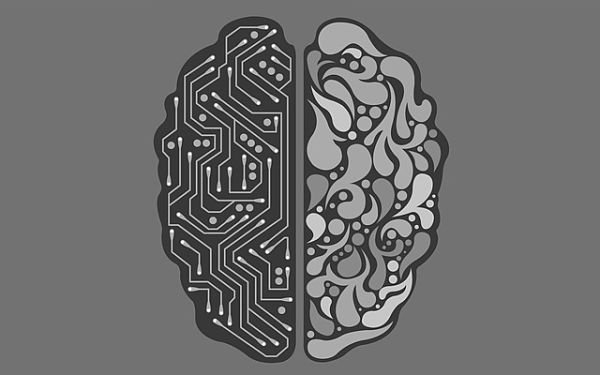
Carnegie Mellon University has received a five-year, $20 million award from the U.S. National Science Foundation to lead an institute that will employ social scientists and artificial intelligence researchers to create human-centric AI tools to help people address challenges on the job.
American high school students interested in the social, behavioral and economic (SBE) sciences won’t have to wait until college to gain hands-on research experience thanks to a new National Science Foundation initiative.

Children in Sierra Leone require five vaccinations by the age of one, but many parents—especially those who face a five to eight-mile […]
This article is the first in a series celebrating the 100th anniversary of the Social Science Research Council—a New York City-based independent […]

The Pentagon’s Minerva Research Initiative has funded six social science projects under its Defense Education and Civilian University Research banner.
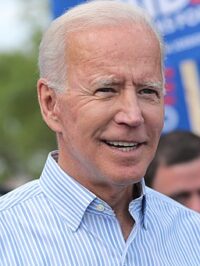
Although it’s purely aspirational at best, the Biden administration is seeking an 18.6 percent increase in the budget for the National Science Foundation, the United States’ largest funder of academic social science research.
Jürgen Habermas, a globally known social theorist whose explorations of democracy, validity and communication have gained new prominence in the current moment, […] People often see science as a world apart: cool, rational and untouched by persuasion or performance. In this view, scientists simply discover […] “Research impact” means different things to different people. Some refer broadly to how science changes behaviors, beliefs, or practices outside academic institutions. […] David Canter considers informal places where people socialize, suggesting they’re an arena ChatGPT and other LLMs can’no’t replicate. As someone who lives […] It’s become cliche since Clive Humbly coined it in 2006, but data is indeed the new oil. It’s a mantra repeated by […] In September 2025, The Guardian reported about a lawyer in Australia having faced sanctions due to false citations. These citations were not […]
EXPLORE
Impact

Jürgen Habermas, 1929-2026: Exponent of the Public Sphere
READ MORE

Scientists Should Keep in Mind It’s Called the ‘Marketplace of Ideas’ for a Reason
READ MORE

Survey Finds Social Scientists Feel Unsupported in Seeking Societal Impact
READ MORE
Innovation

Reaching Parts to Which AI Has No Access
READ MORE

Andrea Medina-Smith on Making Research Data More FAIR
READ MORE

A Status Check on Hallucinated Case Law Incidents
READ MORE