


Could Distributed Peer Review Better Decide Grant Funding?
The landscape of academic grant funding is notoriously competitive and plagued by lengthy, bureaucratic processes, exacerbated by difficulties in finding willing reviewers. Distributed […]
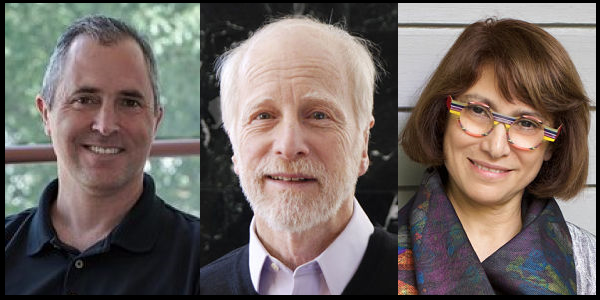
U.S. government-funded research that on its face looked only at fame, names and gender turned out to be pioneering work into implicit bias. This year a Golden Goose Award went to three researchers who developed the concept of implicit bias and then made a huge impact on popular culture by giving the world a test to measure it.

The Coalition for National Science Funding hosted a webinar titled “Communicating the Value of NSF to Elected Officials”; Focusing on the need to engage with elected officials while they’re at home in their district. An issue of importance as US Government continues to go back and forth on its funding for the next fiscal year.
Both houses of the United States Congress have appropriations bills that increase funding for the National Science Foundation and the 2020 Census in the works, and ‘regular order’ is still the rule for seeing them advance to passage. But how long will regular order be regular?

Arbitrary choices –all those political considerations that twist and constrain scholarship without adding to it in intellectually meaningful ways — are rife in contemporary academic sociology, says our Daniel Nehring. Tired of trying to pointlessly argue against them in hopes they disappear, he asks that we make these choices explicit and visible.

Funding for basic research, visas for scholars from outside the United States, and streamlining regulations that get in the way of research are areas of concern for a consortium of business and academic interests that annually reviews the state of American government’s commitment to innovation.

The academic world has the power to transform events in redefining its social mission, by responding to this highly ambitious EU action plan with the emergence of courses that match the expectations not only of businesses but, above all, society.
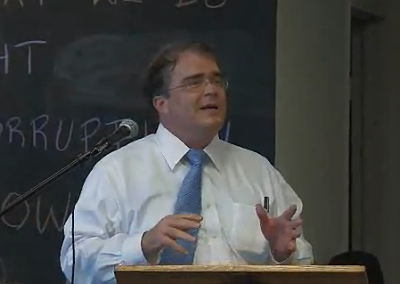
Legislation to fund the National Science Foundation and the Bureau of the Census, among many other U.S. government agencies, in the next fiscal year sailed through its first public hearing today in the House of Representatives.
The House approved several financial services measures, the 21st Century IRS Act, the Taxpayer First Act, and the FAA Reauthorization Act. The House also voted on and failed to adopt a balanced budget Constitutional amendment. The Senate voted to confirm several nominations, including Secretary of State Mike Pompeo.


Jürgen Habermas, a globally known social theorist whose explorations of democracy, validity and communication have gained new prominence in the current moment, […] People often see science as a world apart: cool, rational and untouched by persuasion or performance. In this view, scientists simply discover […] “Research impact” means different things to different people. Some refer broadly to how science changes behaviors, beliefs, or practices outside academic institutions. […] David Canter considers informal places where people socialize, suggesting they’re an arena ChatGPT and other LLMs can’no’t replicate. As someone who lives […] It’s become cliche since Clive Humbly coined it in 2006, but data is indeed the new oil. It’s a mantra repeated by […] In September 2025, The Guardian reported about a lawyer in Australia having faced sanctions due to false citations. These citations were not […]
EXPLORE
Impact

Jürgen Habermas, 1929-2026: Exponent of the Public Sphere
READ MORE

Scientists Should Keep in Mind It’s Called the ‘Marketplace of Ideas’ for a Reason
READ MORE

Survey Finds Social Scientists Feel Unsupported in Seeking Societal Impact
READ MORE
Innovation

Reaching Parts to Which AI Has No Access
READ MORE

Andrea Medina-Smith on Making Research Data More FAIR
READ MORE

A Status Check on Hallucinated Case Law Incidents
READ MORE