


Could Distributed Peer Review Better Decide Grant Funding?
The landscape of academic grant funding is notoriously competitive and plagued by lengthy, bureaucratic processes, exacerbated by difficulties in finding willing reviewers. Distributed […]

Although by no means a household word, “drug courts” have been among the most studied criminal justice interventions of the past two decades. So what are these courts, and why do they matter?

An evaluation of Missouri Department of Mental Health’s Not Guilty by Reason of Insanity Murder Acquittees.

The Effectiveness of Raising the Expected Utility of Abstaining from Terrorism in Israel

It is curious that the UK government department promoting Business, Innovation and Skills should be so committed to a policy that might almost be designed to achieve the opposite effect.

There is still a great deal of inequality between the sexes in the workplace. In this episode of the Social Science Bites podcast Paul Seabright combines insights from economics and evolutionary theory to shed light on why this might be so.

Faith in the wisdom of the affluent to guide public policy has been sorely tested by the enormous costs in money and human suffering resulting from the Great Recession. My data cast further doubt on the notion that representational inequality arises from the greater knowledge or better judgment of those with higher incomes.

If policy influence becomes so unequal that the wishes of most citizens are ignored most of the time, a country’s claim to be a democracy is cast in doubt. And that is exactly what I found in my analyses of the link between public preferences and government policy in the U.S.

In the past twenty years there has been a revolution in economics with the study not of how people would behave if they were perfectly rational, but of how they actually behave. At the vanguard of this movement is Robert Shiller of Yale University. He sits down with Nigel Warburton in this episode of the Social Science Bites podcast

Jürgen Habermas, a globally known social theorist whose explorations of democracy, validity and communication have gained new prominence in the current moment, […] People often see science as a world apart: cool, rational and untouched by persuasion or performance. In this view, scientists simply discover […] “Research impact” means different things to different people. Some refer broadly to how science changes behaviors, beliefs, or practices outside academic institutions. […] David Canter considers informal places where people socialize, suggesting they’re an arena ChatGPT and other LLMs can’no’t replicate. As someone who lives […] It’s become cliche since Clive Humbly coined it in 2006, but data is indeed the new oil. It’s a mantra repeated by […] In September 2025, The Guardian reported about a lawyer in Australia having faced sanctions due to false citations. These citations were not […]
EXPLORE
Impact

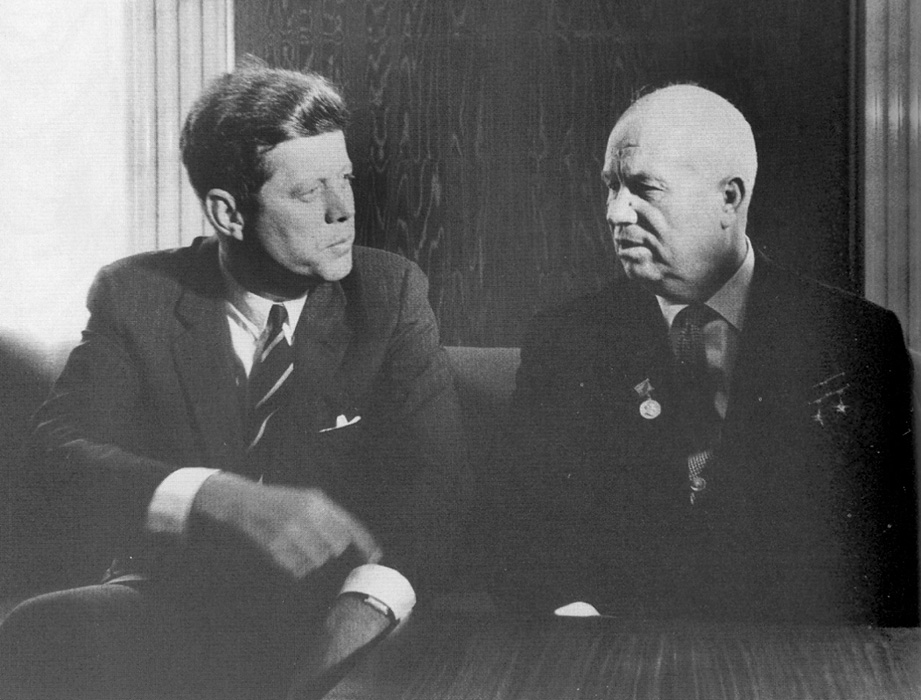
Jürgen Habermas, 1929-2026: Exponent of the Public Sphere
READ MORE

Scientists Should Keep in Mind It’s Called the ‘Marketplace of Ideas’ for a Reason
READ MORE

Survey Finds Social Scientists Feel Unsupported in Seeking Societal Impact
READ MORE
Innovation

Reaching Parts to Which AI Has No Access
READ MORE

Andrea Medina-Smith on Making Research Data More FAIR
READ MORE

A Status Check on Hallucinated Case Law Incidents
READ MORE