



Could Distributed Peer Review Better Decide Grant Funding?
The landscape of academic grant funding is notoriously competitive and plagued by lengthy, bureaucratic processes, exacerbated by difficulties in finding willing reviewers. Distributed […]
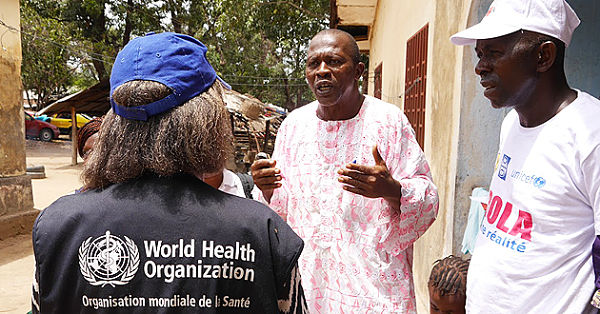
The Ebola outbreak in West Africa reminds us of a key lesson in public health, notes Robert Dingwall: Biomedical solutions will always come late, while social science-based interventions can break the cycle much sooner.
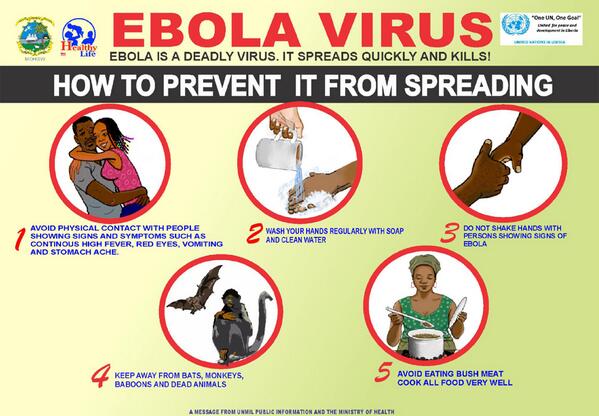
There is a genuine cost from ignoring lessons from social science in the fight against Ebola. What’s even sadder — these lessons were taught in blood three decades ago in the fights against AIDS. Are we ready for the next malady?

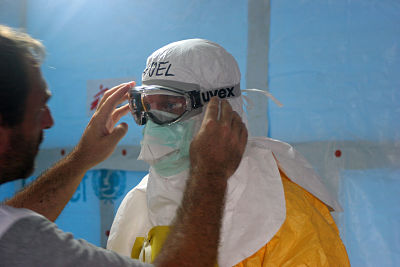
WHO is supposed to be a global health organization, not a global biomedical organization. The Ebola crisis, argues Robert Dingwall, reveals the extent to which it has lost sight of this mission.

As the independence vote moves from all-consuming question to historical incident, what are the lessons that Scottish universities and in particular Scottish social scientists should take away?

Social Science Space talks to Margaret Levi about her goals for re-imagining the Center for Advanced Study in the Behavioral Sciences.

Doctor Who’s sobriquet implies he’s earned a doctorate in something. The Doctor’s not telling what he might have studied, but his actions and attitudes make a strong case for one discipline …
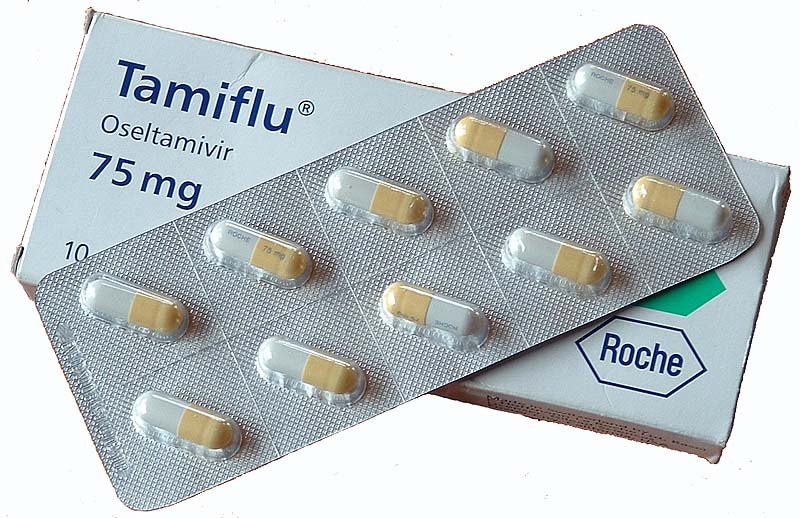
No one expected Tamiflu to be a wonder drug, but indications are that it’s moderately useful in fighting a serious public health threat. But that message was lost last week in an ill-starred rush to beat up on ‘wicked’ Big Pharma, argues Robert Dingwall.

Feel-good interventions that don’t provide a practical good, or at least one not supported by evidence, generate questions that hinge specifically on future responses to climate change and more broadly on government decision-making in general.


Jürgen Habermas, a globally known social theorist whose explorations of democracy, validity and communication have gained new prominence in the current moment, […] People often see science as a world apart: cool, rational and untouched by persuasion or performance. In this view, scientists simply discover […] “Research impact” means different things to different people. Some refer broadly to how science changes behaviors, beliefs, or practices outside academic institutions. […] David Canter considers informal places where people socialize, suggesting they’re an arena ChatGPT and other LLMs can’no’t replicate. As someone who lives […] It’s become cliche since Clive Humbly coined it in 2006, but data is indeed the new oil. It’s a mantra repeated by […] In September 2025, The Guardian reported about a lawyer in Australia having faced sanctions due to false citations. These citations were not […]
EXPLORE
Impact

Jürgen Habermas, 1929-2026: Exponent of the Public Sphere
READ MORE

Scientists Should Keep in Mind It’s Called the ‘Marketplace of Ideas’ for a Reason
READ MORE

Survey Finds Social Scientists Feel Unsupported in Seeking Societal Impact
READ MORE
Innovation

Reaching Parts to Which AI Has No Access
READ MORE

Andrea Medina-Smith on Making Research Data More FAIR
READ MORE

A Status Check on Hallucinated Case Law Incidents
READ MORE