

Could Distributed Peer Review Better Decide Grant Funding?
The landscape of academic grant funding is notoriously competitive and plagued by lengthy, bureaucratic processes, exacerbated by difficulties in finding willing reviewers. Distributed […]
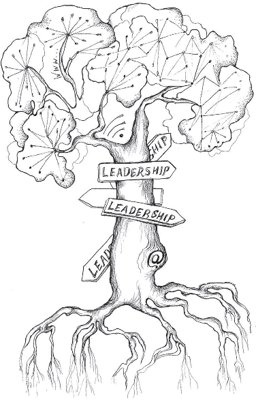
SAGE author Simon Western has written a guide to eco-leadership, a new leadership paradigm for organizations in the climate emergency. For Academic Book Week, we asked him to present a short guide to its principles.

Jargon, a specialized language or set of expressions used by a specific group, is by its nature exclusionary, so it’s likely no surprise that scientific, technical or legal jargon may leave outsiders in the cold. A series of studies from researchers at Ohio State University suggests that jargon may turn off people well beyond an offending passage, and that one popular way to soften any harm – using jargon but immediately defining it – may not work.
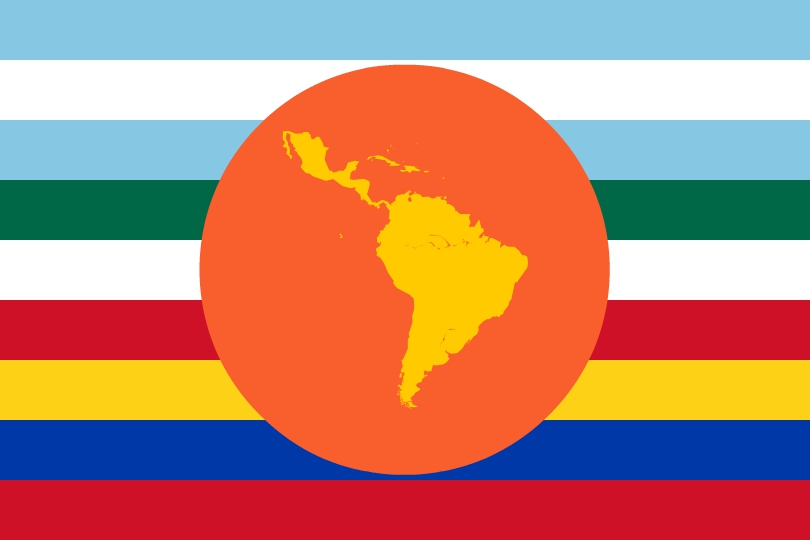
An upward trend in the productivity of Latin American researchers, increased collaboration between them and scholars from other regions, and societal, cultural, and economic characteristics all make Latin America an ideal “natural laboratory” to build and test management theories.
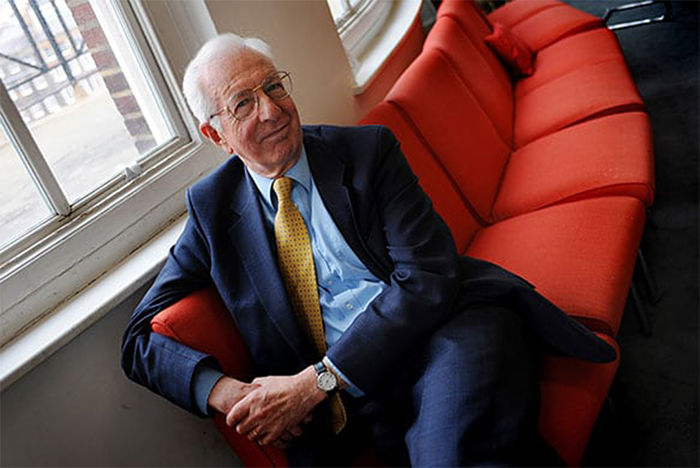
Richard Layard remembers being a history student sitting in Oxford’s Bodleian Library on a misty morning, reading philosopher Jeremy Bentham (he of the famed “It is the greatest happiness of the greatest number that is the measure of right and wrong”). As he recounts to interviewer David Edmonds in this Social Science Bites podcast, he thought, “Oh yes, this is what it’s all about.”
Ideally, advocates say, government-sponsored scientists should follow their research where it leads, talk about it honestly and freely with the press and the public, and release unaltered information about their findings. A bill that’s currently stuck in committee would help guarantee that.

Science journalist Hope Reese speaks with Naomi Oreskes, author of the new book ‘Why Trust Science?’ about how to trust science that may conflict with our moral or religious values and what we can do to prevent bias in scientific communities, and methodological fetishism, among other topics.
As part of their impact agenda, universities increasingly promote and train academics to carry out research collaborations across disciplines and with non-academic partners. While this can be impactful, Helen B. Woods argues that attempts to direct research in this way can produce inauthentic collaboration, and suggests an ideas-led approach.

University rankings might claim to provide an index through which students, faculty, and the general public might ascertain a number of things: the quality of education provided by an institution, the potential for networking at an institution, the breadth and depth of research being performed at an institution, and more. The institutional quest towards topping the university rankings can, however, derail efforts towards the improvement of society and higher education at large.


Jürgen Habermas, a globally known social theorist whose explorations of democracy, validity and communication have gained new prominence in the current moment, […] People often see science as a world apart: cool, rational and untouched by persuasion or performance. In this view, scientists simply discover […] “Research impact” means different things to different people. Some refer broadly to how science changes behaviors, beliefs, or practices outside academic institutions. […] David Canter considers informal places where people socialize, suggesting they’re an arena ChatGPT and other LLMs can’no’t replicate. As someone who lives […] It’s become cliche since Clive Humbly coined it in 2006, but data is indeed the new oil. It’s a mantra repeated by […] In September 2025, The Guardian reported about a lawyer in Australia having faced sanctions due to false citations. These citations were not […]
EXPLORE
Impact

Jürgen Habermas, 1929-2026: Exponent of the Public Sphere
READ MORE

Scientists Should Keep in Mind It’s Called the ‘Marketplace of Ideas’ for a Reason
READ MORE

Survey Finds Social Scientists Feel Unsupported in Seeking Societal Impact
READ MORE
Innovation

Reaching Parts to Which AI Has No Access
READ MORE

Andrea Medina-Smith on Making Research Data More FAIR
READ MORE

A Status Check on Hallucinated Case Law Incidents
READ MORE