

Could Distributed Peer Review Better Decide Grant Funding?
The landscape of academic grant funding is notoriously competitive and plagued by lengthy, bureaucratic processes, exacerbated by difficulties in finding willing reviewers. Distributed […]

The election of Donald Trump illustrates the hazards encountered when scientists and scientific institutions alienate themselves from historic global changes.

With the increasing indications that Britain is growing colder to migrants in the wake of Brexit, Daniel Nehring asks what that means specifically for academics from the European Union in the UK.

After more six years at the helm of Canada’s Federation for the Humanities and Social Sciences, Jean-Marc Mangin has stepped down. Christine Tausig Ford, formerly of Universities Canada,has been named interim executive director.

On September 27, as part of Social Science Space’s series on academic freedom, three of the contributors to that series – Daniel Nehring, Dylan Kerrigan, and Joanna Williams – participated in an hour-long webinar to discuss some of the issues at the heart of this issue.

In honor of the recent release of the new Business & Management video collection, SAGE Video is offering a free 30 day […]

Computers have revolutionized academic research – and at the same time created a new crop of problems. But, suggests Ben Marwick, computers can also help address some of the challenges they have created.
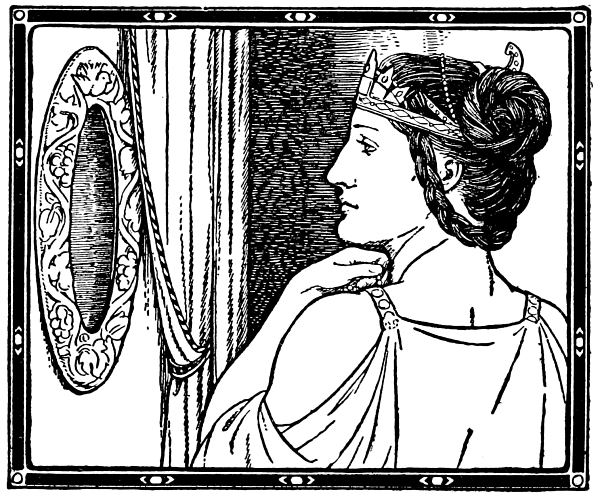
While academics have not just recently become image-conscious, noted Daniel Nehring, the increasing infiltration by corporate interests into universities is changing the face of what that consciousness results in.

Have japan’s national universities been ordered — or coerced — into dismantling their humanities and social science programs or not? Jeff Kingston of Temple University Japan walks us through an answer tangled up in patriotism, politics and the nation’s ailing academy.


Jürgen Habermas, a globally known social theorist whose explorations of democracy, validity and communication have gained new prominence in the current moment, […] People often see science as a world apart: cool, rational and untouched by persuasion or performance. In this view, scientists simply discover […] “Research impact” means different things to different people. Some refer broadly to how science changes behaviors, beliefs, or practices outside academic institutions. […] David Canter considers informal places where people socialize, suggesting they’re an arena ChatGPT and other LLMs can’no’t replicate. As someone who lives […] It’s become cliche since Clive Humbly coined it in 2006, but data is indeed the new oil. It’s a mantra repeated by […] In September 2025, The Guardian reported about a lawyer in Australia having faced sanctions due to false citations. These citations were not […]
EXPLORE
Impact

Jürgen Habermas, 1929-2026: Exponent of the Public Sphere
READ MORE

Scientists Should Keep in Mind It’s Called the ‘Marketplace of Ideas’ for a Reason
READ MORE

Survey Finds Social Scientists Feel Unsupported in Seeking Societal Impact
READ MORE
Innovation

Reaching Parts to Which AI Has No Access
READ MORE

Andrea Medina-Smith on Making Research Data More FAIR
READ MORE

A Status Check on Hallucinated Case Law Incidents
READ MORE