


Could Distributed Peer Review Better Decide Grant Funding?
The landscape of academic grant funding is notoriously competitive and plagued by lengthy, bureaucratic processes, exacerbated by difficulties in finding willing reviewers. Distributed […]

David Canter reviews his experience of filling in automated forms online for the same thing but getting very different answers, revealing the value systems built into these supposedly neutral processes.

The U.S. National Science Foundation’s new Responsible Design, Development, and Deployment of Technologies (ReDDDoT) program supports research, implementation, and educational projects for multidisciplinary, multi-sector teams

In the following Q&A, Roger J. Kreuz, a psychology professor who is working on a manuscript about the history and psychology of plagiarism, explains the nature and prevalence of plagiarism and the challenges associated with detecting it in the age of AI.

David Canter is horrified by the power of readily available large language technology.
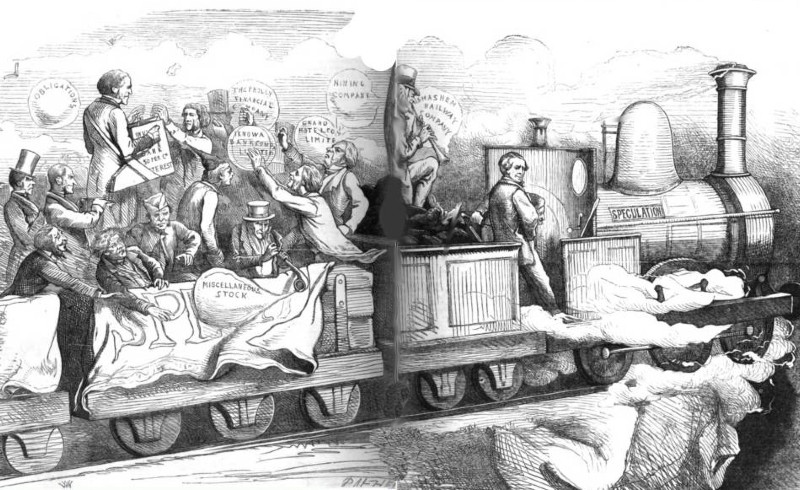
Cryptocurrencies are so last year. Today’s moral panic is about AI and machine learning. Governments around the world are hastening to adopt […]
The double-blind review process, adopted by many publishers and funding agencies, plays a vital role in maintaining fairness and unbiasedness by concealing the identities of authors and reviewers. However, in the era of artificial intelligence (AI) and big data, a pressing question arises: can an author’s identity be deduced even from an anonymized paper (in cases where the authors do not advertise their submitted article on social media)?
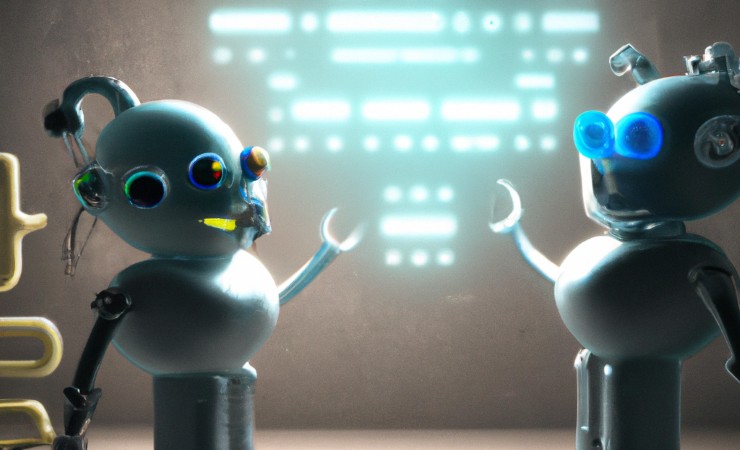
Empathic consciousness in AI opens new horizons in service that puts the relationship between the machines and the humans in exciting and uncharted territories.

Meredith Broussard, one of the few Black women doing research in artificial intelligence, would like to see us tackling the problems that have been shown to be prevalent in today’s AI systems, especially the issue of bias based on race, gender, or ability.
Jürgen Habermas, a globally known social theorist whose explorations of democracy, validity and communication have gained new prominence in the current moment, […] People often see science as a world apart: cool, rational and untouched by persuasion or performance. In this view, scientists simply discover […] “Research impact” means different things to different people. Some refer broadly to how science changes behaviors, beliefs, or practices outside academic institutions. […] David Canter considers informal places where people socialize, suggesting they’re an arena ChatGPT and other LLMs can’no’t replicate. As someone who lives […] It’s become cliche since Clive Humbly coined it in 2006, but data is indeed the new oil. It’s a mantra repeated by […] In September 2025, The Guardian reported about a lawyer in Australia having faced sanctions due to false citations. These citations were not […]
EXPLORE
Impact

Jürgen Habermas, 1929-2026: Exponent of the Public Sphere
READ MORE

Scientists Should Keep in Mind It’s Called the ‘Marketplace of Ideas’ for a Reason
READ MORE

Survey Finds Social Scientists Feel Unsupported in Seeking Societal Impact
READ MORE
Innovation

Reaching Parts to Which AI Has No Access
READ MORE

Andrea Medina-Smith on Making Research Data More FAIR
READ MORE

A Status Check on Hallucinated Case Law Incidents
READ MORE