

Could Distributed Peer Review Better Decide Grant Funding?
The landscape of academic grant funding is notoriously competitive and plagued by lengthy, bureaucratic processes, exacerbated by difficulties in finding willing reviewers. Distributed […]
In the previous post Mathew Flinders identified the ways in which collaborative research touches the emotions of academics and places different kinds of demands […]

The simple fact is that deep, embedded, collaborative research whereby researchers work hand-in-hand with community participants in order to reveal new perspectives […]
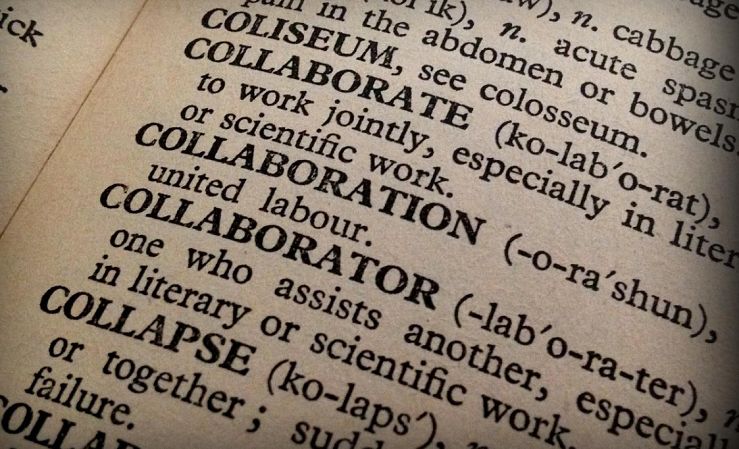
The terms “collaboration,” “coordination” and “cooperation,” write Xavier Castañer and Nuno Oliveira in a recent paper published by the Journal of Management, underpin both the organizations they describe and the study of those organizations, and yet the terms themselves are inconsistently defined and therefore their use can be imprecise or even downright confusing.
As part of their impact agenda, universities increasingly promote and train academics to carry out research collaborations across disciplines and with non-academic partners. While this can be impactful, Helen B. Woods argues that attempts to direct research in this way can produce inauthentic collaboration, and suggests an ideas-led approach.
Anna-Sigrid Keck and colleagues designed a structured doctoral program focused on transdisciplinary research and compared students’ publication patterns to students in traditional programmes. While rates of productivity were broadly similar, citation rates were found to be higher for transdisciplinary students, as were indicators of collaboration such as co-authorship.
The appeal of collaborating with a government agency, or an organization funded by one, seems obvious. In practice, however, it’s not always easy to make collaborative research work well. Susan Dodsworth and Nic Cheeseman outline some simple lessons for those looking to collaborate while avoiding the common pitfalls.
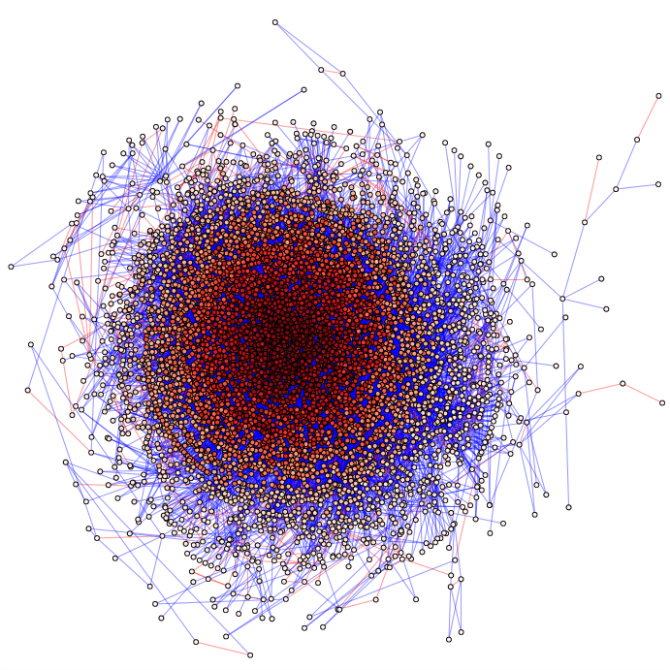
Co-Pierre Georg and Michael E. Rose report on their recent study confirming that seeking out feedback and constructive criticism improves academic research and increases its impact, especially when that feedback is offered by well-connected colleagues.

[We’re pleased to welcome Gang Li of Deakin University. Gang recently published an article in Journal of Hospitality & Tourism Research entitled […]


Jürgen Habermas, a globally known social theorist whose explorations of democracy, validity and communication have gained new prominence in the current moment, […] People often see science as a world apart: cool, rational and untouched by persuasion or performance. In this view, scientists simply discover […] “Research impact” means different things to different people. Some refer broadly to how science changes behaviors, beliefs, or practices outside academic institutions. […] David Canter considers informal places where people socialize, suggesting they’re an arena ChatGPT and other LLMs can’no’t replicate. As someone who lives […] It’s become cliche since Clive Humbly coined it in 2006, but data is indeed the new oil. It’s a mantra repeated by […] In September 2025, The Guardian reported about a lawyer in Australia having faced sanctions due to false citations. These citations were not […]
EXPLORE
Impact

Jürgen Habermas, 1929-2026: Exponent of the Public Sphere
READ MORE

Scientists Should Keep in Mind It’s Called the ‘Marketplace of Ideas’ for a Reason
READ MORE

Survey Finds Social Scientists Feel Unsupported in Seeking Societal Impact
READ MORE
Innovation

Reaching Parts to Which AI Has No Access
READ MORE

Andrea Medina-Smith on Making Research Data More FAIR
READ MORE

A Status Check on Hallucinated Case Law Incidents
READ MORE