


Could Distributed Peer Review Better Decide Grant Funding?
The landscape of academic grant funding is notoriously competitive and plagued by lengthy, bureaucratic processes, exacerbated by difficulties in finding willing reviewers. Distributed […]

Crystal clear graphs, slides, and reports are valuable – they save an audience’s mental energies, keep a reader engaged, and make you look smart. This webinar covers the science behind presenting data effectively and will leave viewers with direct, pointed changes that can be immediately administered to significantly increase impact.
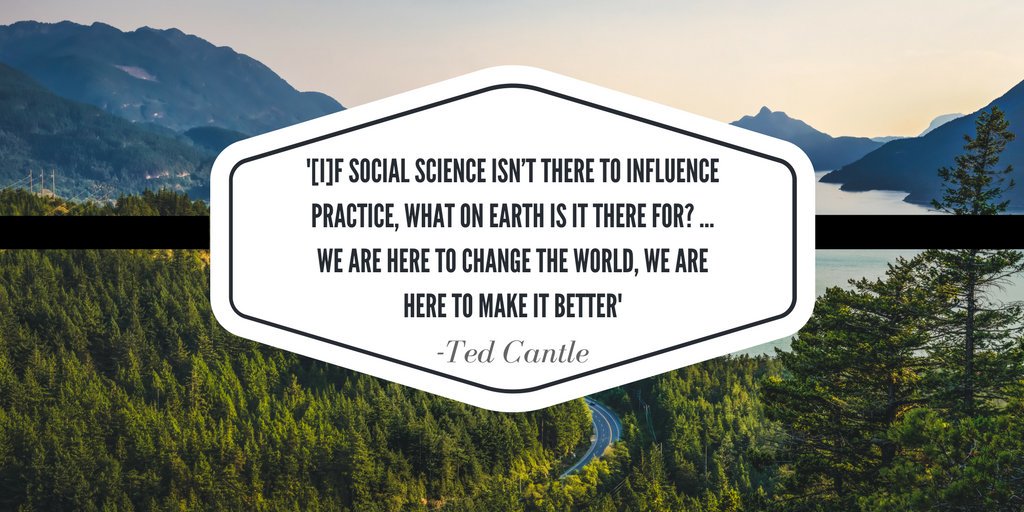
Social Science Bites, a series of interviews with leading social scientists, reached a milestone with its 50th podcast — Gary King on Big Data Analysis — in March 2017. This Storify of tweets presents a memorable quote from each of those first 50 interviews.
On May 5, Congress finally cleared the fiscal year 2017 spending bill package, which included increases for the National Institutes of Health and flat funding for the National Science Foundation. Weeks later, President Trump unveiled his fiscal year 2018 budget, which includes sweeping cuts to NIH, NSF and federally-funded science research and education.
Alan B. Krueger, presently the Bendheim Professor of Economics and Public Policy at Princeton and formerly chairman of President Barack Obama’s Council […]
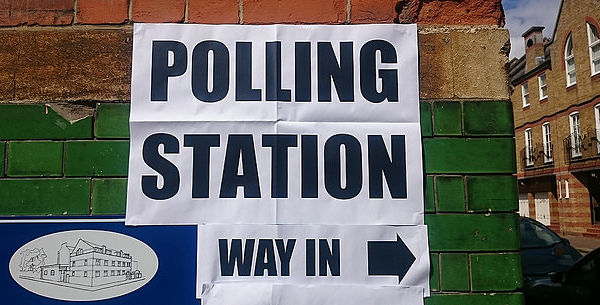
For social scientists, there must be a concern that a generation’s worth of accumulated empirical evidence on effective leadership has made so little impact on the candidates in the upcoming General Election in the United Kingdom.

Border criminology, Mary Bosworth details in this Social Science Bites podcast, is trying to understand both things that are happening at the border but also things that are happening in our criminal justice system.

During the past month, the number 100, usually associated with the word days, has been prominent in our public discourse. This column will not add to the cacophony of assessments, condemnations, or in some quarters, celebrations of the new American president. Instead, it will focus on another time frame for 100, years.

Ask a number of influential social scientists who in turn influenced them, and you’d likely get a blue-ribbon primer on the classics in social science. And so it as we present the third and final series of answers to that question drawn from the first 50 guests on the Social Science Bites podcast series.

People often see science as a world apart: cool, rational and untouched by persuasion or performance. In this view, scientists simply discover […] “Research impact” means different things to different people. Some refer broadly to how science changes behaviors, beliefs, or practices outside academic institutions. […] One researcher studies how war affects children, another took a literal worm’s eye view to examine rural development, while two others scrutinized […] David Canter considers informal places where people socialize, suggesting they’re an arena ChatGPT and other LLMs can’no’t replicate. As someone who lives […] It’s become cliche since Clive Humbly coined it in 2006, but data is indeed the new oil. It’s a mantra repeated by […] In September 2025, The Guardian reported about a lawyer in Australia having faced sanctions due to false citations. These citations were not […]
EXPLORE
Impact

Scientists Should Keep in Mind It’s Called the ‘Marketplace of Ideas’ for a Reason
READ MORE

Survey Finds Social Scientists Feel Unsupported in Seeking Societal Impact
READ MORE

Canada’s SSHRC Names 2025 Impact Winners
READ MORE
Innovation

Reaching Parts to Which AI Has No Access
READ MORE

Andrea Medina-Smith on Making Research Data More FAIR
READ MORE

A Status Check on Hallucinated Case Law Incidents
READ MORE