


Could Distributed Peer Review Better Decide Grant Funding?
The landscape of academic grant funding is notoriously competitive and plagued by lengthy, bureaucratic processes, exacerbated by difficulties in finding willing reviewers. Distributed […]
Three new members have been appointed to the 19-strong committee advising the Division of Behavioral and Social Sciences and Education at the National Academies of Sciences, Engineering, and Medicine.

Marc Cowling and Ondřej Dvouletý reflect on their article, “UK government-backed start-up loans: Tackling disadvantage and credit rationing of new entrepreneurs,” which was […]
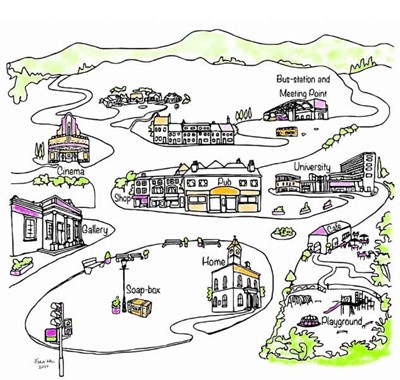
Aled Singleton shows how groups of people harnessed psychogeography through digital technologies in 2021 and 2022, potentially opening team projects across different places.
The population of ‘some college, no credential,’ or SCNC, individuals in the United States has reached 40.4 million (out of a total U.S. population of 331 million), which has resulted in a nationwide push for former students to return to college.
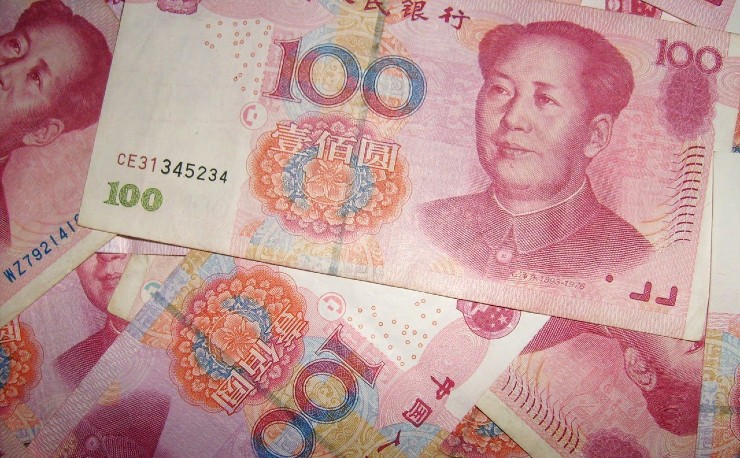
Wealth concentration is a widespread global problem. However, there is few researches exploring how political power structures impact the concentration of family wealth, especially the relationship between de jure and de facto political power. Therefore, this has motivated us to pursue this research.

Seema Iyer, senior director of The Hive, an Innovation Lab at USA for the United Nations’ High Commissioner for Refugees, will keynote the next talk in the University of Virginia’s Data Science For The Public Good Distinguished Speaker Series.

Tasseli McKay, a postdoctoral fellow at Duke University, will deliver the 2023 Mark Kleiman Innovation for Public Policy Memorial Lecture.

Psychologist Shinobu Kitayama explores the cultural differences between Asia and America, the possible origins of those differences, and how the brain and body may reflect those differences.
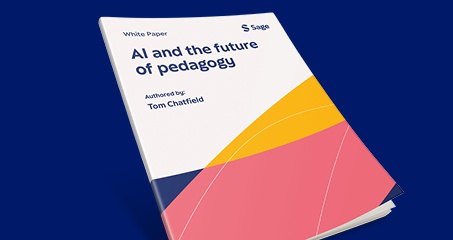
People often see science as a world apart: cool, rational and untouched by persuasion or performance. In this view, scientists simply discover […] “Research impact” means different things to different people. Some refer broadly to how science changes behaviors, beliefs, or practices outside academic institutions. […] One researcher studies how war affects children, another took a literal worm’s eye view to examine rural development, while two others scrutinized […] David Canter considers informal places where people socialize, suggesting they’re an arena ChatGPT and other LLMs can’no’t replicate. As someone who lives […] It’s become cliche since Clive Humbly coined it in 2006, but data is indeed the new oil. It’s a mantra repeated by […] In September 2025, The Guardian reported about a lawyer in Australia having faced sanctions due to false citations. These citations were not […]
EXPLORE
Impact

Scientists Should Keep in Mind It’s Called the ‘Marketplace of Ideas’ for a Reason
READ MORE

Survey Finds Social Scientists Feel Unsupported in Seeking Societal Impact
READ MORE
Canada’s SSHRC Names 2025 Impact Winners
READ MORE
Innovation

Reaching Parts to Which AI Has No Access
READ MORE

Andrea Medina-Smith on Making Research Data More FAIR
READ MORE

A Status Check on Hallucinated Case Law Incidents
READ MORE