L’affaire Salaita: Can Activism Go a Tweet Too Far?
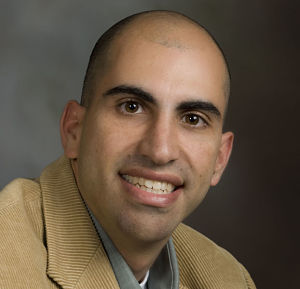
Steven Salaita
We have suggested that output on social media—through blogs, tweets, and Facebook postings—constitutes an increasingly visible part of the work of many scholars. We also realize that the utterances we make in this virtual public sphere—particularly when relevant to our research and teaching areas—are a vehicle for projecting a particular scholarly profile and professional reputation. In this short piece, we examine some of Salaita’s tweets in light of questions surrounding the proper role of an academic, specifically around speech standards and the role of neutrality and position-taking in the realm of teaching and researching.

This article by Brent E. Sasley and Mira Sucharov originally appeared on the LSE Impact of Social Sciences blog as “Scholarly vs. Activist Identities: What standards should govern academic engagement in the public sphere?”
A question of balance?
Salaita is squarely against Israeli policies. In the realm of protracted conflict, is it appropriate to pick a side? While we may disagree with Salaita’s tendencies to promote one side at the expense of the other (we, personally, are more inclined to promote specific political solutions rather than vilify one set of actors), we think he has the scholarly right to do so. More specifically, we think that as those who possess the training and knowledge on issues and method, scholars should be encouraged to take a position on issues. This serves both to further the potential impact of scholarly research on public policies, and to model for students more and less productive ways to bridge the gut and the mind. It follows, then, that it is legitimate for Salaita to express moral outrage, whether or not we all agree on where fingers should be pointed.
A question of style?
Salaita’s tweeting style is crude and provocative, like the tweet about not being surprised if Israeli Prime Minister Benjamin Netanyahu showed up on TV wearing a“necklace made from the teeth of Palestinian children.” Though this rhetorical style goes against standards of traditional academic publishing, it is the norm in social media, particularly on Twitter, where snark and sarcasm are augmented by the demands of brevity. Like late-night comedy clubs versus prime-time television, Twitter and Facebook naturally lend themselves to a more gloves-off discursive style than the lecture hall demands.
A more significant problem for scholarly engagement on Twitter and other social media is that these media can hinder a productive and thoughtful academic exchange. Instead, they all too often serve as an echo chamber for those who already share the writer’s ideological or political approach. In the case of Salaita, those hiring him would presumably want to be assured that in his teaching and research he would uphold the norm of critical thinking in its broadest sense—including tolerance for informed dissent—which is a necessary facet of academia. This is highly relevant since it remains the case that our scholarly identities remain predominant even when participating in the public sphere.
Hate speech?
There is one tweet that stood out to us as being extremely problematic: “Zionism: transforming ‘antisemitism’from something horrible into something honorable since 1948.” In the wake of controversy surrounding that particular tweet, one scholar attempted rhetorical acrobatics to try to explain it away, while another article provided fuller context. Upon closer consideration, we realize that taken in the context of the tweets that came before and after, what appeared like bald anti-Semitism actually was not. Still, given the speed at which Twitter operates, tweets are usually taken at face value unless clearly marked as a partial statement with other parts to follow, and we think it irresponsible at best for Salaita to have issued such a standalone declaration. This is certainly something scholars active in social media, used to the drawn-out process of carefully constructing the scaffolding of an argument before delivering the main point, need to adapt to.
We do not take a position here on the legality or justness of Salaita’s case regarding the University of Illinois job offer revocation. But given that more and more academics are participating in the public sphere through social media, and that more and more want this participation to count in some way for promotion and other decisions, performance in this arena must be fair game for consideration.
If anything, the Salaita case gives us all an opportunity to discuss, assess, and make explicit the standards that govern our academic engagement—whether that engagement takes place in the classroom, on the written page, or in the fast-moving sphere of Twitter, Facebook, and blogs.