Where is future growth going to come from?
On February 17, 2011, Professor John Van Reenen gave a lecture on the future of economic growth in Britain, continuing the LSE Works series of public lectures sponsored by SAGE. These lectures showcase the works of LSE’s Research Centres and offer an opportunity for discourse on various findings.
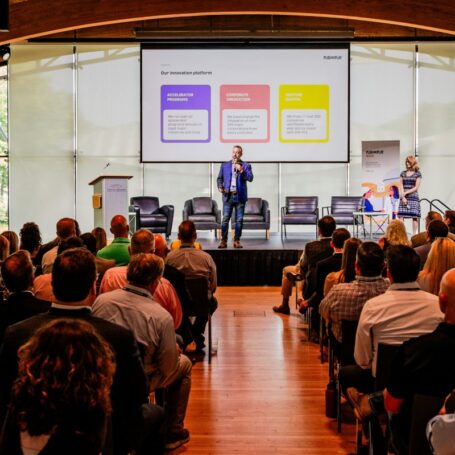
The Hong Kong Theatre at Clement House reached its full capacity for this evening lecture, with 234 people in attendance. Professor Van Reenen, a professor of economics at LSE since 2003 and director at the Centre for Economic Performance (CEP), presented a case for economic reform, including his views on public policy, for the improved growth of the UK economy after the recent recession.
Following this case, Jonathan Haskel, professor of economics at Imperial College Business School, gave a response with his critique of Van Reenen’s suggestions.
In analyzing the potential growth of the UK market, Van Reenen identified trade policies, relaxed planning, less distortionary taxation, proper subsidisation of research and development, and improved management as key in closing the productivity gap in Great Britain. For the most part, Haskel agreed, placing more emphasis on intangible assets as a source for growth and as a large investment opportunity.
Both men believe the government should remove the Patent Box subsidy for intellectual property and that policies should shift towards a more liberal immigration approach in order to augment human and intellectual capital for expansion. Although the discussion left uncertainty about the expected sources of the most growth in the UK economy, Van Reenen and Haskel both called for government intervention and macroeconomic policy reform in order to create more favourable conditions for accelerated growth.




























































































As usual the social scientists do not comprehend where the great wealth comes from. They do not understand that it takes a very select part and special individuals to start the whole process off. Tweaking here and there will do little in the global markets of tomorrow. It isa bout time taht they homed into the fundamental building blocks of economic dynamism and supported new thnking out of the box instead of the old dogma that has ruined this country. In a mere twenty-year’s time to 2031, the UK and the EU will be reaching the limits of despair when… Read more »