Social Science is Changing how to view Policing

Image: Idea go
Social Science research is changing our understanding of the police and policing. This is raising fundamental questions about how police officers are recruited, trained and organised. Most basic is the implication that it no longer makes sense to think of a general purpose police officer who works his way up from a bobby on the beat. Every area of policing is emerging as something specialist that requires particular intellectual and social skills. These need higher level training than is possible for people who enter the force straight from school without any academic background.
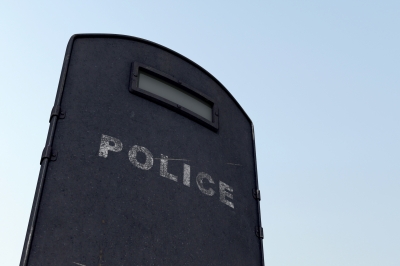
The management of crowds and public order is one area where police experience is no longer a professional basis for developing strategies and tactics. Growing research shows the benefits of understanding the social psychology of crowds, challenging the naïve assumptions that still hang over from Gustave LeBon’s century old writing. The UK police are beginning to take on board developing social science insights (see for example Dr Clifford Scott’s writings on this linked through his twitter @CliffordStott). This encourages the police to think of a crowd as a set of individuals shaped by social processes rather than some atavistic mass as was the view over hundred years ago.
For centuries it has been known that crimes are not randomly distributed over time and place. The developments in police record keeping and the applications of statistical models to these IT databases has made the prediction of where crimes are likely to occur much more precise. This has given rise to using criminological based analyses of crime patterns as a basis for police patrols. In the US they’ve graced this activity with the inviting term of ‘predictive policing’. The only difference from the traditional approach to setting up police patrols is that they are now based on empirically tested algorithms. But this means that senior officers need some deeper understanding of the process than the earlier ‘we usually have some trouble outside the Dog and Duck on Saturday night so we’d better send a patrol car there’. Just treating the computer output as from a black box could lead to serious mistakes.
The whole process of investigation is also being driven increasingly by science and technology, not just the implications of DNA and the use of CCTV and automatic number plate recognition, but also the rather overplayed use of behavioural sciences. Can a senior investigating officer leading a murder enquiry really get by these days without some basic understanding of chemistry, biology and psychology, at least to the level of a first year undergraduate?
It seems unlikely that the different areas of knowledge that enrich the wide ranging aspects of police activity can all be mastered by one person. This raises questions about whether the generic route into policing and the assumption that all police officers will emerge from the same pathway, whether they become responsible for policing the Notting Hill Carnival, the Soham murder enquiry, or investigating MP’s expense claims, is still appropriate.
I published these ideas in an article in The Times recently (my original is now available ) under the general heading of ‘Policing is no longer a general purpose job’, expecting some flak from the force, but somewhat to my surprise a number of more junior police officers actually went out of their way to say how much they agreed. Inspector John Kenny even contacted me to point out that as long ago as the 1930’s, Hugh Trenchard when commissioner of the Metropolitan police drew on his experience in the RAF to establish an officer route into the police, just like that for the military, but apparently the Police Federation challenged this and it faded away.
The police are under ever increasing scrutiny, with the top echelons criticised for inappropriately close links with newspaper barons, the CPS complaining they do not link rape cases effectively enough and the forces themselves seeking to outsource some of their activities. All of these activities speak of a growing need to professionalise the police in the sense that the military or the medics are professional. As in any developed profession at the heart of this is the recognition of specialist skills for different areas of activity. The monolithic police service will come under increasing pressure unless it grasps the implications of this nettle.