Announcements

Philosopher of Fun: Brian Sutton-Smith, 1924-2015 Announcements
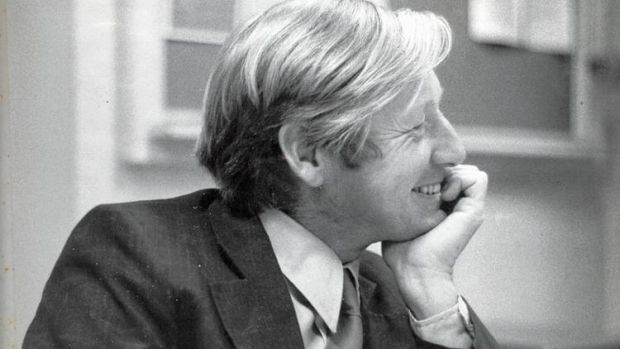
Brian Sutton-Smith. (Photo: Strong National Museum of Play)

Philosopher of Fun: Brian Sutton-Smith, 1924-2015
March 17, 2015 3010

Brian Sutton-Smith

Brian Sutton-Smith. The photo is from the Strong National Museum of Play, where Sutton-Smith was a scholar in residence and which holds the archive of his research materials on play.

Brian Sutton-Smith, the world’s foremost scholar of play and philosopher of fun, passed away earlier this month. Among all the New Zealand native’s accolades, what’s maybe most impressive about Sutton-Smith is that he managed to carry out deliberate, careful study of a subject which, by its very nature, resists seriousness. His theories on the evolutionary origin and usefulness of play will continue to influence play researchers.

For the most part, life is pretty serious business. Sutton-Smith found that we could learn a thing or two from children; kids often make light of (and escape from) the adult-run world they inhabit with jokes and stories that push the boundaries their authoritative overlords put in place.

For example, Ink, dink, pen and ink, I smell a great big stink, And it comes from, Y.O.U. is one of the few poems Sutton-Smith singles out from his early work on play, which began in the late 1940s, when he studied unorganized games and play in New Zealand children. He spent three years observing and collecting data on play in primary school children from all over the country, resulting in a 900-page dissertation.

Pacific Standard logo

This article by Kate Wheeling first appeared at our media partner site Pacific Standard under the title “What We Can Learn From Brian Sutton-Smith.” It is reprinted here by permission.

Sutton-Smith received the first educational psychology degree in New Zealand’s history for that research work. That only came, however, once he removed all traces of the racy jokes and poems—per the doctoral committee chairman’s (basically mandatory) request—that he’d heard whispered among the children when the adults were out of earshot. Soon after, when Sutton-Smith became a professor of psychology at Bowling Green University, he made the lewd material that had to be scrubbed from his thesis the subject of new research. He collected hundreds of jokes that grade school students found humorous and adults found disgusting or offensive (Johnny if you don’t stop playing with your little sister I will have to close the casket!).

According to Sutton-Smith, play, like sex, is “a pleasure for its own sake, but its genetic gift is perhaps the sense that life, temporarily at least, is worth living.”

In 1974, Sutton-Smith wrote How to Play With Your Children (and When Not To) with his wife, which provided advice to new parents about how to tease their children during their first year of life, such as tickling, making funny faces, or “hanging the baby upside down by the ankles.” Teasing, Sutton-Smith argued, plays an important role in the socialization of children across many cultures. Simply put, teasing is basically parent-guided play, initiating a child’s experiences with potentially threatening aspects of society (so that when they finally interact with non-family members, they don’t totally freak out). According to Sutton-Smith,”playful parent-child relationships,” and more specifically, the emotional surprises associated with these kinds of teasing, lead to flexible, friendlier, and happier children. In 2008, he wrote:

Children who grow up with early access to this kind of play and who enjoy ludic support for the whimsy of their inner lives are likely to be more sophisticated in their mature social lives and more diplomatically adept in their everyday social relations … All this is particularly true as these worlds of pretend meanings gradually take on the successive personal colorations of make believe, wishful thinking, day dreaming, primary processing, irony, allegories, bathos, parody, euphemism, innuendo, inversion, and various rhetorics. These early subjective pretences serve as a first training for the sophisticated semantics of the social world, its multitude of languages, and its ubiquitous and varied media.

When Sutton-Smith began his unique research, he was essentially the only researcher on the playground, but today his specialty is a widely studied branch of psychology. Looking back on a life dedicated to the study of play, Sutton-Smith once mused that his work may have all been an attempt to convince his mother his own “rough and tumble” play habits growing up in the windswept hills around New Zealand’s Island Bay were normal and formative. “Nice boys are allowed to act quite horribly,” he wrote, “as long as they are playing.”



Kate Wheeling is an editorial fellow at Pacific Standard, which she joined after internships at the American Geophysical Union and Yale Medicine, where she wrote about all things science from heliophysics to human cells. Wheeling has a bachelor’s degree in behavioral neuroscience and a master’s in science journalism.

View all posts by Kate Wheeling

Related Articles

JG Ballard and the Epstein Files
News
April 15, 2026

JG Ballard and the Epstein Files

Read Now
Wenn die Browser-Erweiterung entscheidet: Eine praktische Fallstudie zur Phantom Wallet Extension für Solana-Nutzer in Deutschland
News
March 16, 2026

Wenn die Browser-Erweiterung entscheidet: Eine praktische Fallstudie zur Phantom Wallet Extension für Solana-Nutzer in Deutschland

Read Now
Celebrating the National Survey of Health and Development: 1946-2026
Research
March 9, 2026

Celebrating the National Survey of Health and Development: 1946-2026

Read Now
Why trading volume in prediction markets matters more than you think — and how event-outcome mechanics drive it
News
March 7, 2026

Why trading volume in prediction markets matters more than you think — and how event-outcome mechanics drive it

Read Now
ICE: Good People and Dirty Work

ICE: Good People and Dirty Work

Watching recent events in Minneapolis from the comfortable distance of several thousand miles and a large ocean, my mind turned to an […]

Read Now
Why Your Next 2FA App Should Be an OTP Generator — and How to pick one that won’t let you down

Why Your Next 2FA App Should Be an OTP Generator — and How to pick one that won’t let you down

Whoa! I was setting up an account the other day and the site offered SMS for two-factor. Seriously? No way. My gut […]

Read Now
‘Tino’ Cuéllar Named Director of the Center for Advanced Study in the Behavioral Sciences

‘Tino’ Cuéllar Named Director of the Center for Advanced Study in the Behavioral Sciences

Mariano-Florentino “Tino” Cuéllar, a former justice of the Supreme Court of California and currently the president of the Carnegie Endowment for International […]

Read Now
0 0 votes
Article Rating
Subscribe
Notify of
guest

This site uses Akismet to reduce spam. Learn how your comment data is processed.

0 Comments
Newest
Oldest Most Voted
Inline Feedbacks
View all comments