If Academic Freedom is Suppressed There, How Do We Act Here?
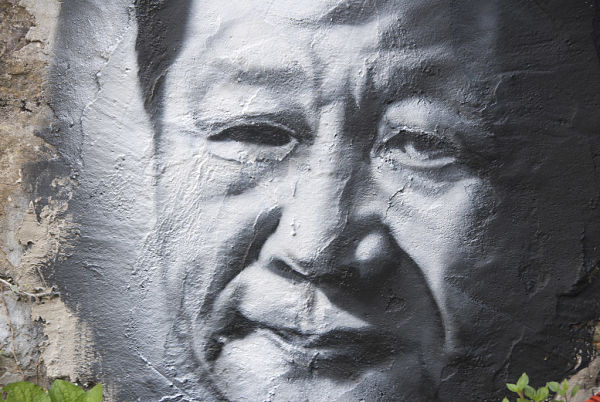
This is an important year in Chinese history. It marks the anniversaries of two political movements involving students and scholars: the May Fourth Movement and the Tiananmen Square protests – known in China as the June Fourth Incident.
The May Fourth Movement of 1919 challenged traditional Chinese values and authorities and demanded freedom of speech and democracy. Seventy years later – and 40 years after the Chinese Communist Party (CCP) had taken power – students, scholars, and other citizens mobilized again in defense of freedom of speech, human rights, and democratic values. But on June 4 1989, the CCP brutally crushed their movement. The crackdown created a legacy of heavily censored wrongs that cannot be righted while the current system lasts.
After 1989, the Chinese government stepped up its control over students through “patriotic” education campaigns. It also imposed more restrictions on scholars. Yet academics working in universities, think-tanks and NGOs have, over the years, continued to expose and criticize systemic injustices – especially on the internet and social media, although censorship on these platforms has increased under president of China, Xi Jinping.
State persecution
Since assuming power in 2012, Xi Jinping has more tightly controlled civil society, the media and universities and strengthened ideological indoctrination. New bans and restrictions of research and teaching on topics such as constitutionalism and civil society have further impeded independent scholarship.
Numerous critical scholars have been silenced. Some have gone into exile. Among the courageous scholars who continue to insist on the freedom to write is law professor Xu Zhangrun. His sharp critique of President Xi’s “new era” recently earned him a suspension from his university.

In the Xinjiang Uighur Autonomous Region in north-west China, more than 300 intellectuals have reportedly been incarcerated in camps. These camps are thought to hold about 1.1 million Chinese citizens from predominantly Muslim ethnic minorities. Among the victims are Rahile Dawut, an expert on Uighur folklore, and Ilham Tohti, an economist who was sentenced to life imprisonment in 2014.
The persecution of these intellectuals has effects well beyond China’s borders. It deprives the entire academic community of important critical voices.
Communist party influence
In 1919 and 1989, foreign universities had only limited exchanges with Chinese universities. Today, they are heavily involved – and invested in joint ventures with China. Many have come to rely on increasing numbers of Chinese students – it’s estimated that one in five international students in UK universities are from China.
Some receive support through Confucius Institutes – Chinese government-funded centers of Chinese language and cultural education. Scholars and their institutions are also attracted by research facilities in and grants from China.
The expansion of Chinese academic repression is particularly concerning in the Hong Kong Special Administrative Region, where civil liberties used to be fairly well protected. In April 2019, Benny Tai, a law professor at Hong Kong University was sent to prison, along with others, for his role in the 2014 Umbrella movement – a peaceful civil disobedience movement.
While Tai awaits the outcome of his appeal, there have already been worrying calls for his dismissal. And his case has had a palpable chilling effect on academic freedom in the city.
In other parts of the world, Chinese pressure is felt in different ways. Self-censorship is of increasing concern, as some scholars and their institutions no longer dare to engage in critical research or to speak up for Chinese colleagues at risk. One of the most striking examples of responsiveness to pressure has been the readiness of international academic publishers to censor their own journals at China’s request.
Collective action
It bears noting that many Chinese and Western universities have signed on to the 2013 Hefei Statement. This commits signatories to “the exercise of academic freedom by faculty … without undue constraint”. The European Parliament has expressed its concern about threats to academic freedom and called for initiatives to safeguard academic values in external relations.
But so far, there are no mechanisms to safeguard academic values in co-operation and exchange with repressive countries. To change this, we need a principled commitment to defending academic freedom trans-nationally. This will require the adoption of Codes of Conduct, such as those recommended by Human Rights Watch – as well as the creation of university committees on the ethics of global academic engagement.
There also must be transparency about the terms on which universities “engage” with counterparts in countries of concern, including external sources of funding for research and teaching. Intelligent rules and mechanisms to screen out academic funding from problematic sources that would come with strings attached, must also be introduced.
Universities and academics around the world must take a firm stance when academic freedom is threatened abroad. In 2018, Cornell University’s School of Industrial and Labor Relations terminated an exchange program with a Chinese university it said was collusive in persecuting its students. Moves like this are important, because ultimately, the global challenge of defending academic freedom requires collective and institutionalized action.