Shona Minson on Children of Imprisoned Mothers
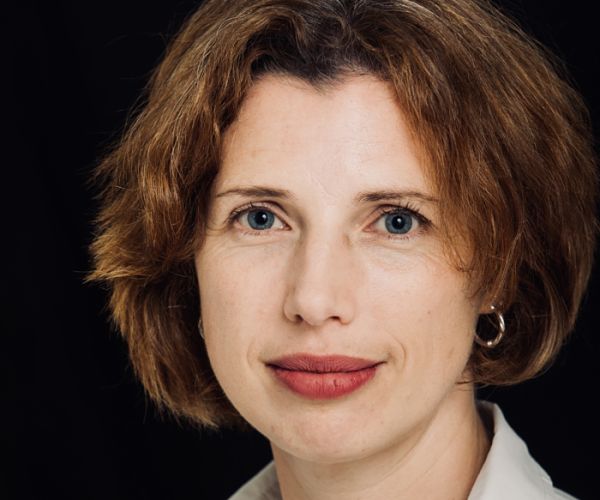
When a mother with minor children is imprisoned, she is far from the only one facing consequences. Their children can end up cared for in multiple placements, they’re often unable to attend school and they’re stigmatised.
These effects on the children of the incarcerated, although predictable, have been poorly understood precisely because almost no one has done that. But Minson, who practiced both criminal and family law before entering academe, did. Following up on issues she’d seen in her work as a lawyer and after taking a master’s at the University of Surrey, she interviewed children, their caregivers and members of the Crown Court judiciary to see both how having a mom locked up affected children and how sentencing decisions that created those situations came about.
Furthermore, she shared her findings with the authorities. “I didn’t realize,” she tells interviewer David Edmonds in this Social Science Bites podcast, “that academics didn’t normally try to change things.”
And while that action might have been somewhat out of the ordinary, what happened next is even more unusual: the authorities listened. After telling the Parliamentary Joint Committee on Human Rights about her findings in March 2018, the committee held an enquiry centered on the rights of the children of the imprisoned, and on Tuesday, 1 October, new guidelines were released with the aim of strengthening female offenders’ family and other relationships. Existing systemic problems, she believes, can be “more of a blind spot than a deliberate dismissal of these children.”
While the policy affect was likely the most gratifying reward, she also received this year’s Outstanding Early Career Impact Prize awarded by the Economic and Social Research Council in association with SAGE Publishing (the parent of Social Science Space).
In this podcast, Minson explains that the lack of research into the children of imprisoned women echoes scant data on the mothers themselves. No one knows exactly how many mothers are locked up in England and Wales because that information isn’t collected, but a “best” guess follows by multiplying the results of a 1997 study that found 61 percent of women in prison were mothers by the rough daily headcount of 3,800 women in prison. Of that estimated maternal population of 2,300, most are single mothers incarcerated up to 60 miles from home, leaving their children in the hands of a variety of carers, ranging from grandparents to friends to, as a last resort, a local authority.
“Most people don’t want their children to go into the care system,” Minson relates, “because it can be very, very difficult to get them back again. And often short sentences are given women … so if they lose their children into care at that point, it can be years before they have them back even though they’ve only been in prison a few months.”
But those informal arrangements are also fraught, with children often living in multiple places during their mom’s confinement. And because these particular children are not recognized as ‘children in need,’ they get no priority in school places – so carry-on issues with not being in school, stigma because their mother is in prison, and resulting damage to education all plant seeds for future problems. And some not so-future ones …
“Most of the children that I met just describe themselves as sad,” Minson says. “They have this huge grief, and therapists have written about this, whether it’s a disenfranchised grief where you’re almost unentitled to it, or an ambiguous loss because of the uncertainty – a person hasn’t died, but you don’t know when they’re coming back and you can’t talk about in the way you might if your parents separated or divorced.”
In this podcast, Minson discusses why she chose not to interview the imprisoned mothers for her research, the surprising lack of knowledge about child issues she saw in the judges she talked with, and how new court rulings are opening up non-custodial sentencing options for some mothers.
Minson is currently a British Academy post-doctoral fellow at the Centre for Criminology at the University of Oxford, where she is continuing to study children’s rights, this time in the wake of both custodial and non-custodial sentences.
To download an MP3 of this podcast, right-click HERE and save.
For a complete listing of past Social Science Bites podcasts, click HERE. You can follow Bites on Twitter @socialscibites and David Edmonds @DavidEdmonds100.