Ruth Wodak on How to Become a Far-Right Populist
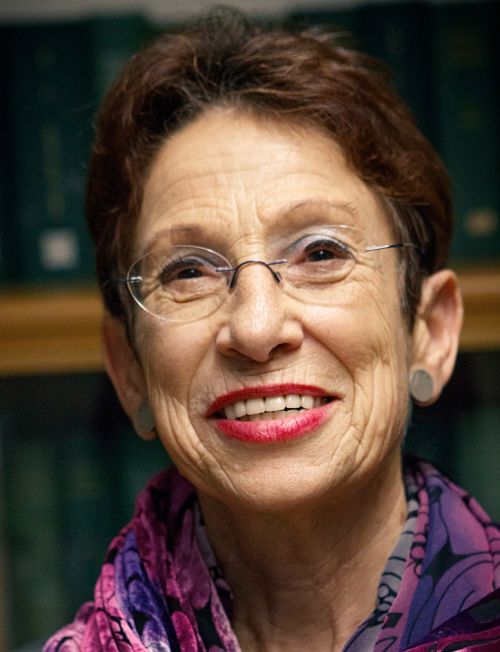
Depending on your views, far-right populism can represent a welcome return to the past , or a worrying one. The former, argues sociolinguist Ruth Wodak in this Social Science Bites podcast, is one of the hallmarks of far-right populism – a yearning for an often mythical past where the “true people” were ascendant and comfortable.
She’s termed this blurred look backward retrotopia, “a nostalgia for a past where everything was much better,” whether it was ever real or not.
Wodak, who to be clear finds herself worrying and not welcoming, offers host David Edmonds a recipe for becoming a far-right populist. In her scholarship, she’s identified four ingredients, or dimensions, to the ideology that often underlie populist far-right parties.
The most apparent from the outside is a strong national chauvinism or even nativism. This nativism is very exclusive to a specific set of insiders, who focus on creating “an anti-pluralist country, a country which is allegedly homogeneous, which has one kind of people who all speak the same language, have the same culture, or look the same. [Having] this imaginary ‘true people’ is very important. Far-right populists decide who belongs and who does not belong to the ‘true people.’”
And just as important is then having a group of outsiders to cast as scapegoats responsible for major problems – making for “an easy narrative for very complex issues.” It’s probably no surprise, then, that “conspiracy theories are part and parcel of the far-right agenda. They are very supportive in constructing who is to blame, etc., for all the complex problems.”
Another ingredient is an anti-elitism that targets elites or ‘the establishment’, i.e. managers, teachers, journalists, intellectuals, liberals or your political opponents; “all the people who allegedly don’t listen to ‘us’ and who have very different interests from ‘the true people’.”
Next comes a focus on law and order (“an agenda of protecting this true people”) enforced through a hierarchal party structure. This top-down structure frequently focuses on a charismatic leader who encapsulates the spirit of the ‘true people’ – and rejects the ‘other.’ “Along with the scapegoat,” Wodak explains, “comes ‘the topos of the savior’ … the leader who will save the true American or the true Austrian or the true British people from those all dangers, they will ‘solve’ the problems, protect the people, and they promise hope.”
From the archives: Ruth Wodak talks to Social Science Space on the election of Donald Trump
The final standard ingredient is endorsing conservative values and perceived cultural touchstones, such as Christianity in Europe.
This recipe matters, of course, thanks to the rise of far-right populist politics across the Americas, Europe and Asia. Wodak herself is Austrian – she’s professor in linguistics at the University of Vienna and emeritus distinguished professor and chair in Discourse Studies at Lancaster University – has seen plenty of recent natural experiments in populism throughout continental Europe.
She cites several reasons for the popularity of far-right populism, including the end of the Cold War and the resultant increase in migration from Eastern Europe into the West. Those migrants, previously seen as refugees from communism who were welcomed and even feted, morphed into unwelcome and fear-inducing interlopers (and despite being white and from Christian cultures). Around the same time, she continues, neo-liberal policies changed labor policies in the West, creating inequalities that the right could build on – just as they did in the pro-business responses to the global financial crisis of 2008 (“saving the banks instead of the people”) and globalization.
In this podcast, Wodak also discusses how right-wing populism makes use of social media, how exploiting “otherness” helps roll over self-interest, what the role of a social scientist is in exploring fraught ideologies, and how someone might counteract malign politics.
Wodak has studied right-wing discourse for years, work that is covered in 2015 book The Politics of Fear: What Right-Wing Populist Discourses Mean, which will see a second edition later this year. At present, she is senior visiting fellow at Vienna’s Institut für die Wissenschaft des Menschen where with Markus Rheindorf she is examining “repoliticization from below.”
To download an MP3 of this podcast, right-click HERE and save.
For a complete listing of past Social Science Bites podcasts, click HERE. You can follow Bites on Twitter @socialscibites and David Edmonds @DavidEdmonds100.