A Look at the Terminology Behind Hispanic Heritage Month
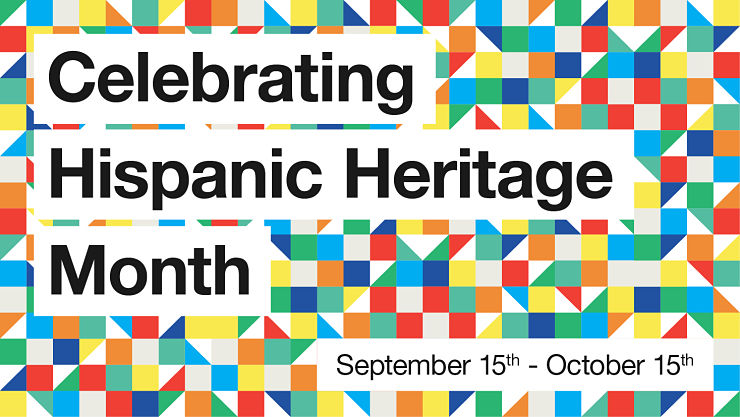
National Hispanic Heritage Month, which the United States observes between September 15 and October 15, was created by a 1988 law after Representative Esteban E. Torres and Senator Paul Simon each proposed bills to expand National Hispanic Heritage Week into a monthlong celebration. The observance period coincides with the Independence Day celebrations of Costa Rica, El Salvador, Guatemala, Honduras, Nicaragua, Mexico, Chile, and Belize. Expanding the commemoration came soon after the U.S. Census Bureau decreed a new official label for people of Spanish and Latin American ancestry living in the U.S.
As Daniel Martínez and Kelsey Gonzalez outline in “‘Latino’ or ‘Hispanic’? The Sociodemographic Correlates of Panethnic Label Preferences among U.S. Latinos/Hispanics,” the Census Bureau introduced the category “Hispanic” in 1980 to denote people of “Mexican, Puerto Rican, Cuban, Central or South America or other Spanish culture or origin, regardless of race.” The alternative term “Latino” rose to popularity in the 1990s, as activists criticized “Hispanic” for erasing Latin American, indigenous, and mestizo (mixed-race) identities by overemphasizing a colonial relation to Spain. But while “Latino” includes people from non-Spanish speaking countries in Latin America and sidesteps some of the colonial undertones of “Hispanic,” it excludes those of Spanish origin outside of the Western Hemisphere.
To this day, “Hispanic” and “Latino” are often used interchangeably in the United States. However, as Martínez and Gonzalez note, many within these communities prefer one term over the other for a variety of reasons, including citizenship status, language use, generation-since-immigration, national origin, education, and political affiliation.
In recent years, “Latinx” has become common parlance among academics and activists because of its capacity to pluralize people of Latin American origin into a pan-ethnic, gender-inclusive group. But, as with any catchall term, “Latinx” has several limitations, which Cristobol Salinas outlines in “The Complexity of the ‘x’ in Latinx: How Latinx/a/o Students Relate to, Identify With, and Understand the Term Latinx.” The term “Latinx” is related to access to higher education and as Salinas writes, a majority of the student participants in his study “perceived higher education as a privileged space where they only used the term Latinx to be inclusive. Once they returned to their communities, they did not use the term, as they did not want to be the voces de poder overshadowing the voces perdidas.” Salinas also argues that using “Latinx” as an all-encompassing term neutralizes gender and decenters the “x” from its original purpose of recognizing gender-nonconforming people.
Melissa K. Ochoa at Saint Louis University argues against using Latinx, partly because she feels there’s a better alternative.
“Many academics might feel compelled to continue to use Latinx because they fought hard to have it recognized by their institutions or have already published the term in an academic journal,” Ochoa writes at The Conversation. “But there is a much better gender-inclusive alternative, one that’s been largely overlooked by the U.S. academic community and is already being used in Spanish-speaking parts of Latin America, especially among young social activists in those countries. It’s “Latine” – pronounced “lah-teen-eh” – and it’s far more adaptable to the Spanish language.”
And in practice, “Latine” is rising in popularity as an alternative to Latinx. Advocates for “Latine” cite concerns that the “x” in Latinx is an anglicized imposition and argue that the letter “e” is easier for Spanish speakers to understand and accept, as it is used to end many masculine and feminine nouns in Spanish. Such varying terminology underscores the importance of recognizing individual community members’ own identity preferences.
Just as with Martinez, Gonzalez, and Salinas’ research demonstrates, social and behavioral scientists play a key role in addressing and amplifying key discussions, issues, and progress—ones that can help shape the future of not only how the U.S. marks Hispanic Heritage Month, but how policymakers and legislators create structural reform.