NAS Creates Council to Address Research Integrity and Trust
The road to reliable and trusted scientific research runs through a tangled terrain of ethical, accountability and assessment concerns that can be just as tough to surmount as the research question itself. A new blue-ribbon council convened by the United States’ National Academies of Sciences, Engineering, and Medicine aims to tackle questions about nettlesome issues like conflict of interest, measuring impact and handling retractions.
In an article appearing today at PNAS (but dated October 12), the three co-chairs of the new council detail the plan for the Strategic Council for Research Excellence, Integrity, and Trust and its goal “to optimize the excellence and trustworthiness of research for the benefit of society.”
Specifically, the council will:
1) identify, anticipate and prioritize key challenges to research ethics, integrity, and trustworthiness;
2) articulate principles, policies, and best practices to address them;
3) catalyze progress by coordinating collaborative action; and
4) break barriers where needed to accelerate solutions.
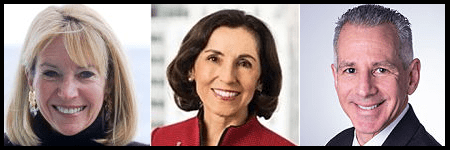
The co-chairs are Marcia McNutt, president of the National Academies of Sciences, Engineering, and Medicine (NAS) and former head of the American Academic for the Advancement of Science; France A. Córdova, president of the Science Philanthropy Alliance for former director of the National Science Foundation; and David B. Allison, dean of the Indiana University School of Public Health-Bloomington.
In their announcement, they write that “researchers are confronted with a dizzying array of different requirements and policies, all roughly intended to ensure the excellence and integrity of research but time consuming, frustrating to satisfy, and not all obviously ensuring the excellence and integrity of research in actuality.” While this isn’t a new observation by any means – the NAS itself catalogued these concerns in two reports, 2016’s Optimizing the Nation’s Investment in Academic Research and 2017’s Fostering Integrity in Research. Both those reports suggested a new body was needed to address these concerns and which could use its bully pulpit effectively across a thicket of researchers, institutions, funders, governments and businesses. “To be successful, any willing entity would need to have the respect of the scholarly community and public, understand the challenges encountered in all aspects of research, and be minimally conflicted to avoid having an agenda tuned to its own interests.”
The NAS, assisted by National Academy of Engineering and National Academy of Medicine, turned out to be that willing entity, with initial funding coming from the NAS and the Gordon and Betty Moore Foundation. The council includes members drawn from stakeholders (but not appointed by the sponsors themselves), and while the goal is to create a body of recommended best practices the council itself has no regulatory authority.
“By encouraging the creation of new tools,” write the co-chairs, “the [council] can make it easy for researchers to know what is expected of them and make it easier to meet those expectations.”
The members of the council, in addition to the co-chairs, are:
Wayne Cascio | acting principal deputy assistant administrator for science at the U.S. Environmental Protection Agency
Michael Drake | president of the University of California system
Juan Enriquez | managing director of Excel Venture Management
Kathleen Hall Jamieson | director of the Annenberg Public Policy Center of the University of Pennsylvania
Vidar Helgesen | executive director of the Nobel Foundation
John Hennessy | chair of Alphabet Inc. and director of the Knight-Hennessy Scholars at Stanford University
Lyric Jorgenson | acting associate director for science policy and acting director of the Office of Science Policy at the National Institutes of Health
Veronique Kiermer | chief scientific officer at PLOS
Arthur “Skip” Lupia | assistant director, social, behavioral and economic science, of the National Science Foundation (until January) and professor of the Institute for Social Research at the University of Michigan
Martin Rees | professor at Trinity College, Cambridge University and former president of the Royal Society
L. Rafel Reif | president of the Massachusetts Institute of Technology
Magdalena Skipper | editor in chief of Nature
Barbara Snyder | president of the Association of American Universities
Susan Wolf | professor at the University of Minnesota Law School