Equality Smatters
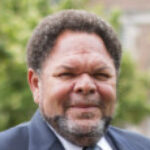
The number of African American linguists is growing, albeit gradually. Very few of us share my legacy as a Black baby boomer whose life began in poverty, yet I will soon assume the presidency of the Linguistic Society of America. My life reflects a special brand of American exceptionalism that defies easy classification, and my former Stanford student, professor Tracy Conner, has been kind enough to discuss my journey from Brooklyn, through inner-city Philadelphia as a child and college student. Throughout the seven decades of my life I have witnessed a great deal of inequality that cannot be easily categorized, or reduced to sound bites that might provide grist for ideologically predisposed extremists on either side of the political spectrum.

“Equality smatters” is a tangential product of self-reflective vignettes from a U.S. slave descendant who recognizes the paradoxical fact that America has yet to truly overcome the consequences of its original sin, or the destruction and displacement of those ancient first families that lived on land now occupied by the United States of America. One of my earliest memories of inequality occurred when my mother took me with her to Oak-Lane Country Day School, where she was a student teacher attending Temple University. The pastoral campus where she taught affluent white students occupied several acres of meadows, ponds, and woods that contrasted sharply with the asphalt laden playground at the elementary school that I attended, which occupied one square block in East Germantown, Philadelphia.
As is the case with so many American family success stories, my parents worked very hard and obtained college educations that gradually improved their standard of living; both Mom and Dad eventually earned doctoral degrees. Another sign of my age is reflected by the fact that our family’s move from inner-city Philadelphia to inner-city Los Angeles took place in 1958, when propeller driven airplanes traversed the nation in only nine hours. I landed in California and moved to a multiracial multilingual neighborhood with Asian Americans, Mexican Americans, fellow African Americans, and elderly European Americans who either lacked the desire or the resources to flee to the predominantly white suburbs that were sprouting up in the western San Fernando Valley, at a time (circa 1959) when Los Angeles was creating a fledgling freeway system to accommodate those suburbanites who clogged Sepulveda Boulevard during their daily commutes into various central Los Angeles business districts.
With the advantage of their good jobs and college educations, my parents made the decision to move to the suburbs, where the racial composition of the community was drastically different from those of my early childhood in Brooklyn or Philadelphia. Our new home was nestled at the end of a secluded cul-de-sac where every home had immaculate landscaping, and most neighbors graced their homes with swimming pools, as did my parents. Although we were only the second African American family to move onto our street, my parents took justifiable pride in their accomplishments, having no idea whatsoever that I would soon encounter racist taunts and unfair treatment in an elementary school where I was one of three African American students. Indeed, the early image of educational inequality that I witnessed prior to my mother becoming a certified teacher was emphatically reinforced between 1958, when I was a fourth grade student and all of my classmates were fellow students of color, and 1959, when our family moved to Canoga Park, and I was the only student of color among my new classmates.
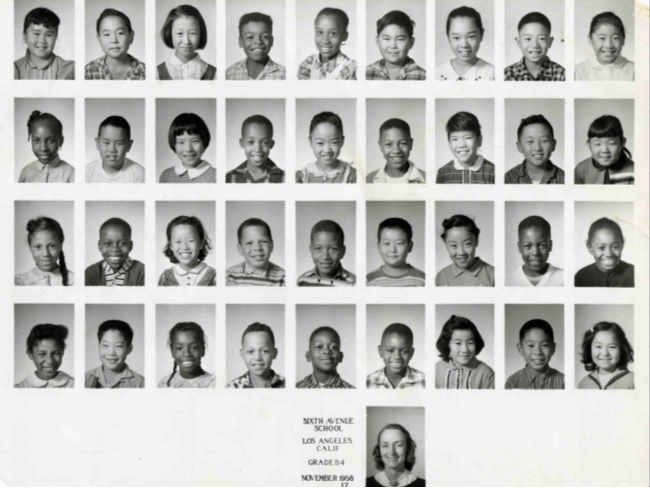
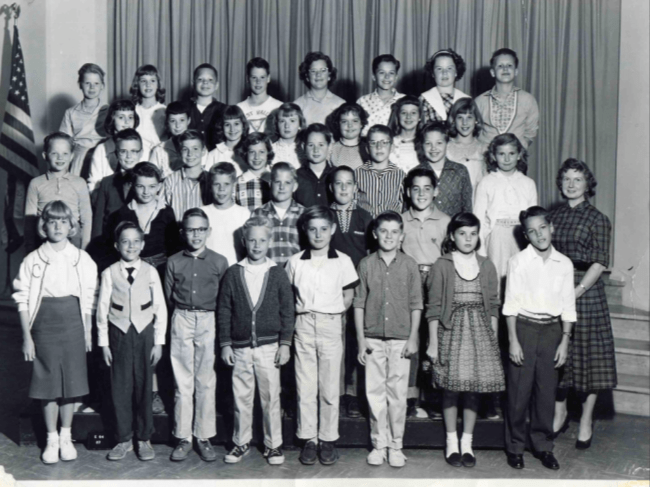
The contrasts that I observed were numerous, and my professional work as a linguist who has devoted scholarship to the advancement of justice and equality owes much to having witnessed American educational apartheid firsthand. Far from actually closing economic divisions among racially diverse Americans, public education across the nation tends to perpetuate the class structure, thereby exacerbating disparities that calls our national ethos of equal opportunity and justice for all into question.
Despite having been taught by several teachers who were dismissive of my academic potential, or -occasionally – much worse, there were others who helped me. Most notably, the storied linguist – professor William Labov – of the University of Pennsylvania was kind enough to become my mentor, and he took considerable risk in 1972 when I entered graduate school as his advisee. I knew nothing of linguistic science, but I knew a great deal about linguistic prejudice, and therein lays the origin of my personal rags to riches American story, for which I am eternally grateful. The smatters of personal reflection that I shared with professor Tracy Conner, and those of you who are kind enough to read our interview, paint a picture of partial progress toward the egalitarian nation where self-evident truths, of all people being treated fairly and justly with inalienable human rights, may someday prevail.