 Academic Funding
 Latest COMPETES Bill Heads to House Floor
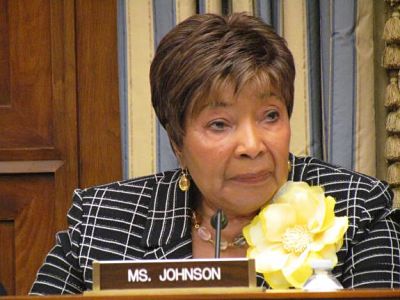
Eddie Bernice Johnson of Texas, the ranking Democrat on the House Science panel, introduced a substitute to the ‘anti-science’ HR 1806, but her bill is not expected to advance.
Wednesday, the U.S. House of Representatives’ Science, Space and Technology Committee passed along party lines (19 Republicans to 16 Democrats) the America COMPETES Reauthorization Act of 2015, or H.R. 1806. The science-agency-funding bill now heads to the House floor for a vote; that vote has not yet been scheduled.
Lamar Smith, R-Texas, the committee chairman and sponsor of the legislation, describes H.R. 1806 as “pro-science and fiscally responsible bill.” It prioritizes basic research at the National Science Foundation, Department of Energy Office of Science, and National Institute of Standards and Technology, while keeping funding levels within congressionally set discretionary spending limits. For NSF, the bill would increase funding for the Biological Sciences, Engineering , Mathematical and Physical Sciences , and Computer and Information Science and Engineering directorates at the expense of other NSF accounts, including Social, Behavioral and Economic Sciences (SBE) and Geosciences (GEO). (See COSSA’s analysis of H.R. 1806 for more information.)
This article was drawn from the Washington Update of the Consortium of Social Science Agencies.
COSSA strongly opposes H.R. 1806 and issued a statement last week expressing our concerns. [This week SAGE – the sponsor of Social Science Space — issued its own statement opposing the bill.]
Congresswoman Eddie Bernice Johnson of Texas, the ranking Democrat on the committee, had harsh words for the bill during the more than five hour-long markup, noting that H.R. 1806 is the “combination of two bad bills” from last year, becoming a “doubly bad bill.” She noted that the original America COMPETES Act enacted in 2007, and its reauthorization in 2010, were “landmark” pieces of legislation, vetted by dozens of scientific stakeholders through a transparent process. In contrast, H.R. 1806 was developed by committee Republicans behind closed doors without federal agency or stakeholder input. In addition, Johnson continued, while the previous two COMPETES bills aimed to ensure America’s preeminence in science and engineering, the bill before the committee “questions the motives of NSF and the integrity of scientists.” She expressed her embarrassment over the committee’s consideration of the bill, noting that the nation would be better off with no bill than with H.R. 1806.
Johnson entered into the committee record 30 letters (including COSSA’s) raising opposition or serious concerns with the legislation. In contrast, she noted that the previous COMPETES bills received hundreds of endorsements.
Research and Technology Subcommittee Ranking Member Daniel Lipinski, D-Illinois, called the targeting of SBE and GEO within H.R. 1806 a “partisan distraction” from what could otherwise be an important message on science, adding that the cuts to social science would be detrimental. He expressed his commitment to finding a bipartisan compromise, but added that he is unsure how to get there with this bill.
The committee considered more than 30 amendments during the markup, most from the committee’s Democratic members. About half of the amendments addressed concerns within the NSF portion of the bill, including an amendment by Rep. Katherine Clark, D-Maryland, that would have struck the specific authorizations for NSF’s individual directorates, and amendments that would delete language tying NSF research to issues of “national interest” and misrepresentation of research results. These amendments were defeated along party lines.
Of particular note was an amendment in the nature of a substitute offered by Johnson which offered a Democratic alternative bill to H.R. 1806 — also called the America COMPETES Reauthorization Act of 2015, in this case (H.R. 1898 — that was introduced on April 21. The Johnson amendment was defeated along party lines, and the committee is not expected to take it up as a standalone measure.
Nonetheless, every Democratic member of science committee signed on to H.R. 1898 as original cosponsors. Like the Republican bill, the Johnson bill would authorize research efforts at NSF, DOE’s Office of Science and NIST. However, that is where the similarities end.
The Johnson bill would authorize NSF for fiscal years (FY) 2016 through 2020; the Smith bill only provides authorizations for FY 2016-2017, requiring that the Committee turn back to NSF reauthorization in a year or so. In addition, the Democrats’ bill sets much more ambitious and sustained funding levels for the agency, with nearly 5 percent growth each year:

Further, the Johnson bill does not provide specific authorizations for NSF’s research directorates. Instead, it keeps with the current practice of providing an authorization for Research and Related Activities, Education and Human Resources, and other high-level accounts, and maintains NSF’s flexibility for determining how best to prioritize research funding.
The bill’s predecessor, known as the FIRST Act in 2014, never received a floor vote. However, reports indicate that Chairman Smith is hoping to bring the bill to the floor in the near future, potentially as soon as next week.
Meanwhile, the Senate has not yet introduced COMPETES reauthorization legislation this year. However, Smith and Senate Commerce Committee Chairman John Thune, R-South Dakota, issued a joint statement earlier Wednesday expressing their intent to work together on a COMPETES bill this year.