Celebrating the 40th Anniversary of Hofstede’s ‘Culture’s Consequences’
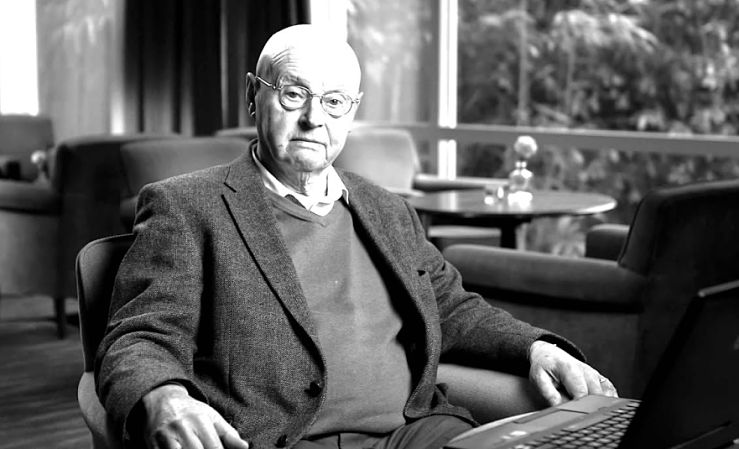
It has been 40 years since Geert Hofstede, who sadly passed away in February 2020, published his book with SAGE Publishing, Culture’s Consequences. There may be two possible reactions to news of this anniversary: 1) that in 2021 the work may be considered outdated; 2) that Geert Hofstede’s work is timeless.
When I met Geert in the early 1990s, I had worked in advertising practice and education, a field of study for which little formal education was available in most countries. The leading marketing and advertising textbooks were by North American authors, who also dominated the view of globalization and its influence on marketing (globalization was assumed to lead to global consumers with similar needs and wants). Geert’s research demonstrated the fallacy of this assumption, but it took some time for people to recognize the usefulness of his work.
The first one was Sara Miller McCune, the founder of SAGE Publishing, who not only recognized the value of his work but also suggested ‘Culture’s Consequences’ as the title of the book.
Geert was a down-to-earth person. He studied mechanical engineering as well as social psychology, a combination that could be recognized in his way of thinking. He worked in business, not only in the academic world. His interest was in systems and people, a combination that was useful for marketing and advertising where understanding needs and wants of consumers is essential in combination with understanding media systems. Although his studies were at a higher level than mine, we had a similar study background. I received a degree in textile engineering in Enschede – a city in the East of the Netherlands – while he was working for a textile company in the same city. As I am 15 years younger than he was, we never met at that time. But it supports his strong belief that researchers bring their own cultural background into their research.
Geert had a deep interest in people. He loved teaching, answering all questions and even receiving students in his home. He was able to explain complex issues in simple terms. Next to his research, he understood the reality of culture’s consequences as he had lived in different countries with his family and traveled the world. During seminars he used to listen to many personal stories of students. He once told me he had saved many intercultural marriages by helping them to understand the reason for some of their conflicts!
Although there were many critics of his work, I never saw him angry about criticism. There was only one fundamental error that irritated him: the ecological fallacy, using his country level data to understand individual behavior, thus applying averages to individuals.
His work was used most for understanding cross-cultural differences in management, but he was pleased with my new application to global marketing. Some cross-cultural psychologists did not approve of using the work for understanding mundane matters such as why in some cultures more people prefer a Swatch watch and in others a Rolex, or use more washing powder than in others, where such differences could not be explained by income differences. As at the time of my education teaching of statistical expertise was limited, Geert taught me the elementary methods needed to do my own research starting with Spearman correlation analysis, without a PC (the way he himself had started so many years ago) which over the years with the help of computers led to an enormous database demonstrating how cultural differences influenced consumer behavior and communications across nations. He used many of my data in new editions of his own books.
In 1999, my husband and I moved to Zeeland, close to the sea and since then, Geert and his wife Maaike came to visit us each year at the end of August. We all went swimming in the sea together with the seals, eating mussels and lobster and playing Mahjong. And talking about his work. These personal memories will live on, in the same way Geert’s work will continue to be of great importance and relevance for years to come.



























































































For a recent critique of Hofstede’s work see McSweeney B (2024) Hofstede’s Imagined Cultures Chapter 8 in https://www.routledge.com/Hofstede-Matters/Magala-Erten-Bell-Claes-Yazici-Karabag/p/book/9781032518442