



Could Distributed Peer Review Better Decide Grant Funding?
The landscape of academic grant funding is notoriously competitive and plagued by lengthy, bureaucratic processes, exacerbated by difficulties in finding willing reviewers. Distributed […]


In the first of monthly series we’re calling Methods in Action, Mark Griffiths reprises his SAGE Research Methods case study “The Use of Behavioural Tracking Methodologies in the Study of Online Gambling” to explain how he and his research partner harnessed the big data possibilities of online gambling to both assess behavior and see if ‘responsible gambling’ interventions really work.

In receiving the SAGE-CASBS Award, Ken Prewitt, a champion for scholarly knowledge, suggests there is no applied or basic science, only science in use and science soon to be used.

What Unions No Longer Do. By Jake Rosenfeld . Cambridge, MA: Harvard University Press, 2014. 288 pp. ISBN 978-0-674725119, $39.95 (Cloth). Barry […]

Amitai Etzioni argues that the U.S. shouldn’t automatically resort to the big stick when engaging in its self-imposed job as the world’s enforcer of freedom of navigation.

Given the angry images cascading off TV screens, it’s pretty clear that migrants aren’t welcome in Europe. Or are they? Three papers in a themed edition of the ‘International Journal of Comparative Sociology’ suggest a more nuanced answer.
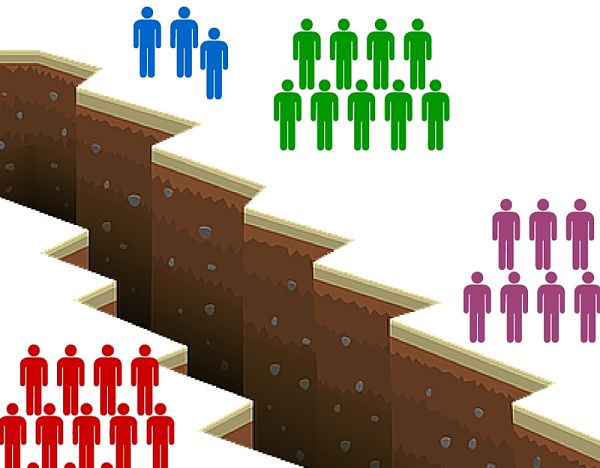
There is a divide in how academics from the humanities and social sciences view open access publishing compared to their colleagues in the science, technology and medical fields: HSS is notably more skittish about OA.

Just as the ice on a frozen pond may prevent us from seeing the richness in the underlying water, so may the calcifications of the most recent research blind us to what classic theorists actually said and wrote. So argue three academics in a new article about the legacy of Kurt Lewin’s change management theory.

A remarkably prescient special issue of the journal ‘International Political Science Review’ examines Euroscepticism’s migration ‘from the margins to the mainstream.’ Social Science Space talks to one of the issue’s guest editors.

As part of his 2026 budget proposal, Andy Burnham, the United Kingdom’s prime minister, has called for “good growth in every postcode.” […] The Royal Swedish Academy of Sciences has awarded this year’s Nobel Prize in Economic Sciences to the American economists Robert E. Hall […] Four Americans working in the social and behavioral sciences are among the 20 people named MacArthur Fellows this year. Recipients may be […] The following is an adapted extract from The Cultural Industries, fifth edition, by David Hesmondhalgh. The increasing presence of information technology (IT) […] Developers of AI data centers have a public trust problem. According to multiple surveys, a majority of Americans say they would oppose […] I was adding some final flourishes on the topic of ‘iatrocracy’ to my forthcoming book with Natewindé Sawadogo – Sickness and Social […]
EXPLORE
Impact

A Conversation with Diane Coyle on Bridging Media, Government and Academe
READ MORE
Economic Peaks, Troughs and This Year’s Nobelists in Economics
READ MORE

Four From Social Science World Receive 2026 MacArthur Fellowships
READ MORE
Innovation
IT Giants and Their Operations: Should We Be Concerned?
READ MORE

What We Miss When We Study Public Trust with Surveys Alone
READ MORE

AI and ‘Iatrocracy’ – A Cautionary Tale
READ MORE